

Explore Android 16 privacy changes impact on ad revenue, tracking limits, monetization shifts, and how developers adapt to new ad policies.
Introduction
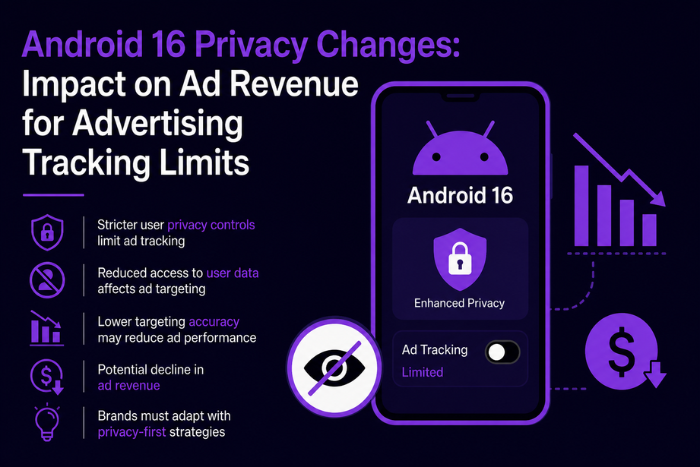
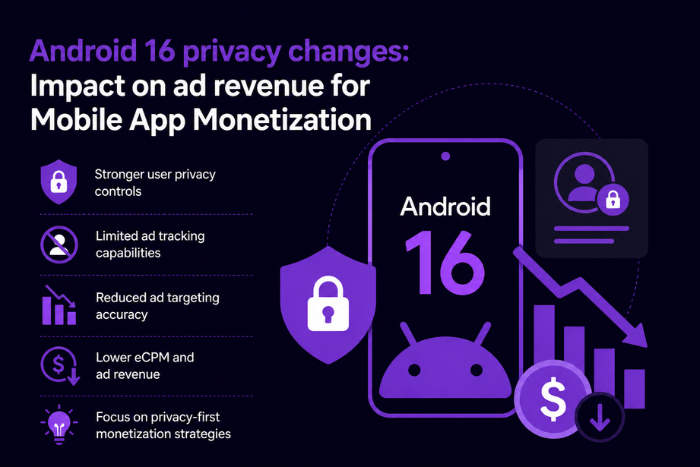
The rollout of Android 16 has introduced a major shift in how user privacy is handled across the Android ecosystem, directly reshaping the digital advertising landscape. The topic of Android 16 privacy updates is now critical for app developers, marketers, publishers, and ad-tech companies that rely heavily on behavioral targeting and personalized ads for revenue generation.
With Android 16, Google continues its long-term direction toward stronger privacy controls, reduced tracking capabilities, and greater transparency in how user data is accessed. These changes affect identifiers, cross-app tracking, background data collection, and ad personalization signals. As a result, traditional advertising models that depend on third-party tracking are becoming less effective.
For mobile app developers and businesses monetizing through ads, this means a fundamental shift in strategy. Ad impressions alone are no longer enough—contextual advertising, first-party data, and privacy-compliant targeting methods are becoming essential.
Understanding these privacy changes helps businesses prepare for reduced tracking accuracy, fluctuating CPM rates, and changes in ad personalization effectiveness. At the same time, it opens opportunities for privacy-first advertising models, AI-driven contextual ads, and improved user trust.
Why Android 16 Privacy Changes: Impact on Ad Revenue is Important
The Android 16 update directly affects how digital advertising ecosystems function on mobile devices.
- Reduced User Tracking Capabilities
Limits traditional ad targeting methods based on behavioral data. - Shift in Revenue Models
Developers must rely more on contextual and first-party data monetization. - Impact on Ad Performance
Lower tracking accuracy can reduce ad relevance and CTR. - Regulatory Alignment
Strengthens compliance with global privacy expectations. - Advertiser Strategy Changes
Requires new bidding, targeting, and attribution models. - Increased Importance of User Trust
Privacy-focused apps gain higher retention and engagement.
Types of Solutions for Android 16 Privacy Changes: Impact on Ad Revenue
Businesses are adapting to Android 16 changes through multiple monetization approaches:
Contextual Advertising Solutions
- Ads based on app content instead of user tracking
- Keyword and behavior-in-session targeting
- Improved privacy compliance
First-Party Data Strategies
- Collection of user data with explicit consent
- CRM-based personalization models
- Loyalty and subscription-based insights
Privacy-First Ad Networks
- Reduced reliance on third-party identifiers
- Aggregated and anonymized reporting systems
- Consent-driven ad delivery
Hybrid Monetization Models
- Combination of ads + subscriptions
- In-app purchases + rewarded ads
- Balanced revenue diversification
AI-Based Ad Optimization
- Machine learning for contextual ad placement
- Predictive engagement modeling
- Real-time ad performance optimization
Key Features of Android 16 Privacy Changes: Impact on Ad Revenue
The Android 16 update introduces several important system-level updates:
Stronger Privacy Controls
- Reduced access to device-level identifiers
- Limited cross-app tracking capabilities
Improved Permission Transparency
- Users gain more control over data sharing
- Clearer permission prompts and dashboards
Restricted Background Tracking
- Limits continuous data collection in apps
- Reduces passive user behavior tracking
Safer Ad Attribution Models
- Privacy-preserving conversion tracking
- Aggregated reporting instead of user-level tracking
Enhanced User Consent Systems
- Explicit opt-in for personalized ads
- Better control over ad preferences
Context-Based Targeting Support
- Shift toward on-device contextual signals
- Less dependency on external tracking systems
Development Process
To adapt to Android 16 changes, developers should follow a structured approach:
- Privacy Impact Assessment
Evaluate how the update affects current monetization models. - Ad Revenue Dependency Audit
Identify reliance on tracking-based revenue sources. - Strategy Redesign
Shift toward contextual or hybrid monetization. - SDK and Ad Network Updates
Integrate privacy-compliant ad systems. - First-Party Data Implementation
Build consent-based data collection pipelines. - Testing & Optimization
Measure changes in CPM and CTR performance. - Continuous Monitoring
Track revenue trends and adjust strategy.
Technology Stack for Android 16 Privacy Changes: Impact on Ad Revenue
Modern ad monetization systems use advanced technologies:
Programming Languages: Kotlin, Java
Ad Platforms: Google AdMob, Meta Audience Network, Unity Ads
Analytics Tools: Firebase Analytics, GA4
Data Processing: BigQuery, Apache Spark
AI/ML Tools: TensorFlow, PyTorch, Vertex AI
Backend Systems: Node.js, Spring Boot
Consent Tools: CMP frameworks, privacy SDKs
Cloud Platforms: AWS, Google Cloud, Azure
Cost Factors for Android 16 Privacy Changes: Impact on Ad Revenue
The Android 16 privacy changes: Impact on ad revenue introduces several cost implications:
- Revenue Fluctuation Risk
Reduced tracking may initially lower ad performance. - Migration Costs
Updating ad SDKs and privacy frameworks. - Infrastructure Costs
First-party data systems require backend investment. - Compliance Costs
Ensuring adherence to privacy regulations. - AI Integration Costs
Implementing contextual and predictive ad systems. - Testing & Optimization Costs
Continuous experimentation for revenue recovery.
Latest Trends
The advertising ecosystem is rapidly evolving due to Android 16 privacy changes: Impact on ad revenue:
- Rise of Contextual Advertising
Ads based on app content instead of user tracking. - First-Party Data Monetization
Direct user relationships replacing third-party tracking. - Privacy-Centric Ad Networks
New ad platforms focusing on anonymized data. - AI-Driven Ad Optimization
Machine learning replacing traditional targeting methods. - Subscription + Ad Hybrid Models
Diversified revenue streams for stability. - Cookieless Mobile Advertising
Industry-wide shift away from persistent identifiers.
Why Choose Us
We help businesses adapt to Android 16 privacy changes: Impact on ad revenue with future-ready monetization and privacy-compliant ad solutions.
Privacy-First Monetization Strategy
We design ad systems aligned with Android 16 privacy standards.
Revenue Optimization Expertise
Improve ad performance using AI-driven and contextual strategies.
Scalable Ad Infrastructure
Build systems that adapt to evolving privacy rules.
Compliance-Driven Development
Ensure full alignment with global privacy regulations.
Advanced AdTech Integration
Integrate modern SDKs and privacy-safe tracking systems.
End-to-End Support
From strategy planning to implementation and optimization.
Ready to protect and grow your ad revenue in Android 16?
Let’s build a privacy-first monetization strategy for your app.
Contact us today to optimize your mobile ad performance.
Key Points :
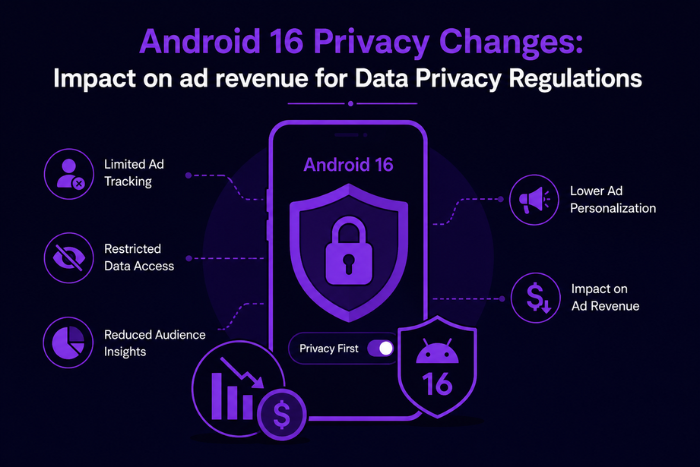
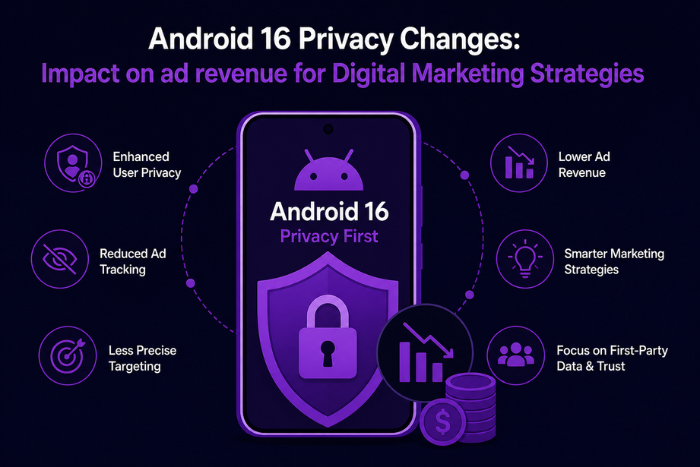
- Android 16 privacy changes reduce cross-app tracking and limit user-level data collection.
- Ad revenue is impacted due to lower targeting accuracy and reduced personalization signals.
- Contextual advertising becomes more important as behavioral tracking decreases.
- First-party data strategies are now essential for maintaining stable ad performance.
- Privacy-focused ad models improve user trust but require new monetization approaches.
- AI-driven ad optimization helps recover performance under privacy restrictions.
FAQ's
It may initially impact revenue due to reduced tracking, but new models like contextual ads can balance losses.
It limits cross-app tracking and restricts access to device identifiers.
Rewarded ads are less impacted since they rely on user interaction rather than tracking.
Gaming, free apps, and ad-supported mobile platforms are most affected.
It challenges traditional advertising but promotes more sustainable, privacy-friendly monetization models.