
Understand Google Play billing policy update April 2026 India, compliance changes, payment rules, developer impact, and monetization updates.
Introduction
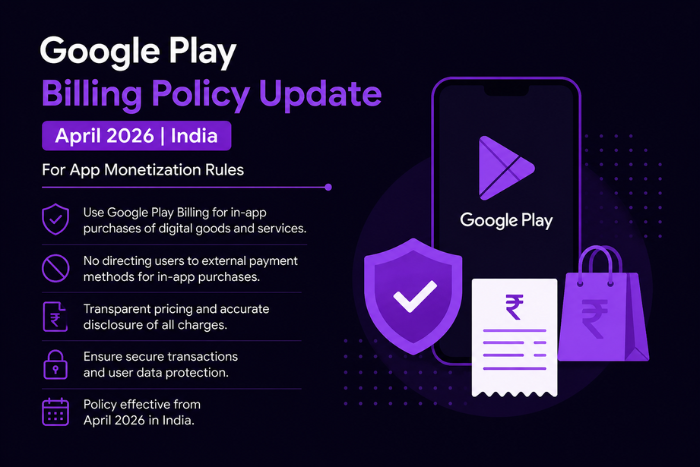
The Google Play billing policy update April 2026 India introduces major changes in how Android developers manage in-app purchases, subscriptions, and digital monetization. With India’s rapidly growing mobile economy and evolving regulatory environment, Google has updated its billing framework to improve transparency, flexibility, and compliance.
This update is especially important for developers, startups, and enterprises relying on app monetization. It affects how payments are processed, how alternative billing options are handled, and how revenue flows are managed within Android applications.
India is one of the largest mobile-first markets, and these changes aim to create a more balanced ecosystem for both users and developers. Businesses now need to rethink their monetization strategies and ensure compliance with updated billing rules.
Overall, this policy shift is not just a technical adjustment but a strategic transformation in mobile app revenue models, requiring careful implementation and planning.
Why Google Play Billing Policy Update April 2026 India is Important
This policy update plays a key role in shaping the Android monetization ecosystem in India.
- Regulatory Compliance in India
Aligns billing systems with updated digital payment guidelines. - Expanded Payment Flexibility
Developers can explore alternative billing methods. - Revenue Optimization
Multiple monetization options improve earning potential. - User Payment Convenience
More localized and accessible payment options. - Developer Freedom
Reduced dependency on a single billing system. - Market Competition Growth
Encourages innovation in payment ecosystems.
Types of Solutions (Google Play Billing Policy Update April 2026 India)
Google Play Billing System
- Standard system for in-app purchases
- Required for most digital goods
- Built-in subscription management
Alternative Billing Options
- Third-party payment gateway integration
- Regional payment systems in India
- Flexible checkout experiences
Hybrid Billing Model (Most Common)
- Combination of Google billing and external systems
- Flexible transaction-based usage
- Balanced compliance and revenue optimization
Subscription-Based Monetization
- Monthly and yearly subscription models
- Automated renewal systems
- Premium content access
Enterprise Billing Solutions
- API-driven billing architecture
- Large-scale payment orchestration
- Custom enterprise monetization systems
Key Features of Google Play Billing Policy Update April 2026 India
Expanded Payment Flexibility
- Multiple billing methods supported
- Integration with local payment systems
Improved Transparency
- Clear pricing and transaction visibility
- Better user understanding
Developer Control
- More flexibility in billing design
- Better pricing strategy control
Regulatory Alignment
- Designed for Indian compliance requirements
- Reduced legal risks
Subscription Enhancements
- Improved lifecycle management
- Better cancellation handling
Security Improvements
- Enhanced fraud prevention systems
- Secure transaction processing
Development Process
Implementing changes under the Google Play billing policy update April 2026 India requires structured execution:
- Policy Analysis & Compliance Review
Understand updated requirements and restrictions. - Monetization Strategy Planning
Choose between Google billing, hybrid, or alternative models. - Payment Integration Design
Architect multiple billing system support. - API Implementation
Integrate billing libraries and gateways. - Testing & Validation
Ensure secure and accurate payment flow. - Deployment & Monitoring
Release updates with performance tracking. - Optimization & Updates
Improve conversion and payment efficiency.
Technology Stack
Modern billing systems under this policy include:
Programming Languages: Kotlin, Java, Python
Billing Systems: Google Play Billing Library, Stripe, Razorpay
Backend: Node.js, Spring Boot
Databases: PostgreSQL, Firebase, MongoDB
Cloud Platforms: AWS, Google Cloud, Azure
Security Tools: OAuth, JWT, Encryption
Analytics: Google Analytics, Firebase Analytics
DevOps: Docker, Kubernetes, CI/CD
Cost Factors
The policy update impacts cost structures in several ways:
- Integration Costs
Multi-billing support increases development effort. - Transaction Fees
Vary based on payment providers. - Compliance Costs
Ongoing legal and policy adherence. - Maintenance Costs
Regular updates for billing systems. - Infrastructure Costs
Scalable backend requirements. - Development Expertise
Skilled engineers required for secure implementation.
Latest Trends
Key trends emerging from this billing update include:
- Multi-Billing Systems
Apps support multiple payment providers. - UPI & Local Payments Growth
Strong shift toward Indian payment methods. - Subscription Economy Expansion
Subscription models dominate app monetization. - Regulatory-Driven Changes
Billing systems evolving with policy updates. - Frictionless Checkout Experience
Faster in-app payment flows. - AI-Based Fraud Detection
Smarter payment security systems.
Why Choose Us
We help businesses adapt to the Google Play billing policy update April 2026 India with secure, scalable, and compliant solutions.
Expert Billing Integration
We implement Google and alternative billing systems efficiently.
Compliance-First Approach
Ensure full alignment with latest policy requirements.
Scalable Monetization Architecture
Future-ready billing systems designed for growth.
Secure Payment Infrastructure
Strong protection for all transactions.
Performance Optimization
Improve conversions and reduce payment failures.
End-to-End Support
From planning to deployment and optimization.
Want to upgrade your app monetization system for 2026?
Let’s build a secure and scalable billing solution for your business.
Contact us today for expert implementation support.
Key Points :
- Developers can now use hybrid billing models combining Google Play billing and third-party payment systems.
- The update improves monetization options for apps in India’s fast-growing digital market.
- Compliance with new billing rules is mandatory to avoid policy violations and app restrictions.
- Subscription-based apps gain better control over pricing, renewals, and user payments.
- usinesses need to redesign their monetization strategy to adapt to evolving Android billing ecosystems in 2026.
FAQ's
Yes, in many cases developers can use alternative billing systems alongside Google Play billing.
It gives more monetization flexibility but requires compliance with updated policies.
For many digital goods, yes, but alternative options may now be available.
Yes, billing systems may require updates to comply with new rules.
It may allow developers to optimize costs using alternative payment providers.
Yes, it is tailored for the Indian digital market and regulatory environment.