
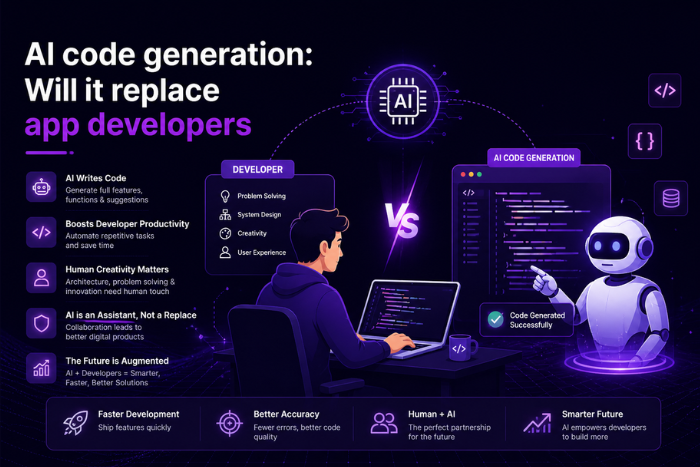
AI Code Generation: Will It Replace App Developers Explore AI code generation: Will it replace app developers, productivity trends, automation limits, and the future of software development. Introduction Artificial intelligence is rapidly transforming software development, with AI-powered code generation tools now capable of writing code, debugging, automating repetitive tasks, and accelerating product delivery. In 2026, businesses and developers are increasingly asking a critical question: AI code generation: Will it replace app developers? While AI tools like GitHub Copilot, ChatGPT, and enterprise-grade code assistants are significantly improving developer productivity, the reality is more complex than simple replacement. AI excels at automating repetitive programming tasks, scaffolding projects, generating boilerplate code, and supporting faster iteration. However, app development involves much more than writing code—it requires business logic, architecture, creativity, security, user experience, compliance, and strategic problem-solving. Understanding how AI code generation impacts app developers is essential for businesses planning future development strategies. Rather than full replacement, AI is reshaping developer roles into more strategic, collaborative, and innovation-driven positions. This guide explores the true impact of AI on app development, where automation excels, where human expertise remains essential, and how businesses can maximize AI-human collaboration for sustainable software success. Why AI Code Generation: Will It Replace App Developers is Important The rise of AI coding tools is fundamentally changing software development economics and workforce strategies. Increases Development SpeedAI accelerates coding workflows and reduces repetitive tasks. Reduces Initial Development CostsAutomation lowers resource requirements for simpler tasks. Improves Developer ProductivityHuman developers can focus on strategic work. Supports Faster MVP LaunchesAI shortens product validation cycles. Enhances Code QualityAI assists with debugging and optimization. Transforms Hiring StrategiesBusinesses must rethink development team structures. Future-Proofs Development OperationsAI integration is becoming essential for competitiveness. Types of Solutions for AI Code Generation: Will It Replace App Developers AI coding adoption varies based on project complexity and organizational goals. AI-Assisted App DevelopmentHuman developers collaborate with AI tools for productivity gains. Automated MVP DevelopmentFaster startup validation with AI-generated prototypes. Low-Code & No-Code IntegrationCombining AI with simplified development frameworks. Enterprise Software AutomationAI support for internal systems and process optimization. Code Refactoring & Maintenance AutomationLegacy modernization and debugging. Test Automation SolutionsAI-generated QA scripts and testing workflows. DevOps & Deployment AutomationStreamlining CI/CD processes. Custom Human-Led DevelopmentComplex projects still requiring expert engineering. Get Free Quotation Now..!! Key Features of AI Code Generation: Will It Replace App Developers Modern AI development ecosystems provide significant capabilities. Automated Code SuggestionsReal-time code generation and completion. Bug Detection & DebuggingFaster issue identification. Boilerplate AutomationReducing repetitive engineering tasks. API Integration AssistanceSimplifying development workflows. Documentation GenerationImproving project efficiency. Test Script AutomationEnhanced QA speed. Rapid PrototypingFaster concept validation. Developer Workflow OptimizationIncreased overall engineering efficiency. Development Process Successful AI integration into software development requires strategic implementation. Project Complexity AssessmentDetermining where AI can provide value. Tool SelectionChoosing appropriate AI coding platforms. Human-AI Workflow DesignDefining collaboration between developers and automation. Architecture PlanningEnsuring scalable, secure system design. Development & ValidationAI-supported coding with human oversight. Security & Compliance AuditsVerifying generated code quality. Continuous OptimizationRefining AI utilization strategies. Technology Stack for AI Code Generation: Will It Replace App Developers AI-powered development relies on advanced tools and ecosystems: AI Coding Tools: GitHub Copilot, ChatGPT, Amazon CodeWhispererProgramming Languages: Python, JavaScript, Java, Swift, KotlinFrameworks: React, Flutter, Node.js, AngularLow-Code Platforms: Bubble, OutSystems, MendixCloud Platforms: AWS, Azure, Google CloudDevOps Tools: Docker, Jenkins, GitHub ActionsTesting Tools: Selenium, Cypress, PostmanSecurity Tools: Snyk, SonarQube, Veracode Cost Factors for AI Code Generation: Will It Replace App Developers AI adoption introduces both savings and new operational considerations. AI Tool LicensingSubscription fees for enterprise-grade platforms. Human Oversight CostsSkilled developers remain essential. Security Review RequirementsGenerated code may require deeper audits. Training & Adoption CostsTeam onboarding for AI workflows. Complexity of ApplicationAdvanced systems still require senior engineers. Compliance DemandsIndustry regulations may increase validation expenses. Maintenance & RefactoringLong-term code quality management. Latest Trends The future of software engineering is increasingly AI-augmented. Agentic Development ToolsAI systems handling larger development tasks. Prompt-Driven DevelopmentNatural language software creation. AI-Powered DevOpsInfrastructure automation expansion. Low-Code + AI ConvergenceAccelerating digital product creation. Security-Focused AI CodingImproved code validation. Human-AI Pair ProgrammingCollaborative engineering models. Enterprise AI GovernanceCompliance frameworks for AI-generated software. Specialized AI Developer RolesNew engineering career evolution. Why Choose Us for AI Code Generation: Will It Replace App Developers Successfully leveraging AI in software development requires both technical expertise and strategic leadership. AI + Human Development Expertise We combine automation efficiency with senior engineering excellence. Strategic Development Planning Helping businesses optimize AI adoption without compromising quality. Secure, Scalable Software Architecture Ensuring enterprise-grade performance. Cost-Optimized Delivery Balancing automation with human innovation. Future-Ready Technology Consulting Preparing organizations for evolving development models. Transparent Process Clear milestones, governance, and measurable outcomes. Innovation Leadership Helping businesses stay ahead in AI-powered software development. We empower businesses to use AI as a competitive advantage while preserving the strategic value of expert app developers. Ready to future-proof your software development strategy with AI?Let’s build smarter, faster, and more scalable applications with AI-powered development.Contact us today for expert AI development consulting. Get Free Quotation Now..!! Key Points : AI code generation: Will it replace app developers is reshaping software development in 2026. AI accelerates coding, debugging, testing, and rapid app prototyping. Human developers remain essential for strategy, architecture, security, and UX. AI is transforming developers into higher-value problem solvers and innovation leaders. Startups can use AI to reduce development costs and speed up MVP launches. Human-AI collaboration is becoming the dominant software engineering model. FAQ’s Will AI completely replace app developers? No, AI is more likely to augment developers rather than fully replace them. What tasks can AI code generation automate? Boilerplate code, debugging, testing, documentation, and rapid prototyping. Where do human app developers remain essential? Architecture, strategic planning, security, UX design, and complex problem-solving. Can startups rely entirely on AI for app development? AI can accelerate MVPs, but human oversight remains critical. Does AI reduce software development costs? Yes, particularly for repetitive tasks and early-stage projects. How should businesses prepare for AI-driven development? By integrating AI tools while upskilling teams for strategic collaboration. Get Free Quotation Now..!!

App Development for Vision Pro & Meta Quest 4 2026
App Development for Vision Pro & Meta Quest 4 2026 App development for Vision Pro & Meta Quest 4 2026 covers XR apps, spatial UX, immersive performance, and enterprise innovation. Introduction Spatial computing is rapidly redefining the future of digital experiences, and 2026 marks a major turning point for businesses investing in immersive technologies. With Apple Vision Pro and Meta Quest 4 leading the premium mixed reality (MR), virtual reality (VR), and augmented reality (AR) markets, organizations are increasingly exploring next-generation application development to stay ahead of evolving consumer and enterprise demands. Understanding App development for Vision Pro & Meta Quest 4 2026 is essential for startups, enterprises, educators, healthcare providers, retailers, and entertainment brands looking to capitalize on the spatial computing revolution. These platforms offer opportunities far beyond traditional mobile applications, enabling 3D user interfaces, gesture controls, spatial collaboration, immersive commerce, enterprise training, and real-time simulations. Developing for Vision Pro and Meta Quest 4 requires specialized technical expertise in XR frameworks, optimized 3D assets, platform-specific SDKs, and user-centric immersive design. This guide explores how businesses can leverage cutting-edge XR development to build scalable, future-ready applications for both ecosystems while maximizing innovation, performance, and ROI. Why App Development for Vision Pro & Meta Quest 4 2026 is Important Spatial computing platforms are transforming digital interactions across industries. Expands Market OpportunitiesAccess premium XR consumer and enterprise ecosystems. Enhances User EngagementImmersive experiences improve retention and interaction. Supports Enterprise InnovationEnables training, collaboration, and operational efficiency. Future-Proofs Digital ProductsPositions businesses for next-generation technology shifts. Unlocks New Revenue ModelsSpatial commerce, immersive subscriptions, and virtual services. Improves Brand DifferentiationEarly adoption builds competitive advantage. Enables Advanced Human-Computer InteractionEye tracking, hand gestures, and spatial controls. Types of Solutions for App Development for Vision Pro & Meta Quest 4 2026 Different industries require specialized XR app development solutions. Enterprise Training ApplicationsInteractive simulations and workforce education. Healthcare & Medical XR AppsSurgical visualization, patient care, and therapy. Retail & eCommerce Spatial AppsVirtual product visualization and immersive shopping. Gaming & Entertainment PlatformsHigh-performance VR and MR experiences. Collaborative Productivity ToolsVirtual meetings and remote teamwork solutions. Education & eLearning PlatformsImmersive educational environments. Real Estate & Architecture Visualization3D property walkthroughs and design simulations. Industrial & Manufacturing SolutionsWorkflow optimization and operational support. Get Free Quotation Now..!! Key Features of App Development for Vision Pro & Meta Quest 4 2026 Modern XR applications require advanced platform-specific capabilities. Spatial User Interfaces3D environments optimized for immersion. Hand, Eye & Gesture TrackingNatural interaction models. High-Fidelity 3D RenderingRealistic visual experiences. Cross-Platform XR CompatibilitySupport for VisionOS, OpenXR, and Meta ecosystems. Real-Time CollaborationMulti-user immersive environments. Performance OptimizationLow-latency, high-frame-rate execution. Cloud & Edge IntegrationScalable backend infrastructure. Security & Privacy ComplianceEnterprise-grade data protection. Development Process Successful XR app development requires structured planning and technical precision. Business Goal & Use Case AnalysisIdentifying strategic XR opportunities. Platform Selection StrategyVision Pro, Meta Quest 4, or cross-platform. UX/UI Spatial DesignCreating immersive user journeys. 3D Asset Development & OptimizationBuilding efficient volumetric experiences. Platform-Specific DevelopmentUtilizing VisionOS, Unity, Unreal, or OpenXR. Testing & Performance BenchmarkingEnsuring hardware efficiency and comfort. Deployment & Continuous SupportLaunching and evolving applications. Technology Stack for App Development for Vision Pro & Meta Quest 4 2026 Advanced XR development relies on powerful frameworks and tools: Vision Pro Development: SwiftUI, RealityKit, ARKit, XcodeMeta Quest 4 Development: Unity, Unreal Engine 5, OpenXR, Meta Presence PlatformCross-Platform Engines: Unity PolySpatial, Unreal Engine, WebXR3D Asset Tools: Blender, Maya, Reality Composer ProProgramming Languages: Swift, C#, C++, JavaScriptCloud Platforms: AWS, Azure, Google CloudDevOps Tools: Docker, Jenkins, GitHub ActionsAnalytics & Monitoring: Firebase, Datadog, AppDynamics Cost Factors for App Development for Vision Pro & Meta Quest 4 2026 Several variables impact XR app development budgets. Platform ComplexityNative VisionOS and Meta development vary in cost. 3D Asset ProductionAdvanced immersive content increases investment. Hardware OptimizationPerformance tuning for XR devices. Cross-Platform RequirementsBroader compatibility increases scope. Enterprise Security NeedsCompliance-heavy industries require larger budgets. Real-Time Collaboration FeaturesMulti-user systems increase backend complexity. Ongoing MaintenanceContinuous updates and compatibility support. Latest Trends The XR landscape is rapidly evolving with major innovations. Spatial CommerceImmersive shopping experiences. Enterprise Metaverse SolutionsCorporate collaboration and training ecosystems. AI-Powered XR ApplicationsSmarter adaptive environments. Mixed Reality Productivity ToolsSpatial workspaces. Cross-Platform XR StandardizationOpenXR adoption growth. Volumetric Video IntegrationRicher immersive media. Digital Twin ApplicationsIndustrial and enterprise simulation growth. Privacy-First XR DevelopmentAdvanced biometric and user protection. Why Choose Us for App Development for Vision Pro & Meta Quest 4 2026 Building successful XR applications requires deep technical expertise and strategic execution. Specialized XR Development Expertise Comprehensive experience across Vision Pro, Meta Quest, and OpenXR ecosystems. Enterprise-Grade Spatial Solutions Scalable immersive platforms for business growth. Performance-Driven Development Optimized experiences for speed, comfort, and retention. Advanced 3D & Spatial UX Design Immersive interfaces designed for real-world usability. Cross-Platform Capability Building apps that maximize ecosystem reach. Transparent Development Process Clear timelines, measurable KPIs, and strategic collaboration. Future-Ready Innovation Solutions built for the next era of spatial computing. We help businesses transform ambitious XR ideas into scalable, immersive digital products that lead in the spatial computing era. Ready to build immersive XR apps for Vision Pro and Meta Quest 4?Let’s create cutting-edge spatial experiences tailored to your business goals.Contact us today for expert XR app development solutions. Get Free Quotation Now..!! Key Points : Vision Pro and Meta Quest 4 enable immersive AR, VR, and mixed reality experiences. Spatial UX, gesture controls, and 3D interfaces are critical for XR app success. Cross-platform XR development expands reach across premium immersive ecosystems. Enterprise, healthcare, retail, and education sectors benefit from advanced XR applications. Unity, Unreal Engine, VisionOS, and OpenXR power next-generation spatial app development. FAQ’s What industries benefit most from Vision Pro and Meta Quest 4 app development? Healthcare, education, retail, gaming, enterprise collaboration, and industrial sectors. Which platform is better for enterprise XR: Vision Pro or Meta Quest 4? Vision Pro often excels in premium enterprise productivity, while Meta Quest 4 offers broader cost accessibility. How expensive is XR app development in 2026? Costs vary significantly depending on complexity, 3D assets, and enterprise requirements. Is cross-platform XR development possible? Yes, frameworks like Unity and OpenXR support broader deployment. What are

No-code vs Low-code vs Custom Apps: When to Use What
No-code vs Low-code vs Custom Apps: When to Use What Discover No-code vs low-code vs custom apps: When to use what for speed, scalability, cost, and business growth in 2026. Introduction As businesses race toward digital transformation in 2026, choosing the right software development approach has become a critical strategic decision. Organizations now have more options than ever, ranging from no-code platforms and low-code frameworks to fully custom-built applications. Each model offers unique advantages depending on business goals, budget, scalability, and technical complexity. Understanding No-code vs low-code vs custom apps: When to use what is essential for startups, enterprises, and decision-makers looking to optimize development speed while balancing long-term growth. No-code solutions offer rapid deployment for simple applications, low-code platforms provide faster customization with moderate flexibility, and custom development delivers maximum scalability, security, and control for complex systems. Selecting the right approach can dramatically impact operational efficiency, innovation, and ROI. This guide explores the differences, ideal use cases, cost implications, and strategic considerations to help businesses determine the best path for their digital products. Why No-code vs Low-code vs Custom Apps: When to Use What is Important Choosing the correct development model influences business agility, technical scalability, and long-term competitiveness. Faster Digital TransformationBusinesses can deploy solutions aligned with urgency and resources. Optimized Budget AllocationPrevents overinvestment or underbuilding. Scalable GrowthEnsures technology supports future expansion. Improved Operational EfficiencyRight-fit platforms streamline workflows. Risk ReductionAvoids costly migration or redevelopment. Enhanced InnovationSupports strategic experimentation and rapid iteration. Security & Compliance AlignmentEnsures proper governance for industry-specific needs. Types of Solutions for No-code vs Low-code vs Custom Apps: When to Use What Different development paths serve different business needs and technical requirements. No-Code App DevelopmentBest for internal tools, MVPs, landing pages, and workflow automation. Low-Code DevelopmentIdeal for CRM systems, business process automation, moderate SaaS products, and enterprise dashboards. Custom App DevelopmentSuitable for complex enterprise systems, fintech platforms, healthcare apps, marketplaces, and scalable SaaS ecosystems. Hybrid Development StrategiesCombining low-code for operational tools and custom development for core systems. Workflow Automation SolutionsRapid process digitization without deep technical expertise. Customer Portal PlatformsFlexible development based on scalability requirements. AI-Integrated ApplicationsOften requiring low-code or custom infrastructure. Industry-Specific Compliance PlatformsCustom solutions for regulated sectors. Get Free Quotation Now..!! Key Features of No-code vs Low-code vs Custom Apps: When to Use What Modern software development models offer diverse capabilities: Development SpeedNo-code offers fastest deployment. Customization FlexibilityCustom apps provide unlimited control. ScalabilityCustom development supports large-scale growth. Cost EfficiencyNo-code and low-code reduce initial expenses. Integration CapabilitiesLow-code and custom apps support broader API ecosystems. Security ControlsCustom apps offer advanced compliance and governance. Maintenance RequirementsPlatform dependency impacts support complexity. User AccessibilityNo-code empowers non-technical teams. Development Process Choosing and implementing the right model requires strategic planning: Business Requirement AnalysisDefining technical needs and scalability goals. Platform Feasibility AssessmentEvaluating no-code, low-code, or custom fit. Budget & Timeline PlanningAligning investment with business priorities. UI/UX DesignCreating effective user experiences. Development & IntegrationBuilding and connecting systems. Testing & Security ValidationEnsuring reliability and compliance. Deployment & Continuous OptimizationScaling based on business evolution. Technology Stack for No-code vs Low-code vs Custom Apps: When to Use What Different approaches leverage distinct ecosystems: No-Code Platforms: Bubble, Webflow, Adalo, ZapierLow-Code Platforms: OutSystems, Mendix, Microsoft Power Apps, AppianCustom Development Languages: Python, JavaScript, Java, Swift, KotlinFrameworks: React, Angular, Node.js, FlutterCloud Platforms: AWS, Azure, Google CloudDatabases: PostgreSQL, MongoDB, FirebaseDevOps Tools: Docker, Kubernetes, JenkinsAI Integration: OpenAI APIs, TensorFlow, PyTorch Cost Factors for No-code vs Low-code vs Custom Apps: When to Use What Each model presents unique financial implications. Initial Development CostsNo-code is lowest; custom is highest. Subscription or Licensing FeesNo-code and low-code often involve recurring platform costs. Scalability ExpensesGrowth may increase platform or redevelopment costs. Customization ComplexityAdvanced features drive custom investment. Maintenance RequirementsCustom apps may require larger ongoing budgets. Security Compliance CostsRegulated industries may require custom solutions. Migration CostsSwitching from no-code to custom later can be expensive. Latest Trends The development landscape is evolving rapidly. AI-Assisted No-Code DevelopmentFaster automation and prototyping. Enterprise Low-Code ExpansionIncreased adoption in corporate ecosystems. Composable Custom ArchitectureModular enterprise applications. Hybrid Development ModelsStrategic combination of development approaches. Vertical SaaS PlatformsIndustry-specific app ecosystems. Security-First DevelopmentCompliance-driven architecture. API Economy GrowthEnhanced integrations across all platforms. Citizen DevelopmentNon-technical users building business tools. Why Choose Us for No-code vs Low-code vs Custom Apps: When to Use What Choosing the right development strategy requires technical expertise and business foresight. Strategic Technology Consulting We help businesses identify the ideal development path. Full-Spectrum Development Expertise Experience across no-code, low-code, and custom ecosystems. Cost-Optimized Solutions Maximizing ROI while minimizing unnecessary expenses. Scalable Product Development Building systems designed for long-term growth. Security & Compliance Focus Protecting your business and customers. Transparent Process Clear strategy, milestones, and measurable results. Future-Ready Innovation Solutions designed to evolve with market changes. We empower businesses to choose and implement the most effective development model for sustainable success. Ready to choose the right app development strategy for your business?Let’s build scalable, efficient digital solutions tailored to your growth goals.Contact us today for expert no-code, low-code, or custom app consulting. Get Free Quotation Now..!! Key Points : No-code platforms offer rapid deployment for simple apps and MVPs. Low-code solutions balance speed, flexibility, and moderate scalability. Custom apps provide maximum security, performance, and enterprise-grade scalability. Development model selection directly impacts cost, ROI, and long-term growth. Hybrid development strategies are becoming increasingly popular in 2026. Strategic platform decisions reduce future migration risks and improve digital transformation success. FAQ’s What is the difference between no-code, low-code, and custom apps? No-code requires no programming, low-code involves minimal coding, and custom apps are fully built from scratch. When should businesses choose no-code solutions? For simple tools, MVPs, and rapid deployment with limited complexity. Is low-code suitable for enterprise applications? Yes, many low-code platforms support enterprise automation and moderate scalability. Are no-code platforms cheaper long term? Initially yes, but scaling limitations may increase future costs. Can businesses migrate from no-code to custom later? Yes, but migration can be costly depending on system complexity. Which option is best for startups? No-code or low-code often provides faster validation and lower costs. Get Free Quotation
App Maintenance Cost Per Month: India 2026 Rates
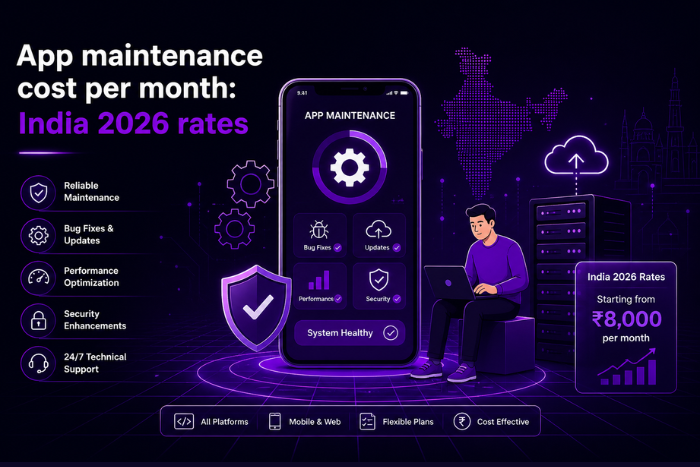
App Maintenance Cost Per Month: India 2026 Rates App maintenance cost per month: India 2026 rates covers pricing, support plans, and cost-saving strategies for mobile apps. Introduction Launching a mobile app is only the beginning of its lifecycle. To remain secure, competitive, and user-friendly, every application requires ongoing maintenance. In 2026, businesses across startups, SMEs, and enterprises are increasingly focused on understanding app maintenance cost per month: India 2026 rates to effectively budget for post-launch operations. India continues to be one of the most cost-effective global destinations for app maintenance services, offering skilled developers, scalable teams, and competitive pricing. Monthly app maintenance costs vary depending on app complexity, platform requirements, cloud hosting, security compliance, bug fixes, feature upgrades, and customer support. Whether you operate an eCommerce app, fintech platform, healthcare solution, or enterprise system, understanding maintenance pricing is critical for maximizing ROI and ensuring long-term app performance. This guide explores the real monthly maintenance rates in India, key cost drivers, modern maintenance solutions, and best practices to optimize your investment while keeping your app running smoothly in 2026 and beyond. Why App Maintenance Cost Per Month: India 2026 Rates is Important Ongoing maintenance directly impacts app stability, customer satisfaction, and business continuity. Ensures App SecurityRegular updates protect against vulnerabilities and cyber threats. Improves PerformanceMaintenance keeps apps optimized and responsive. Reduces DowntimeProactive support minimizes disruptions. Supports OS CompatibilityFrequent updates align apps with iOS and Android releases. Enhances User ExperienceContinuous improvements boost retention. Controls Long-Term CostsPlanned maintenance prevents expensive emergency fixes. Supports Business ScalabilityInfrastructure evolves alongside growth. Types of Solutions for App Maintenance Cost Per Month: India 2026 Rates Different businesses require varying maintenance models based on app size and operational needs. Basic Maintenance PlansBug fixes, minor updates, and security patches. Standard Monthly SupportPerformance optimization, compatibility updates, and regular monitoring. Enterprise Maintenance SolutionsFull-scale DevOps, analytics, compliance, and scalability management. Cloud Infrastructure ManagementServer monitoring, hosting optimization, and database maintenance. Security & Compliance ServicesData protection, audits, and regulatory adherence. Feature Enhancement PackagesOngoing functionality expansion and UI/UX improvements. Emergency Maintenance ServicesImmediate issue resolution for critical disruptions. Dedicated Development TeamsContinuous product evolution with assigned technical experts. Get Free Quotation Now..!! Key Features of App Maintenance Cost Per Month: India 2026 Rates Modern maintenance services provide businesses with essential operational support. 24/7 MonitoringReal-time issue detection and resolution. Bug Fixing & TroubleshootingContinuous stability improvements. Performance OptimizationFaster load times and smoother functionality. Cloud Resource ManagementCost-effective hosting and server efficiency. Security UpgradesRegular patches and penetration testing. Analytics & ReportingUser behavior insights for strategic updates. Scalability SupportInfrastructure growth for increasing demand. Platform Compatibility UpdatesSeamless support for OS and device changes. Development Process Effective maintenance follows a structured lifecycle management approach. Initial App AuditReviewing codebase, infrastructure, and technical debt. Maintenance Strategy PlanningDefining support scope and monthly goals. Bug Monitoring & Security ReviewIdentifying vulnerabilities and operational issues. Performance TuningOptimizing speed, UX, and server efficiency. Feature Update PlanningImplementing user-driven improvements. Testing & Quality AssuranceEnsuring updates do not disrupt performance. Continuous MonitoringMaintaining operational excellence. Technology Stack for App Maintenance Cost Per Month: India 2026 Rates Modern app maintenance relies on advanced tools and technologies: Mobile Platforms: iOS, Android, Flutter, React NativeProgramming Languages: Swift, Kotlin, Java, JavaScript, DartCloud Platforms: AWS, Google Cloud, Microsoft AzureMonitoring Tools: New Relic, Datadog, Firebase CrashlyticsCI/CD Tools: Jenkins, GitHub Actions, BitriseSecurity Tools: Snyk, Cloudflare, AppSweepDatabase Management: MySQL, PostgreSQL, MongoDBDevOps Infrastructure: Docker, Kubernetes, Terraform Cost Factors for App Maintenance Cost Per Month: India 2026 Rates Several variables determine monthly maintenance pricing in India. App ComplexityBasic apps cost less than enterprise-grade systems. Platform TypeNative apps often require higher maintenance budgets. Hosting & Cloud UsageInfrastructure costs vary based on traffic. Security RequirementsCompliance-heavy industries incur higher expenses. Feature ExpansionFrequent updates increase monthly costs. Third-Party IntegrationsAPIs and payment systems require monitoring. Development Team StructureFreelancers, agencies, or dedicated teams affect pricing. Support Availability24/7 support increases operational investment. Latest Trends App maintenance strategies are evolving with technological advancements. AI-Powered Predictive MaintenanceAutomated issue detection and resolution. DevOps AutomationStreamlining updates and deployments. Cloud Cost OptimizationSmarter infrastructure scaling. Cross-Platform Maintenance GrowthUnified support reducing operational expenses. Cybersecurity PrioritizationIncreased investment in app protection. Real-Time Monitoring ExpansionAdvanced analytics for proactive support. Low-Code Maintenance ToolsFaster deployment of updates. Sustainability in Cloud OperationsEnergy-efficient infrastructure strategies. Why Choose Us for App Maintenance Cost Per Month: India 2026 Rates Managing app maintenance effectively requires expertise, reliability, and cost efficiency. Affordable India-Based Expertise Competitive monthly pricing without compromising quality. Full Lifecycle Support From bug fixes to enterprise scalability. Proactive Security Management Protecting apps from modern threats. Performance-Focused Maintenance Ensuring maximum uptime and speed. Transparent Pricing Models Clear monthly budgeting with no hidden costs. Scalable Support Plans Solutions designed for startups through enterprises. Advanced Monitoring & Automation Leveraging modern DevOps and AI technologies. We help businesses maximize app performance while minimizing maintenance costs through efficient, scalable, and future-ready support services. Ready to optimize your app maintenance budget in India for 2026?Let’s build a cost-effective maintenance strategy that protects your app and supports growth.Contact us today for customized monthly app maintenance solutions. Get Free Quotation Now..!! Key Points : India offers cost-effective mobile app maintenance with skilled technical expertise. Monthly maintenance costs vary based on app complexity, platform, and infrastructure needs. Regular updates improve app security, performance, and user retention. Cross-platform apps often reduce long-term maintenance expenses. AI-powered maintenance and DevOps automation are lowering operational costs in 2026. Scalable support plans help startups and enterprises manage app growth efficiently. FAQ’s What is the average app maintenance cost per month in India in 2026? Costs typically range from ₹20,000 to ₹2,00,000+ per month depending on app complexity and service scope. Why is app maintenance necessary after launch? It ensures security, compatibility, performance optimization, and user satisfaction. Are cross-platform apps cheaper to maintain? Generally, yes, due to shared codebases and simplified updates. What industries require higher app maintenance costs? Fintech, healthcare, eCommerce, and enterprise applications often require larger budgets. Does cloud hosting impact monthly maintenance expenses? Yes, hosting traffic and infrastructure significantly affect overall costs. Should startups outsource app maintenance to India? India offers cost-effective, skilled resources, making it a strong outsourcing destination.

Cross-platform vs Native Apps: 2026 Performance Data
Cross-platform vs Native Apps: 2026 Performance Data Explore Cross-platform vs Native apps: 2026 performance data, costs, scalability, speed, and development strategies for modern mobile success. Introduction As mobile app development evolves rapidly, businesses must make strategic decisions about the architecture powering their applications. One of the most critical choices is between native and cross-platform development. In 2026, performance benchmarks, development efficiency, scalability, and user experience have all become more advanced, making this decision more nuanced than ever. Understanding Cross-platform vs Native apps: 2026 performance data is essential for startups, enterprises, and product owners seeking the best return on investment. Native apps offer unmatched performance, deep hardware integration, and superior optimization, while cross-platform solutions provide faster development cycles, broader market reach, and lower initial costs. With frameworks like Flutter and React Native significantly improving, the performance gap is narrowing, but not disappearing entirely. Businesses must evaluate performance data, long-term maintenance, budget considerations, and user expectations before choosing the right path. This guide provides comprehensive insights into the latest performance trends, strategic considerations, and future-ready development solutions. Why Cross-platform vs Native Apps: 2026 Performance Data is Important Choosing the right app development model directly impacts product performance, scalability, operational costs, and customer satisfaction. Performance OptimizationNative apps deliver superior speed, responsiveness, and resource efficiency. Cost EfficiencyCross-platform solutions reduce initial development costs. Faster Time-to-MarketCross-platform frameworks accelerate deployment. User Experience QualityNative development offers smoother, more platform-specific interactions. Scalability & Future GrowthStrategic architecture decisions improve long-term adaptability. Market CompetitivenessProper platform choice supports sustainable product success. Maintenance EfficiencyDevelopment architecture affects ongoing support complexity. Types of Solutions for Cross-platform vs Native Apps: 2026 Performance Data Different app types require different development approaches depending on complexity, performance demands, and business goals. Native iOS App DevelopmentHigh-performance applications optimized for Apple devices. Native Android App DevelopmentFully customized Android applications with maximum hardware access. Flutter Cross-Platform DevelopmentUnified codebase with near-native performance. React Native DevelopmentFlexible development with strong community support. Progressive Web Apps (PWAs)Lightweight alternatives for broad accessibility. Hybrid Enterprise ApplicationsCost-effective solutions for business operations. Gaming & AR/VR AppsNative solutions for resource-intensive applications. MVP & Startup AppsCross-platform development for faster validation. Get Free Quotation Now..!! Key Features of Cross-platform vs Native Apps: 2026 Performance Data Modern app development requires evaluating several essential performance and business metrics. Processing SpeedNative apps outperform in computationally intensive tasks. UI/UX FluidityNative delivers superior animations and responsiveness. Hardware IntegrationNative offers full device feature access. Development SpeedCross-platform significantly shortens build time. Code ReusabilityCross-platform enables shared development resources. Maintenance CostsUnified codebases simplify updates. Security ComplianceNative apps often offer stronger security customization. Scalable ArchitectureBoth approaches can scale with proper planning. Development Process A structured development strategy ensures businesses choose the most suitable architecture. Business Goal AnalysisDefining performance, budget, and timeline priorities. Market & User ResearchUnderstanding audience expectations and platform preferences. Technical Feasibility AssessmentEvaluating app complexity and required hardware integration. Framework or Native Stack SelectionChoosing the optimal development path. UI/UX Design & PrototypingBuilding platform-specific or universal experiences. Development & TestingEnsuring performance benchmarks are met. Deployment & OptimizationLaunching with continuous updates and performance monitoring. Technology Stack for Cross-platform vs Native Apps: 2026 Performance Data Modern mobile solutions leverage advanced development ecosystems: Native iOS: Swift, Objective-C, XcodeNative Android: Kotlin, Java, Android StudioCross-Platform Frameworks: Flutter, React Native, XamarinBackend Technologies: Node.js, Python, FirebaseCloud Platforms: AWS, Azure, Google CloudDatabases: PostgreSQL, MongoDB, Firebase FirestoreDevOps Tools: Docker, Kubernetes, JenkinsAnalytics & Monitoring: Firebase Analytics, New Relic, AppDynamics Cost Factors for Cross-platform vs Native Apps: 2026 Performance Data Development architecture significantly impacts project budgeting. Initial Development CostNative apps generally require higher upfront investment. Framework Licensing & DependenciesCross-platform tools may introduce framework reliance. Maintenance ComplexityNative apps may require separate update pipelines. Testing RequirementsMulti-platform testing impacts QA costs. Scalability InfrastructureAdvanced apps may demand greater backend resources. Performance OptimizationHigh-end functionality may increase native costs. Developer ExpertiseSpecialized native developers often command higher rates. Latest Trends The mobile ecosystem is rapidly evolving with new trends shaping app development choices. Flutter Performance ImprovementsClosing the native performance gap. AI-Powered App ExperiencesAdvanced AI features influencing architecture needs. Foldable Device OptimizationNew hardware categories requiring adaptive frameworks. Edge Computing IntegrationOn-device processing demands higher performance. Low-Code Development ExpansionAccelerating app deployment cycles. 5G-Enhanced Mobile PerformanceDriving richer app experiences. Security-First DevelopmentIncreasing focus on compliance and data privacy. Composable App ArchitectureModular design improving scalability. Why Choose Us for Cross-platform vs Native Apps: 2026 Performance Data Selecting the right development strategy requires technical expertise, business insight, and future-focused planning. Strategic Architecture Consulting We help businesses choose the best platform based on measurable performance data. Native & Cross-Platform Expertise Deep experience across Flutter, React Native, iOS, and Android ecosystems. Cost-Optimized Solutions We balance speed, quality, and scalability to maximize ROI. Performance-Driven Development Our solutions prioritize user experience, responsiveness, and reliability. Scalable Growth Planning We build apps designed for future expansion and technological evolution. Transparent Development Process Clear milestones, communication, and measurable outcomes. Long-Term Support Ongoing optimization, maintenance, and architecture scaling. We empower businesses to build high-performance mobile apps that align with evolving 2026 market demands. Ready to choose the right mobile app architecture for your business?Let’s build scalable, high-performance apps backed by real 2026 performance data.Contact us today for expert mobile app strategy and development. Get Free Quotation Now..!! Key Points : Cross-platform vs Native apps: 2026 performance data helps businesses choose the right development strategy. Native apps deliver superior speed, security, and hardware integration. Cross-platform frameworks reduce development costs and accelerate time-to-market. Flutter and React Native continue closing the performance gap in 2026. AI, edge computing, and foldable devices are reshaping mobile development priorities. Startups often benefit from cross-platform solutions for faster market validation. FAQ’s Which performs better in 2026: native or cross-platform apps? Native apps generally offer better performance, but modern cross-platform frameworks have significantly narrowed the gap. Is Flutter close to native performance in 2026? Yes, Flutter offers near-native performance for many app categories, especially standard business apps. Are native apps more expensive than cross-platform apps? Typically, yes, due to separate codebases and platform-specific development. Is cross-platform better for startups? Often yes, because it reduces development time and initial costs. Which option offers better

App Subscription Fatigue: New Monetization Models 2026
App Subscription Fatigue: New Monetization Models 2026 App subscription fatigue: New monetization models 2026 explores flexible pricing, hybrid revenue, and smarter app growth strategies. Introduction As consumers grow increasingly overwhelmed by recurring subscription costs, app subscription fatigue has become one of the biggest challenges facing developers, SaaS companies, and mobile businesses. In 2026, users are demanding more flexibility, better value, and personalized pricing structures rather than traditional monthly payment models. This shift is driving the evolution of innovative monetization strategies that balance profitability with user retention. Understanding app subscription fatigue: new monetization models 2026 is critical for businesses looking to remain competitive in a crowded digital economy. From hybrid monetization and usage-based pricing to ad-supported premium experiences and AI-driven personalization, modern monetization models are reshaping how apps generate revenue. Businesses that proactively adapt to these trends can reduce churn, improve customer satisfaction, and unlock sustainable growth. This service helps organizations design, implement, and optimize future-ready monetization strategies tailored to changing consumer expectations and emerging market opportunities. Why App Subscription Fatigue: New Monetization Models 2026 is Important The rise of subscription fatigue directly impacts customer acquisition, retention, and overall app profitability. Businesses must evolve beyond traditional subscription models to remain successful. Reduces Customer ChurnFlexible pricing options improve retention and long-term engagement. Enhances User ExperiencePersonalized monetization models create better value perception. Boosts Revenue DiversificationMultiple revenue streams reduce dependence on subscriptions alone. Improves Competitive PositioningInnovative pricing strategies help apps stand out. Supports Global Market AdaptationLocalized monetization meets regional consumer preferences. Increases Customer Lifetime ValueSmarter pricing encourages sustained user relationships. Types of Solutions for App Subscription Fatigue: New Monetization Models 2026 Businesses can implement various monetization solutions to combat subscription fatigue effectively: Hybrid Monetization ModelsCombining subscriptions, in-app purchases, ads, and one-time payments. Usage-Based PricingCharging users based on actual service consumption. Freemium with Premium UpgradesOffering free core features with optional advanced functionality. Ad-Supported Premium AccessLower subscription costs through integrated advertising. Web-to-App Billing SystemsReducing app store commission fees while improving margins. AI-Powered Personalized PricingDynamic pricing tailored to user behavior and preferences. Lifetime Access or Founder PlansOne-time payment models for long-term customer acquisition. Localized Pricing StrategiesRegion-specific pricing to maximize accessibility and revenue. Get Free Quotation Now..!! Key Features of App Subscription Fatigue: New Monetization Models 2026 Modern monetization frameworks introduce essential features for sustainable app growth: Flexible Payment StructuresMonthly, annual, usage-based, and hybrid options. AI-Driven Revenue OptimizationPersonalized offers and predictive retention strategies. Customer SegmentationTailored pricing for diverse user groups. Integrated Payment SystemsSeamless web and mobile billing integration. Churn Prediction AnalyticsIdentifying at-risk subscribers before cancellation. Regulatory ComplianceSupporting global billing standards and app store policies. Scalable Monetization ArchitectureEasily adaptable as business models evolve. Enhanced Conversion FunnelsOptimized onboarding and upsell experiences. Development Process Building a successful monetization strategy requires structured implementation: Market Research & Competitor AnalysisUnderstanding industry pricing trends and customer expectations. User Behavior AnalysisIdentifying pain points, churn triggers, and willingness to pay. Monetization Model Strategy DesignSelecting optimal pricing frameworks for business goals. Technology IntegrationImplementing billing systems, analytics, and AI personalization. Testing & ExperimentationRunning A/B tests for pricing validation. Launch & User EducationIntroducing new monetization systems with clear communication. Continuous OptimizationMonitoring KPIs and refining monetization performance. Technology Stack for App Subscription Fatigue: New Monetization Models 2026 A future-proof monetization strategy relies on advanced technologies: Programming Languages: Python, JavaScript, Swift, KotlinMobile Frameworks: Flutter, React NativePayment Platforms: Stripe, RevenueCat, PaddleAnalytics Tools: Mixpanel, Amplitude, FirebaseAI & Personalization: TensorFlow, PyTorch, OpenAI APIsCloud Platforms: AWS, Google Cloud, AzureCRM Systems: HubSpot, SalesforceDevOps Tools: Docker, Kubernetes, Jenkins Cost Factors for App Subscription Fatigue: New Monetization Models 2026 Several factors influence implementation costs for advanced app monetization systems: Platform ComplexityExisting infrastructure and billing systems impact integration costs. AI Personalization FeaturesAdvanced machine learning increases development investment. Third-Party Payment ProvidersTransaction fees and API costs vary by provider. Compliance RequirementsRegional tax laws and privacy regulations add complexity. Testing & OptimizationContinuous experimentation requires ongoing investment. Customer Support InfrastructureMonetization transitions may require enhanced support systems. Scalability RequirementsEnterprise-grade solutions may increase cloud and operational expenses. Latest Trends The app economy is rapidly evolving with emerging monetization innovations: Hybrid Revenue ModelsCombining multiple monetization channels for flexibility. AI-Optimized Dynamic PricingReal-time pricing adjustments based on user data. Web2App Conversion FunnelsDriving users to lower-cost payment ecosystems. Subscription BundlingOffering package deals to increase perceived value. Microtransactions & Modular PurchasesSmaller, user-controlled purchases reducing commitment anxiety. Ad-Supported Premium PlansBalancing affordability and profitability. Blockchain & Tokenized RewardsEmerging decentralized monetization opportunities. Privacy-First MonetizationRevenue strategies aligned with stricter data regulations. Why Choose Us for App Subscription Fatigue: New Monetization Models 2026 Successfully navigating subscription fatigue requires strategic innovation, technical expertise, and deep market understanding. Monetization Strategy Expertise We design advanced monetization systems that maximize revenue while improving user retention. AI-Driven Personalization Our solutions leverage predictive analytics and behavioral data for smarter pricing. Scalable Revenue Models We build monetization architectures designed for long-term adaptability. Conversion Optimization We improve pricing funnels to reduce churn and increase customer lifetime value. Regulatory Compliance Our strategies align with evolving app marketplace regulations. Transparent Development Process Clear communication, measurable KPIs, and continuous optimization. Future-Ready Innovation We help businesses stay ahead of monetization shifts in the evolving digital economy. We empower apps to transform subscription fatigue into sustainable growth through innovative revenue strategies. Ready to overcome app subscription fatigue with smarter monetization?Let’s build flexible, profitable app revenue systems tailored to your users.Contact us today to future-proof your app monetization strategy. Get Free Quotation Now..!! Key Points : Flexible monetization models reduce app subscription fatigue in 2026. Hybrid pricing strategies improve user retention and revenue growth. AI-powered personalization enhances app monetization performance. Usage-based pricing offers consumers better payment flexibility. Web-to-app billing lowers platform fees and boosts profitability. Subscription bundling and microtransactions increase customer value. FAQ’s What is app subscription fatigue? App subscription fatigue occurs when users become overwhelmed by managing multiple recurring app payments, leading to cancellations and reduced spending. What monetization models are replacing subscriptions in 2026? Hybrid monetization, usage-based pricing, ad-supported access, personalized pricing, and web-to-app billing are leading alternatives. How can businesses reduce subscription churn? By offering flexible pricing, personalized offers, and diversified monetization options. Is hybrid monetization
Super Apps Trend in India After ONDC + UPI 2.0
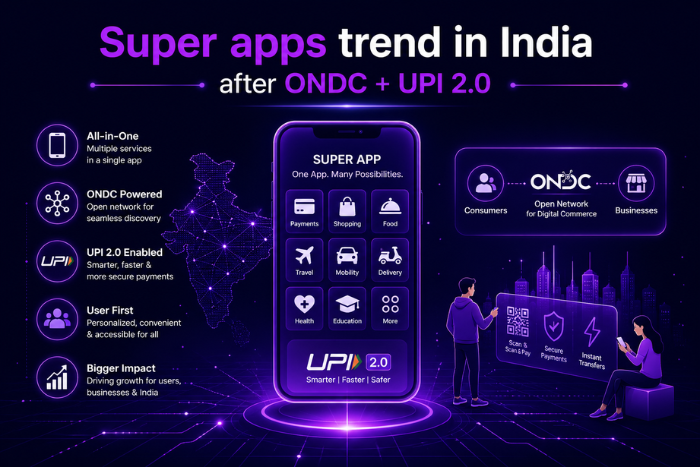
Super Apps Trend in India After ONDC + UPI 2.0 Super apps trend in India after ONDC + UPI 2.0 is reshaping payments, commerce, fintech, and digital ecosystems for scalable growth. Introduction Super apps trend in India after ONDC + UPI 2.0 is rapidly transforming the country’s digital economy by combining payments, commerce, mobility, financial services, and lifestyle solutions into unified ecosystems. As India’s digital infrastructure matures through initiatives like ONDC (Open Network for Digital Commerce) and UPI 2.0, businesses now have unprecedented opportunities to build integrated platforms that serve millions of users through a single application. This evolution is reshaping how Indian consumers interact with digital services, moving from fragmented app experiences to consolidated super platforms offering payments, shopping, banking, logistics, insurance, and more. UPI 2.0 enhances secure digital transactions, while ONDC democratizes commerce access for businesses of all sizes, creating the perfect environment for super app expansion. Understanding super apps trend in India after ONDC + UPI 2.0 is essential for enterprises, startups, and investors aiming to capitalize on India’s next wave of digital transformation. This guide explores market opportunities, technology frameworks, development strategies, cost considerations, and future trends driving India’s super app revolution in 2026 and beyond. Why Super Apps Trend in India After ONDC + UPI 2.0 is Important India’s evolving digital economy creates strong opportunities for super app development and ecosystem expansion. Unified Consumer ExperienceMultiple services integrated into one digital platform. Enhanced Digital Payments InfrastructureUPI 2.0 improves security, transaction speed, and scalability. Open Commerce ExpansionONDC allows broader participation in digital commerce. Startup & Enterprise Growth OpportunitiesBusinesses can reach wider audiences with ecosystem-driven strategies. Lower Customer Acquisition CostsConsolidated services improve retention and engagement. Competitive Market DifferentiationSuper apps can create long-term digital dominance. Types of Solutions for Super Apps Trend in India After ONDC + UPI 2.0 Super app ecosystems can support diverse digital services. Digital Payments PlatformsUPI, wallets, bill payments, subscriptions, and banking. E-commerce & Marketplace SolutionsONDC-powered shopping, logistics, and merchant integrations. Mobility & Travel AppsRide-sharing, ticketing, travel bookings, and navigation. Fintech EcosystemsInsurance, lending, wealth management, and investments. Healthcare Super AppsTelemedicine, pharmacy, diagnostics, and wellness. Lifestyle & Entertainment PlatformsFood delivery, streaming, gaming, and subscriptions. B2B Commerce PlatformsSupply chain, procurement, and merchant services. Government & Civic IntegrationPublic services, utilities, and digital governance. Get Free Quotation Now..!! Key Features of Super Apps Trend in India After ONDC + UPI 2.0 Modern super apps require advanced technical and business capabilities. UPI 2.0 Payment InfrastructureSecure, scalable, and seamless financial transactions. ONDC Commerce IntegrationOpen digital commerce connectivity. Modular Ecosystem ArchitectureScalable multi-service platform design. AI-Powered PersonalizationCustomized recommendations and user experiences. Cross-Service User AccountsUnified authentication and profiles. Advanced Security & ComplianceData privacy, fraud prevention, and regulatory alignment. Real-Time AnalyticsUser behavior, transaction, and engagement optimization. Third-Party API EcosystemFlexible expansion and partnerships. Development Process Market Research & Strategy PlanningIdentifying target users, services, and monetization opportunities. Platform Architecture DesignBuilding scalable, modular infrastructure. UPI 2.0 & ONDC IntegrationImplementing secure payment and commerce systems. Core Service DevelopmentLaunching essential ecosystem modules. UI/UX OptimizationCreating seamless multi-service user journeys. Testing, Security & Compliance ValidationEnsuring regulatory and operational readiness. Deployment & Continuous Ecosystem ExpansionScaling features, partnerships, and services. Technology Stack for Super Apps Trend in India After ONDC + UPI 2.0 Building super apps requires enterprise-grade technologies. Frontend Frameworks: Flutter, React Native, AngularBackend Technologies: Node.js, Java, Python, GoDatabases: PostgreSQL, MongoDB, RedisCloud Platforms: AWS, Azure, Google CloudPayments Infrastructure: UPI APIs, payment gateways, wallet integrationsCommerce Systems: ONDC APIs, logistics integrationsSecurity Tools: OAuth, biometric authentication, fraud detectionAnalytics & AI: BigQuery, TensorFlow, customer intelligence platforms Cost Factors for Super Apps Trend in India After ONDC + UPI 2.0 Development investment depends on ecosystem complexity. Platform ScopeMore services increase infrastructure and development costs. Payments & Compliance RequirementsRegulatory obligations affect implementation complexity. Third-Party IntegrationsONDC, banking, insurance, and logistics integrations add costs. Scalability NeedsHigh user volume requires stronger architecture. AI & Personalization FeaturesAdvanced analytics increase investment. Security InfrastructureFraud prevention and compliance are essential. Ongoing Ecosystem ExpansionNew services and partnerships require continued development. Latest Trends India’s super app ecosystem continues accelerating. ONDC-Driven Commerce ExpansionOpen commerce broadening merchant participation. Embedded Finance GrowthLending, insurance, and investments within super apps. Regional Language AdoptionLocalization for wider Bharat market penetration. AI-Powered Consumer ExperiencesHyper-personalization and predictive services. B2B + B2C Hybrid PlatformsMulti-market ecosystem strategies. Government Digital Ecosystem IntegrationPublic-private super app collaboration. Cross-Border Payment InnovationsExpanding UPI’s international capabilities. Why Choose Us for Super Apps Trend in India After ONDC + UPI 2.0 Building scalable super apps in India’s evolving digital ecosystem requires strategic expertise, deep technical capabilities, and regulatory understanding. Super App Development Expertise Specialized experience in large-scale digital ecosystem architecture. ONDC & UPI 2.0 Integration Advanced implementation of India’s emerging commerce and payment frameworks. Scalable Product Development Enterprise-grade infrastructure designed for millions of users. AI & Data-Driven Growth Personalization, analytics, and optimization strategies. Regulatory & Security Excellence Compliance-focused development for fintech and commerce ecosystems. Cost-Optimized Execution Efficient product strategies maximizing ROI. End-to-End Digital Transformation Support From planning to launch and long-term scaling. We empower businesses to lead India’s super app revolution through secure, scalable, and future-ready digital ecosystems. Ready to build the next generation of super apps in India?Let’s create scalable digital ecosystems powered by ONDC + UPI 2.0.Contact us today for expert super app development solutions. Get Free Quotation Now..!! Key Points : Super apps trend in India after ONDC + UPI 2.0 is transforming digital payments, commerce, and ecosystem-based app development ONDC integration expands open commerce opportunities for startups, enterprises, and merchants UPI 2.0 strengthens secure, scalable financial infrastructure for next-generation digital platforms Super apps combine payments, e-commerce, fintech, healthcare, and lifestyle services into unified user experiences AI-powered personalization and modular architecture drive scalable super app growth in India Regulatory compliance, security, and third-party integrations are critical for successful super app development FAQ’s What are super apps in India? Super apps are unified platforms offering multiple digital services like payments, commerce, travel, and finance within one app. How does ONDC impact super apps? ONDC expands commerce opportunities by enabling open digital marketplace integration. What role does UPI 2.0 play? UPI 2.0 strengthens payment

MVP App Development Timeline: How Fast in 2026
MVP App Development Timeline: How Fast in 2026 MVP app development timeline: How fast in 2026 with costs, tech stack, launch speed, and scalable startup app development strategies. Introduction MVP app development timeline: How fast in 2026 is one of the most critical questions for startups, enterprises, and product teams aiming to launch digital products quickly while minimizing risk. In today’s highly competitive market, businesses need to validate ideas faster, reduce time-to-market, and optimize development budgets without sacrificing product quality. An MVP (Minimum Viable Product) allows companies to build essential features, test market demand, gather real-world feedback, and iterate strategically before committing to full-scale development. However, timelines vary significantly depending on app complexity, technology stack, AI integrations, compliance requirements, and development methodologies. Understanding MVP app development timeline: How fast in 2026 helps businesses set realistic expectations, improve planning, and avoid costly delays. Whether you are building a SaaS platform, fintech app, marketplace, healthcare solution, or AI-powered product, efficient MVP development can accelerate investor readiness, customer acquisition, and long-term product success. This guide explores timelines, costs, strategies, and modern trends shaping MVP development in 2026. Why MVP App Development Timeline: How Fast in 2026 is Important Speed-to-market directly impacts startup success, competitive positioning, and product validation. Faster Product ValidationLaunch early to test market demand and user behavior. Reduced Development RiskAvoid overbuilding before validating core assumptions. Lower Initial InvestmentFocus resources on essential features. Investor ReadinessDemonstrate traction quickly to attract funding. Agile Iteration OpportunitiesImprove products based on real customer feedback. Competitive AdvantageEarly market entry can establish stronger positioning. Types of Solutions for MVP App Development in 2026 MVP strategies vary depending on product type and business objectives. Landing Page MVPsFast validation for product demand and lead generation. No-Code MVPsRapid prototyping for startups testing early concepts. Mobile App MVPsCross-platform or native apps for consumer engagement. SaaS Platform MVPsB2B tools and software product validation. Marketplace MVPsBuyer-seller ecosystems with essential transaction workflows. AI-Powered MVPsIntelligent products with automation and predictive capabilities. Healthcare MVPsCompliance-sensitive digital health applications. Fintech MVPsPayment systems, budgeting apps, and financial tools. Get Free Quotation Now..!! Key Features of MVP App Development Timeline: How Fast in 2026 Modern MVP development prioritizes speed, efficiency, and adaptability. Lean Feature PrioritizationFocus on core business value. Rapid Cross-Platform DevelopmentFlutter or React Native accelerate deployment. Cloud-Native InfrastructureScalable hosting for rapid launches. Agile Development MethodologySprint-based iteration and faster releases. AI-Enhanced Development ProductivityModern tools accelerate coding and testing. Scalable Backend ArchitectureFuture-proof technical foundations. Continuous Testing & QAQuality assurance from early stages. Analytics IntegrationReal-time user behavior tracking for optimization. Development Process Product Discovery & Scope DefinitionIdentifying business goals, target users, and essential features. Market Research & ValidationEvaluating demand, competition, and monetization opportunities. UX/UI Design & PrototypingBuilding user-centric experiences with rapid validation. Technology Stack SelectionChoosing scalable, cost-efficient frameworks and infrastructure. Core Development PhaseBuilding the MVP with essential functionality only. Testing, QA & OptimizationEnsuring performance, security, and launch readiness. Launch & Post-Launch IterationDeploying quickly while improving based on user feedback. Technology Stack for MVP App Development in 2026 Efficient MVP delivery depends on selecting modern, flexible technologies. Frontend Frameworks: Flutter, React Native, Next.jsBackend Technologies: Node.js, FastAPI, Django, FirebaseProgramming Languages: JavaScript, TypeScript, Python, Swift, KotlinDatabases: PostgreSQL, MongoDB, Firebase, RedisCloud Platforms: AWS, Azure, Google CloudAuthentication: OAuth, Firebase Auth, Auth0Analytics Tools: Mixpanel, Google Analytics, AmplitudeDevOps Tools: Docker, GitHub Actions, CI/CD pipelines Cost Factors for MVP App Development Timeline: How Fast in 2026 Development speed and cost are closely connected. Feature ComplexityMore advanced workflows require longer timelines. Platform RequirementsNative development may take longer than cross-platform. Design ComplexityCustom interfaces increase timelines and costs. Third-Party IntegrationsPayments, maps, CRM, and APIs add development time. Compliance RequirementsFintech and healthcare apps may require extra security work. Team ExpertiseSkilled developers can accelerate launches. Post-Launch IterationOngoing optimization impacts total investment. Latest Trends Modern MVP development continues evolving rapidly. AI-Assisted DevelopmentFaster coding, testing, and automation. Cross-Platform First StrategyReduced costs and faster deployment. No-Code + Custom Hybrid ModelsFaster validation combined with scalable development. Micro SaaS GrowthLean products targeting niche markets. Investor-Driven Rapid ValidationFaster MVP cycles for fundraising. Integrated Analytics by DefaultData-first product iteration. Modular Monolith ArchitecturesFaster launches with scalability flexibility. Why Choose Us for MVP App Development Timeline: How Fast in 2026 Launching an MVP quickly requires deep technical expertise, strategic planning, and execution efficiency. We help startups and businesses build market-ready products faster while controlling costs and maximizing validation opportunities. Rapid MVP Development Expertise Specialized in fast, lean, and scalable MVP product launches. Startup & Enterprise Experience Solutions tailored for founders, product teams, and growing businesses. Cost-Optimized Delivery Efficient development that balances speed and product quality. Modern Technology Stack Using Flutter, React Native, AI tools, and cloud-native infrastructure. Scalable Product Foundations Building MVPs ready for future growth. Agile Development Process Fast iterations, transparent milestones, and reduced delays. End-to-End Product Support From discovery to launch and beyond. We help businesses transform ideas into validated products faster with scalable, investor-ready MVP development. Ready to launch your MVP faster in 2026?Let’s build a scalable product that validates your vision quickly.Contact us today for expert MVP app development support. Get Free Quotation Now..!! Key Points : MVP app development timeline: How fast in 2026 depends on app complexity, tech stack, and feature prioritization Rapid MVP development helps startups validate ideas, reduce costs, and accelerate investor readiness Cross-platform frameworks like Flutter and React Native significantly shorten launch timelines Agile development and AI-assisted workflows improve speed without sacrificing product quality Lean MVP strategies focus on core features for faster market entry and user validation Scalable cloud-native architecture supports future growth while minimizing technical debt FAQ’s How long does MVP app development take in 2026? Simple MVPs can take 4–8 weeks, while complex platforms may require 12–28 weeks. What is the fastest way to build an MVP? Cross-platform frameworks, agile processes, and lean feature prioritization accelerate development. How much does MVP app development cost? Costs depend on complexity, features, integrations, and technology stack. What industries benefit most from MVP development? SaaS, fintech, healthcare, marketplaces, AI products, and consumer apps. Why do MVP timelines get delayed? Scope creep, unclear requirements, integration complexity, and poor

Flutter 4.0 Performance Updates for 2026 Apps
Flutter 4.0 Performance Updates for 2026 Apps Flutter 4.0 performance updates for 2026 apps improve speed, UI, AI integration, scalability, and cross-platform development efficiency. Introduction Flutter 4.0 performance updates for 2026 apps are redefining cross-platform application development by delivering substantial improvements in speed, rendering efficiency, AI integration, and scalability. As businesses demand faster, more responsive, and future-ready applications, Flutter 4.0 introduces significant architectural enhancements that improve app performance across mobile, web, desktop, and embedded platforms. With innovations like Impeller 2.0, Dart 4.x integration, advanced DevTools, memory optimizations, and stronger AI/ML capabilities, Flutter 4.0 positions itself as a powerful framework for startups, enterprises, and product teams seeking competitive digital solutions. These upgrades allow developers to build smoother applications with better UI responsiveness, lower latency, and enhanced maintainability. Understanding Flutter 4.0 performance updates for 2026 apps is essential for businesses planning modern app development strategies. Whether upgrading existing applications or launching new digital products, Flutter 4.0 provides performance-driven advantages that improve user experiences, reduce costs, and accelerate time-to-market in an increasingly competitive technology landscape. Why Flutter 4.0 Performance Updates for 2026 Apps is Important Modern digital products require scalable, efficient, and high-performing frameworks, and Flutter 4.0 addresses these evolving business demands. Improved App PerformanceFaster rendering, smoother animations, and reduced UI lag. Cross-Platform ScalabilityUnified development for iOS, Android, web, desktop, and beyond. Enhanced Developer ProductivityBetter tooling, debugging, and state management. AI-Ready InfrastructureSupports advanced AI and machine learning integrations. Cost-Efficient DevelopmentSingle codebase reduces development and maintenance expenses. Future-Proof TechnologyPrepares businesses for next-generation application requirements. Types of Solutions for Flutter 4.0 Performance Updates for 2026 Apps Flutter 4.0 supports diverse app categories across industries. E-commerce ApplicationsHigh-performance shopping experiences with responsive UI. Healthcare ApplicationsSecure, scalable, and data-rich medical solutions. Fintech AppsFast, secure financial tools with optimized performance. Educational PlatformsInteractive learning systems with multimedia capabilities. Enterprise SaaS ApplicationsProductivity tools and internal business platforms. Social Networking AppsSmooth content delivery and scalable user experiences. AI-Powered Mobile AppsSmart assistants, automation tools, and predictive applications. IoT and Embedded SolutionsCross-platform interfaces for connected devices. Get Free Quotation Now..!! Key Features of Flutter 4.0 Performance Updates for 2026 Apps Flutter 4.0 introduces major technical advancements. Impeller 2.0 Rendering EngineReduced jank and faster graphics performance. Dart 4.x OptimizationImproved runtime speed and developer efficiency. Advanced DevToolsBetter performance monitoring and debugging. Enhanced Material Design 3Modern UI customization and design flexibility. AI & ML Integration SupportSmarter application capabilities. Improved Memory ManagementLower resource consumption and better stability. Expanded Web & Desktop SupportStronger true cross-platform performance. Accessibility & Localization ImprovementsMore inclusive global user experiences. Development Process for Flutter 4.0 Performance Updates for 2026 Apps Requirement Analysis & Product StrategyDefining business goals, user requirements, and platform priorities. Architecture PlanningDesigning scalable Flutter 4.0 app structures and workflows. UI/UX Design & PrototypingCreating responsive, high-performance interfaces. Flutter 4.0 Development & IntegrationBuilding optimized applications with latest framework capabilities. Performance OptimizationLeveraging Impeller, Dart enhancements, and memory improvements. Testing & Quality AssuranceValidating performance, scalability, security, and compatibility. Deployment & Ongoing SupportLaunching and maintaining future-ready applications. Technology Stack Modern Flutter 4.0 projects leverage advanced technologies. Programming Languages: Dart 4.x, JavaScript, Swift, KotlinFrameworks: Flutter 4.0, Firebase, Node.jsUI Libraries: Material Design 3, Cupertino WidgetsBackend Technologies: Firebase, AWS, Google CloudState Management: Riverpod, Bloc, ProviderAI/ML Integration: TensorFlow Lite, OpenAI APIs, Google ML KitDevOps Tools: Docker, GitHub Actions, CI/CD pipelinesAnalytics & Monitoring: Firebase Analytics, Crashlytics, Sentry Cost Factors for Flutter 4.0 Performance Updates for 2026 Apps Development costs vary depending on technical and business complexity. Application ComplexityAdvanced features and integrations increase costs. Platform ScopeMobile-only vs full cross-platform deployment. Custom UI/UX RequirementsHigh-end interfaces require more resources. AI/ML IntegrationsIntelligent features add development complexity. Performance Optimization NeedsAdditional tuning impacts budgets. Developer ExpertiseSenior Flutter developers may increase upfront costs. Maintenance & UpdatesLong-term support contributes to overall investment. Latest Trends Flutter’s ecosystem continues evolving rapidly. AI-Integrated Flutter ApplicationsSmarter apps with conversational and predictive capabilities. Desktop & Web ExpansionIncreased enterprise-grade deployment. Embedded Systems GrowthFlutter expanding into IoT and smart devices. Advanced Performance EngineeringGreater focus on rendering and memory optimization. Low-Code & Rapid MVP DevelopmentFaster startup product launches. Enterprise Cross-Platform StandardizationBusinesses consolidating development frameworks. Sustainability-Focused App DevelopmentEfficient apps reducing resource consumption. Why Choose Us for Flutter 4.0 Performance Updates for 2026 Apps Building high-performance Flutter 4.0 applications requires deep technical expertise, modern architecture planning, and strategic execution. Flutter 4.0 Expertise Specialized experience with Flutter 4.0 upgrades, optimization, and enterprise deployments. Cross-Platform Development Excellence Scalable applications for mobile, web, desktop, and emerging platforms. Performance-Driven Development Focused on speed, efficiency, and exceptional user experiences. AI & Future Technology Integration Leveraging modern AI tools for advanced application capabilities. Cost-Optimized Solutions Efficient development processes that maximize ROI. Scalable Enterprise Architecture Future-ready applications designed for business growth. Transparent End-to-End Support Clear communication from planning through deployment and optimization. We help businesses build cutting-edge Flutter 4.0 applications that combine innovation, performance, and scalability. Ready to future-proof your app with Flutter 4.0?Let’s create faster, smarter, scalable applications together.Contact us today for expert Flutter 4.0 development solutions. Get Free Quotation Now..!! Key Points : Flutter 4.0 performance updates for 2026 apps deliver faster rendering, smoother UI, and improved scalability Impeller 2.0 and Dart 4.x significantly enhance speed, memory efficiency, and app responsiveness Cross-platform development with Flutter 4.0 reduces costs across mobile, web, and desktop platforms Advanced AI and machine learning integrations support smarter app experiences Enterprise-grade Flutter 4.0 architecture ensures future-ready, scalable application development Modern Flutter app development provides long-term competitive advantages for businesses in 2026 FAQ’s What are Flutter 4.0 performance updates? Flutter 4.0 introduces rendering, memory, tooling, and AI integration improvements for faster applications. Is Flutter 4.0 suitable for enterprise app development? Yes, Flutter 4.0 supports scalable, enterprise-grade cross-platform applications. =How does Flutter 4.0 improve app speed? Impeller 2.0, Dart 4.x, and memory optimizations significantly enhance performance. Can Flutter 4.0 support AI-powered apps? Yes, Flutter 4.0 offers improved infrastructure for AI and ML integrations. What industries benefit most from Flutter 4.0? E-commerce, healthcare, fintech, education, SaaS, and IoT sectors. Why should businesses adopt Flutter 4.0 in 2026? It offers performance, scalability, cost efficiency, and future-ready technology advantages. Get Free Quotation Now..!!

App Development with GPT-5 API: Cost and Use Cases
App Development with GPT-5 API: Cost and Use Cases App development with GPT-5 API: Cost and use cases, features, tech stack, and scalable AI solutions for modern businesses. Introduction App development with GPT-5 API: Cost and use cases is transforming how businesses build intelligent digital products by integrating advanced AI capabilities into web and mobile applications. GPT-5’s enhanced reasoning, multimodal processing, coding support, and scalable deployment options make it a powerful solution for organizations seeking next-generation automation, personalization, and operational efficiency. From AI chatbots and virtual assistants to healthcare apps, enterprise tools, e-commerce personalization, and content automation platforms, app development with GPT-5 API: Cost and use cases opens opportunities for smarter, faster, and more adaptive applications. However, understanding the cost structure, infrastructure needs, use cases, and implementation process is critical for businesses planning successful deployments. As AI competition intensifies, leveraging app development with GPT-5 API: Cost and use cases effectively can significantly improve customer engagement, streamline workflows, reduce operational costs, and provide long-term competitive advantages. This guide explores practical business applications, pricing factors, development strategies, and emerging trends that will shape AI-powered applications in 2026 and beyond. Why App Development with GPT-5 API is Important Businesses increasingly rely on advanced AI to remain competitive, and GPT-5 API offers a strategic advantage by enabling more powerful, scalable, and reliable applications. Advanced IntelligenceGPT-5 provides improved reasoning, contextual understanding, and multimodal capabilities. Automation EfficiencyAutomates customer service, content creation, workflow management, and support operations. Scalable AI IntegrationSupports startups to enterprise-scale applications with flexible deployment options. Enhanced User ExperienceDelivers personalized, conversational, and highly responsive interactions. Cost OptimizationReduces manual labor and operational inefficiencies over time. Competitive DifferentiationEarly adoption of GPT-5-powered apps can position businesses ahead of competitors. Types of Solutions for App Development with GPT-5 API GPT-5 API can be applied across multiple industries and product categories. AI Chatbots & Customer Support AppsAutomated support systems with natural conversations and problem-solving capabilities. Content Generation PlatformsTools for blogs, marketing copy, product descriptions, and social media automation. Healthcare ApplicationsSymptom analysis, medical documentation, patient communication, and administrative support. E-commerce PersonalizationProduct recommendations, shopping assistants, and customer behavior analysis. Educational AppsPersonalized tutoring, language learning, and intelligent study assistance. Enterprise Productivity ToolsWorkflow automation, document summarization, data analysis, and internal assistants. Finance & Legal PlatformsAI research tools, fraud detection support, compliance automation, and customer engagement. Coding AssistantsSoftware development copilots, debugging tools, and automated documentation. Get Free Quotation Now..!! Key Features of App Development with GPT-5 API GPT-5 introduces advanced features that significantly improve app functionality. Natural Language UnderstandingHuman-like conversation and contextual awareness. Multimodal SupportText, image, and potentially voice integration for richer applications. Function CallingSeamless integration with external tools and APIs. Long Context HandlingBetter memory across larger datasets and conversations. High-Level ReasoningImproved problem-solving for business-critical applications. Custom Fine-TuningTailored performance for industry-specific use cases. Security & Safety LayersBuilt-in safeguards for safer deployment. Scalable Cloud InfrastructureSupports high user volumes and enterprise deployments. Development Proces Requirement Analysis & Business GoalsIdentifying business objectives, user needs, and suitable GPT-5 integration opportunities. Use Case ValidationEvaluating potential ROI, automation possibilities, and market relevance. Architecture PlanningDesigning scalable backend systems, API workflows, databases, and frontend structures. GPT-5 API IntegrationImplementing API connections, prompt engineering, function calling, and workflow automation. UI/UX DevelopmentCreating intuitive interfaces optimized for seamless AI-powered user experiences. Testing & Performance OptimizationValidating output quality, latency, scalability, security, and compliance. Deployment & Continuous MonitoringLaunching the application with real-time analytics, updates, and long-term optimization. Technology Stack for App Development with GPT-5 API Modern GPT-5 applications rely on robust technology ecosystems. Programming Languages: Python, JavaScript, TypeScript, Swift, KotlinFrontend Frameworks: React, Flutter, React Native, Vue.jsBackend Frameworks: Node.js, Django, FastAPI, Express.jsAI Integration: OpenAI GPT-5 API, LangChain, vector databasesDatabases: PostgreSQL, MongoDB, Firebase, RedisCloud Platforms: AWS, Azure, Google CloudDevOps Tools: Docker, Kubernetes, CI/CD pipelinesSecurity Tools: OAuth, JWT, API gateways, encryption protocols Cost Factors for App Development with GPT-5 API The cost of GPT-5 app development depends on multiple variables. API Usage CostsToken consumption, request volume, and model selection directly impact expenses. Development ComplexityAdvanced workflows, multimodal integrations, and custom features increase cost. Infrastructure RequirementsHosting, storage, and cloud services contribute to ongoing expenses. Fine-Tuning & CustomizationSpecialized training or prompt engineering may require additional investment. UI/UX DesignPremium user experiences can raise frontend development costs. Compliance & SecurityRegulatory standards increase implementation complexity. Maintenance & ScalingLong-term support, updates, and optimization require ongoing resources. Latest Trends The AI application market continues evolving rapidly. AI Agents & Autonomous WorkflowsGPT-5 enables task execution beyond simple conversations. Multimodal App ExperiencesCombining text, image, and voice for richer products. Vertical AI ApplicationsIndustry-specific solutions for healthcare, finance, education, and law. Edge AI IntegrationFaster processing through hybrid cloud-edge architectures. Personalized AI ProductsHyper-customized user experiences powered by advanced AI. Enterprise AI AdoptionInternal productivity and operational optimization tools. Responsible AI GovernanceGreater focus on privacy, compliance, and ethical deployment. Why Choose Us for App Development with GPT-5 API Adopting GPT-5 for app development requires strategic expertise, technical precision, and scalable execution. We help businesses build powerful AI applications that maximize performance, reduce costs, and accelerate innovation. GPT-5 Integration Expertise Deep experience in implementing GPT-5 APIs, prompt engineering, and advanced AI workflows. Custom Business Solutions Tailored app development strategies aligned with your industry, users, and growth goals. Scalable Development Architecture Future-ready applications built to handle increasing demand and enterprise expansion. Cost-Optimized Development Efficient development processes that balance innovation with budget-conscious execution. Security & Compliance Focus Strong emphasis on secure deployment, privacy protection, and responsible AI standards. End-to-End Development Support Complete support from planning and development to deployment and continuous improvement. Performance-Driven Approach Focused on delivering fast, reliable, and user-centric AI applications. We empower businesses to unlock GPT-5’s full potential through scalable, secure, and innovative application development. Ready to build powerful AI applications with GPT-5 API?Contact us today for a customized GPT-5 app development strategy.Let’s transform your business with scalable AI innovation. Get Free Quotation Now..!! Key Points : Advanced GPT-5 API integration for intelligent mobile and web applications Scalable AI app development solutions for startups and enterprises Cost-efficient GPT-5 implementation with optimized infrastructure planning Multimodal capabilities for chatbots, automation, personalization, and productivity tools Secure, compliant, and future-ready

