
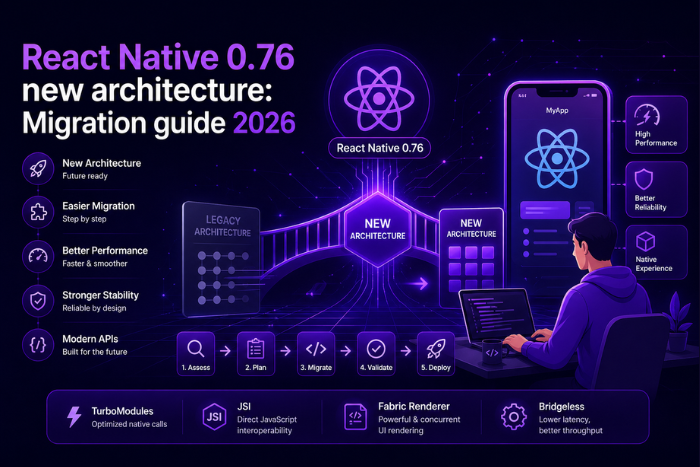
React Native 0.76 New Architecture: Migration Guide 2026 React Native 0.76 new architecture: Migration guide 2026 for faster apps, TurboModules, Fabric, migration costs, and scalable development. Introduction React Native 0.76 new architecture: Migration guide 2026 is essential for businesses and developers aiming to modernize mobile applications for improved performance, scalability, and maintainability. With React Native 0.76 making the new architecture the default standard, adopting technologies like Fabric, TurboModules, JSI, and Codegen is no longer optional for teams seeking long-term competitiveness. Migrating to React Native’s new architecture significantly enhances app startup speed, rendering efficiency, native module performance, and overall user experience. However, successful migration requires strategic planning, dependency audits, native module adjustments, and compatibility management. Understanding React Native 0.76 new architecture: Migration guide 2026 helps organizations future-proof applications while minimizing technical debt. Whether you are upgrading an existing enterprise app, scaling a startup product, or improving cross-platform mobile experiences, this migration can deliver substantial business and technical benefits. This guide covers migration strategy, development processes, technology requirements, costs, and trends to help businesses navigate React Native modernization successfully. Why React Native 0.76 New Architecture: Migration Guide 2026 is Important Modern mobile applications require faster performance and scalable infrastructure, and React Native’s architectural overhaul directly addresses these demands. Improved App PerformanceFabric and TurboModules reduce latency and improve rendering speed. Enhanced Developer ProductivityBetter debugging, native integration, and modularity improve workflows. Long-Term Framework StabilityFuture React Native updates prioritize the new architecture. Reduced Bridge BottlenecksJSI enables faster communication between JavaScript and native code. Scalable Enterprise ReadinessSupports larger applications with improved maintainability. Better User ExperienceFaster interactions, smoother animations, and reduced crashes. Types of Solutions for React Native 0.76 New Architecture Migration React Native migration services apply to various mobile app categories. Enterprise Mobile ApplicationsLarge-scale apps requiring performance optimization and maintainability. E-commerce ApplicationsImproved UI responsiveness and customer experiences. Healthcare AppsSecure, scalable, and reliable cross-platform systems. Fintech SolutionsPerformance-sensitive applications with enhanced security. On-Demand Service AppsFaster navigation, real-time updates, and improved user retention. Social Media PlatformsHigh-performance rendering for dynamic content. Educational ApplicationsInteractive, scalable mobile learning environments. Custom SaaS Mobile AppsModernized app infrastructure for business growth. Get Free Quotation Now..!! Key Features of React Native 0.76 New Architecture: Migration Guide 2026 The new architecture introduces major technical improvements. TurboModulesLazy-loaded modules improve native module performance. Fabric RendererFaster UI rendering with modernized component architecture. JavaScript Interface (JSI)Direct communication without bridge bottlenecks. Codegen IntegrationType-safe native bindings and automation. Hermes OptimizationImproved JavaScript engine performance. Enhanced Debugging ToolsBetter developer visibility and troubleshooting. Smaller App SizesImproved build efficiency for optimized deployment. Future CompatibilityPreparedness for upcoming React Native releases. Development Process Project Audit & Compatibility AssessmentReviewing existing codebase, libraries, and native modules for migration readiness. Dependency ValidationEnsuring third-party packages support React Native 0.76 architecture. Architecture EnablementConfiguring Fabric, TurboModules, Hermes, and Codegen. Custom Native Module MigrationRefactoring legacy modules into TurboModules. UI Component MigrationUpdating native UI components to Fabric. Testing & Performance OptimizationValidating speed improvements, bug fixes, and compatibility. Deployment & Continuous MonitoringLaunching upgraded applications with ongoing maintenance. Technology Stack Modern migration projects rely on advanced technologies. Programming Languages: JavaScript, TypeScript, Swift, Kotlin, Java, Objective-CFrameworks: React Native 0.76, Expo SDK, React NavigationArchitecture Tools: JSI, TurboModules, Fabric, CodegenJavaScript Engine: HermesTesting Tools: Jest, Detox, AppiumCI/CD Tools: GitHub Actions, Bitrise, CircleCICloud Platforms: AWS, Firebase, AzurePerformance Monitoring: Sentry, Firebase Crashlytics Cost Factors for React Native 0.76 New Architecture Migration Migration costs vary depending on technical complexity. Application SizeLarger codebases require more extensive migration work. Third-Party Library CompatibilityUnsupported dependencies increase redevelopment needs. Custom Native Module ComplexityAdvanced native integrations raise implementation costs. Testing RequirementsQA, performance audits, and bug resolution impact budgets. Developer ExpertiseSkilled React Native migration specialists improve outcomes but may cost more. Deployment InfrastructureCI/CD and cloud optimization may require additional investment. Ongoing MaintenanceFuture updates and architecture support contribute to long-term expenses. Latest Trends React Native development continues evolving rapidly. New Architecture Adoption by DefaultMost modern projects are migrating proactively. TypeScript-First DevelopmentImproved scalability and maintainability. Expo Managed Workflow ExpansionEasier integrations for enterprise projects. Enhanced Performance MonitoringAdvanced tools for optimization. Cross-Platform Enterprise GrowthBusinesses increasingly prioritize unified development. AI-Powered Mobile App IntegrationsCombining GPT-based services with React Native apps. Improved DevOps AutomationFaster releases and deployment cycles. Why Choose Us for React Native 0.76 New Architecture Migration Guide 2026 Migrating to React Native 0.76 requires specialized technical expertise and strategic execution. We help businesses modernize mobile applications while minimizing risks and maximizing performance gains. React Native Migration Expertise Deep experience with Fabric, TurboModules, Hermes, and advanced React Native architecture. End-to-End Migration Support From audits and planning to deployment and optimization. Performance-Focused Development We prioritize measurable speed, efficiency, and scalability improvements. Cost-Optimized Solutions Efficient migration strategies that reduce technical debt and unnecessary expenses. Enterprise-Ready Security Secure, compliant, and future-proof development practices. Scalable App Modernization Building mobile applications designed for long-term growth. Transparent Development Process Clear communication, milestone tracking, and reliable delivery. We empower businesses to transition seamlessly into the future of React Native development with confidence and efficiency. Ready to modernize your mobile app with React Native 0.76?Let’s build faster, scalable, future-ready applications together.Contact us today for expert React Native migration support. Get Free Quotation Now..!! Key Points : React Native 0.76 new architecture migration improves app speed, scalability, and long-term maintainability TurboModules, Fabric, and JSI deliver faster rendering and reduced bridge bottlenecks Strategic migration planning minimizes compatibility risks and technical debt Hermes engine optimization enhances performance, startup speed, and resource efficiency Migration costs depend on app complexity, native modules, and third-party dependency updates Future-proof mobile applications with React Native 0.76 default architecture adoption FAQ’s What is React Native 0.76 new architecture? It includes Fabric, TurboModules, JSI, and Codegen for improved app performance and scalability. Why should businesses migrate to React Native 0.76? Migration improves speed, stability, maintainability, and future compatibility. How long does migration typically take? Timelines range from weeks to months based on project complexity. Does migration improve app speed? Yes, the new architecture significantly reduces bottlenecks and enhances performance. Are all third-party libraries compatible? Not all; dependency audits are essential before migration. Get Free Quotation Now..!!

On-Device AI in Mobile Apps: Apple vs Google Approach 2026
On-Device AI in Mobile Apps: Apple vs Google Approach 2026 On-device AI in mobile apps: Apple vs Google approach 2026 for privacy, performance, scalability, and smarter app innovation. Introduction The future of mobile application development is rapidly shifting toward edge intelligence, where AI processing occurs directly on smartphones instead of relying heavily on cloud infrastructure. Understanding On-device AI in mobile apps: Apple vs Google approach 2026 is critical for businesses, developers, and product leaders aiming to build faster, smarter, and privacy-first digital experiences. Apple and Google are shaping two distinct strategies in on-device AI. Apple prioritizes privacy, hardware-software integration, and tightly controlled ecosystem performance, while Google focuses on scalability, broader AI model accessibility, and cloud-enhanced hybrid intelligence. Both approaches significantly impact app architecture, personalization, security, latency, and monetization opportunities. As AI becomes central to mobile apps—from virtual assistants to predictive analytics and multimodal interfaces—choosing the right platform strategy can directly influence user trust, competitive advantage, and long-term product success in 2026 and beyond. Why On-Device AI in Mobile Apps: Apple vs Google Approach 2026 is Important On-device AI is transforming mobile ecosystems globally. Enhanced PrivacyUser data stays on-device. Faster PerformanceReduced cloud dependency lowers latency. Improved ReliabilityOffline AI functionality improves usability. Cost OptimizationLower server costs. Personalized User ExperiencesReal-time intelligent customization. Security BenefitsReduced external data transmission. Platform DifferentiationApple and Google ecosystems offer unique opportunities. Future-Proof App DevelopmentSupports long-term AI trends. Types of Solutions for On-Device AI in Mobile Apps: Apple vs Google Approach 2026 On-device AI influences multiple mobile product categories: AI Assistants & Voice InterfacesSiri, Gemini, and conversational UX. Computer Vision AppsImage recognition and augmented reality. Healthcare Monitoring AppsReal-time health diagnostics. Productivity ApplicationsPredictive automation tools. Smart Security AppsFace recognition and authentication. Gaming & AR/VR PlatformsReal-time immersive experiences. Fintech ApplicationsFraud detection and security. Enterprise Mobile SolutionsWorkflow automation and analytics. Get Free Quotation Now..!! Key Features of On-Device AI in Mobile Apps: Apple vs Google Approach 2026 Modern mobile AI ecosystems offer advanced capabilities: Low-Latency AI ProcessingInstant responses. Privacy-Centric ArchitectureSecure local processing. Offline FunctionalityReduced connectivity dependence. Hardware AccelerationNeural engines and tensor chips. Multimodal AI SupportVoice, text, image, and contextual intelligence. Battery OptimizationEfficient processing. Cross-App IntelligenceDeeper ecosystem integration. Advanced PersonalizationBehavioral adaptation. Scalable AI Model DeploymentBroader app innovation. Development Process Successful on-device AI integration requires strategic planning: Platform Strategy AnalysisApple vs Google ecosystem alignment. Use Case IdentificationDefine AI-powered app opportunities. Model Selection & OptimizationLightweight mobile AI models. Hardware Compatibility PlanningDevice capability optimization. AI IntegrationEmbed Core ML or TensorFlow Lite. Testing & Privacy ValidationSecurity and performance assurance. DeploymentLaunch across target devices. Continuous OptimizationAdapt to AI ecosystem evolution. Technology Stack Modern on-device AI systems rely on: Apple Ecosystem: Core ML, SiriKit, Swift, Neural EngineGoogle Ecosystem: TensorFlow Lite, Android AI APIs, Kotlin, Gemini integrationsCross-Platform: Flutter, React NativeProgramming Languages: Swift, Kotlin, PythonCloud Infrastructure: AWS, Google Cloud, AzureDevOps: Docker, KubernetesData Processing: ONNX, TensorRTAnalytics: Firebase, GA4, Power BI Cost Factors for On-Device AI in Mobile Apps: Apple vs Google Approach 2026 Investment depends on platform complexity: Platform EcosystemApple may require tighter optimization. Model DevelopmentAI training and deployment complexity. Hardware CompatibilityDevice support requirements. Privacy ComplianceRegulatory standards. Development Team ExpertiseSpecialized AI engineering. Performance OptimizationMobile efficiency tuning. MaintenanceOngoing AI model updates. Cross-Platform SupportBroader deployment increases costs. Latest Trends Mobile AI continues evolving rapidly: AI-Native Mobile ArchitectureApps designed around AI-first experiences. Hybrid AI ModelsCombining local and cloud intelligence. Multimodal InterfacesVoice + visual + contextual AI. Private AI AssistantsPersonalized mobile agents. Generative AI IntegrationContent creation within apps. Edge Computing ExpansionFaster decentralized intelligence. AI-Powered PersonalizationDynamic user experiences. Regulatory Privacy ExpansionStronger user protections. Why Choose Us for On-Device AI in Mobile Apps: Apple vs Google Approach 2026 We help businesses build intelligent mobile applications optimized for future AI ecosystems. AI Mobile Development Expertise Deep experience in Apple and Android AI systems. Privacy-First Architecture Secure and compliant app development. Performance Optimization Low-latency, scalable AI experiences. Cross-Platform Innovation Apple, Google, and hybrid solutions. Enterprise-Grade Security Advanced governance standards. Strategic Technology Planning Future-ready AI product development. Transparent Delivery Clear communication and measurable outcomes. Continuous AI Growth Support Long-term optimization for evolving markets. We empower businesses to capitalize on mobile AI innovation with scalable, secure, and intelligent app ecosystems designed for 2026 and beyond. Ready to future-proof your mobile app with on-device AI innovation?Let’s build intelligent mobile experiences optimized for Apple, Google, or hybrid ecosystems.Contact us today for expert AI-powered mobile app development consultation. Get Free Quotation Now..!! Key Points : Learn how on-device AI improves app speed, offline functionality, security, and user personalization. Explore key business use cases including AI assistants, healthcare apps, fintech security, enterprise mobility, and smart ecommerce. Understand the technology stack behind mobile AI, including Core ML, TensorFlow Lite, Swift, Kotlin, and cross-platform frameworks. Analyze development costs based on AI model complexity, platform ecosystem, compliance, and hardware optimization. Identify which platform approach—Apple, Google, or hybrid—is best for long-term scalability and business growth. FAQ’s What is on-device AI in mobile apps? AI processing that occurs directly on smartphones rather than cloud servers. Why is on-device AI important? It improves privacy, speed, and offline functionality. How does Apple’s approach differ from Google’s? Apple emphasizes privacy and hardware integration, while Google focuses on broader scalability and hybrid AI. Is on-device AI more secure? Generally yes, due to reduced external data sharing. What tools support on-device AI? Core ML, TensorFlow Lite, SiriKit, and Android AI APIs. How should businesses prepare for 2026 mobile AI trends? By investing in scalable, privacy-first, AI-native mobile architectures. Get Free Quotation Now..!!
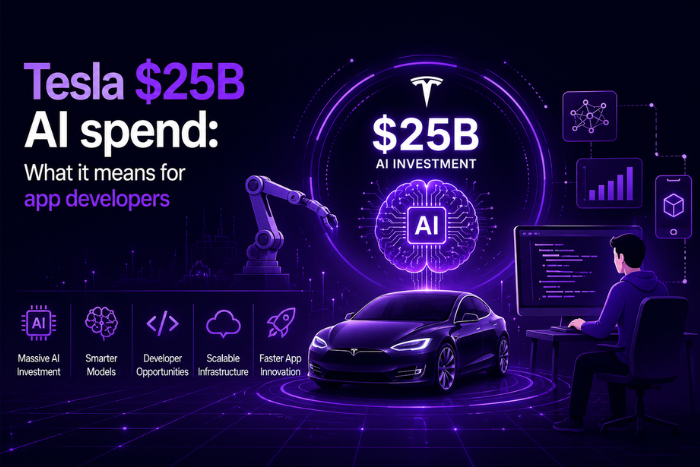
Tesla $25B AI Spend: What It Means for App Developers
Tesla $25B AI Spend: What It Means for App Developers Tesla $25B AI spend: What it means for app developers in 2026, including AI innovation, infrastructure, mobile apps, and growth. Introduction Tesla’s reported $25 billion AI investment in 2026 signals one of the largest technology infrastructure commitments in recent years, with major implications far beyond electric vehicles and robotics. For software companies, startups, and digital agencies, understanding Tesla $25B AI spend: What it means for app developers is essential for future-proofing products, innovation strategies, and competitive positioning. This massive investment focuses on AI infrastructure, autonomous systems, robotics, data centers, compute capabilities, and next-generation software ecosystems. Such large-scale AI spending can accelerate GPU innovation, edge computing, machine learning accessibility, and enterprise software opportunities for developers worldwide. App developers—particularly those in AI mobile apps, SaaS, autonomous systems, productivity tools, and enterprise platforms—must recognize how Tesla’s AI push could reshape development standards, tooling, competition, and monetization opportunities in 2026 and beyond. Why Tesla $25B AI Spend: What It Means for App Developers is Important Large-scale AI infrastructure spending influences the broader software development ecosystem. Accelerated AI InnovationFaster advancements in machine learning and automation. Expanded Developer OpportunitiesMore demand for AI-powered applications. Improved InfrastructureBetter cloud and compute ecosystems. Competitive Market PressureNew AI standards raise expectations. Enhanced AutomationGrowth in intelligent applications. Industry DisruptionMobility, SaaS, and robotics transformation. Tooling EvolutionBetter AI development frameworks. Scalable App EcosystemsIncreased opportunities for enterprise software. Types of Solutions Impacted by Tesla $25B AI Spend Tesla’s AI investment may directly influence multiple digital product categories: AI Mobile ApplicationsSmarter consumer apps. Autonomous Systems PlatformsVehicle, drone, and robotics software. Enterprise SaaS SolutionsAI workflow automation. Computer Vision ApplicationsReal-time image processing tools. Voice & Conversational AppsAI assistants and interfaces. Predictive Analytics PlatformsAdvanced business intelligence tools. Industrial Automation SystemsRobotics and manufacturing software. Edge AI ApplicationsOn-device intelligence solutions. Get Free Quotation Now..!! Key Features of Tesla $25B AI Spend: What It Means for App Developers Developers can expect key opportunities through: High-Performance AI InfrastructureGreater computational resources. Enhanced GPU EcosystemsFaster AI model training. Robotics API OpportunitiesAutomation integrations. Autonomous Software ExpansionNew software categories. Real-Time ProcessingLower-latency AI apps. Advanced PersonalizationSmarter customer experiences. Scalable AI DeploymentEnterprise-grade software growth. Cross-Industry InnovationBroader software applications. Development Process To capitalize on AI ecosystem shifts, businesses should follow strategic development: AI Opportunity AssessmentIdentify relevant product opportunities. Technology Stack SelectionChoose scalable AI tools. Infrastructure PlanningBuild future-ready systems. AI Model IntegrationIncorporate machine learning. UX OptimizationDesign intelligent user experiences. Testing & ComplianceValidate performance and security. DeploymentLaunch scalable AI solutions. Continuous OptimizationAdapt to rapid AI advancements. Technology Stack for Tesla $25B AI Spend: What It Means for App Developers Modern AI development ecosystems include: Programming Languages: Python, JavaScript, Swift, KotlinAI Frameworks: TensorFlow, PyTorch, ONNXCloud Infrastructure: AWS, Azure, Google CloudMobile Development: Flutter, React NativeEdge AI Tools: TensorFlow Lite, Core MLDevOps: Docker, KubernetesData Platforms: Apache Spark, SnowflakeVisualization: Power BI, Tableau Cost Factors for Tesla $25B AI Spend: What It Means for App Developers Tesla’s investment may influence development economics through: AI Infrastructure CostsNew compute pricing shifts. Talent DemandIncreased AI engineering competition. Development ComplexityAdvanced systems require expertise. Hardware AccessibilityGPU competition impacts budgets. Scalability RequirementsHigh-performance systems need stronger infrastructure. Security & ComplianceAI governance adds costs. MaintenanceContinuous AI optimization. Innovation PressureFaster iteration cycles. Latest Trends Tesla’s AI commitment reflects broader trends shaping app development: Autonomous Application GrowthSelf-driving and robotics ecosystems. Enterprise AI ExpansionSmarter SaaS tools. GPU Infrastructure CompetitionBetter AI compute ecosystems. Edge Computing GrowthFaster decentralized AI. AI-Powered AutomationProductivity-focused software. Robotics Software OpportunitiesEmerging API ecosystems. Vertical AI PlatformsIndustry-specific intelligence tools. Sustainable High-Performance ComputingEfficient AI infrastructure. Why Choose Us for Tesla $25B AI Spend: What It Means for App Developers We help businesses strategically adapt to major AI market shifts. AI Development Expertise Deep knowledge of next-generation software systems. Scalable Product Architecture Built for future infrastructure demands. Innovation-Driven Solutions Leveraging emerging AI ecosystems. Cost-Optimized Development Balancing performance and investment. Enterprise-Grade Security Future-ready governance frameworks. Cross-Platform Expertise Web, mobile, SaaS, and automation. Transparent Strategy Clear planning and execution. Long-Term Growth Support Continuous optimization for evolving markets. We empower businesses to capitalize on major AI infrastructure shifts with innovative digital products designed for scalability, performance, and competitive advantage. Ready to future-proof your app development strategy for the AI era?Let’s build intelligent software solutions designed for next-generation innovation.Contact us today for expert AI-powered app development consultation. Get Free Quotation Now..!! Key Points : Explore Tesla $25B AI spend: What it means for app developers in 2026 and future software ecosystems. Understand how Tesla’s AI infrastructure investment could reshape app development, mobile AI, SaaS, and automation platforms. Leverage new opportunities in autonomous systems, robotics software, AI mobile apps, and enterprise intelligence solutions. Prepare for evolving GPU ecosystems, edge computing, and advanced AI development infrastructure. Analyze cost factors including talent demand, infrastructure shifts, and scalable AI architecture requirements. Stay ahead of industry trends such as AI-powered automation, vertical SaaS, robotics APIs, and decentralized intelligence. FAQ’s Why does Tesla’s AI investment matter for app developers? It may accelerate AI innovation, infrastructure, and software opportunities. Will Tesla’s AI spend impact mobile app development? Yes, especially AI-powered and edge applications. Could Tesla influence AI hardware markets? Large investments may affect GPU ecosystems and compute accessibility. Should developers invest more in AI skills? Yes, AI expertise is increasingly critical. Will app development costs change? Potentially, due to hardware, talent, and infrastructure shifts. Is Tesla’s investment part of broader AI industry growth? Yes, it reflects accelerating enterprise AI infrastructure expansion. Get Free Quotation Now..!!
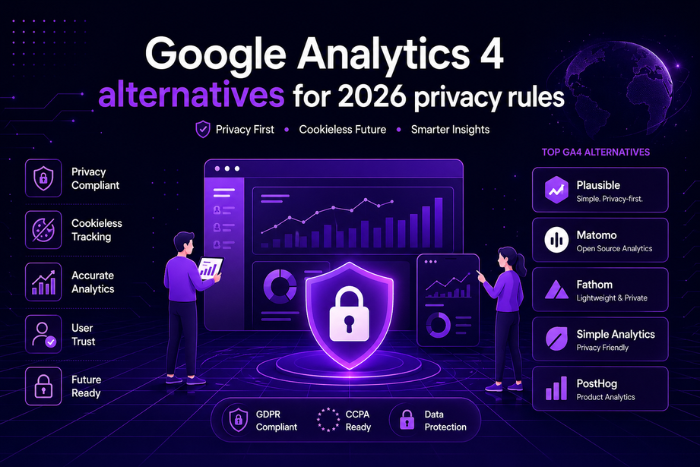
Google Analytics 4 Alternatives for 2026 Privacy Rules
Google Analytics 4 Alternatives for 2026 Privacy Rules Google Analytics 4 alternatives for 2026 privacy rules help businesses improve compliance, data ownership, and privacy-first analytics. Introduction As global privacy regulations tighten and businesses face increasing scrutiny over user data collection, understanding Google Analytics 4 alternatives for 2026 privacy rules has become essential for organizations seeking compliant, accurate, and future-ready analytics solutions. While GA4 remains widely used, concerns around GDPR, evolving privacy laws, consent requirements, third-party cookies, data ownership, and complexity are driving businesses to explore privacy-first analytics platforms. Modern alternatives offer streamlined dashboards, first-party data control, cookieless tracking, and improved compliance with regulations such as GDPR, CCPA, and emerging international standards. For businesses focused on maintaining customer trust, ensuring legal compliance, and preserving actionable data insights, selecting the right analytics platform is critical. In 2026, privacy-first analytics is no longer optional—it is a strategic necessity for sustainable digital growth. Why Google Analytics 4 Alternatives for 2026 Privacy Rules is Important Analytics platforms directly impact compliance, trust, and performance. Privacy ComplianceMeet GDPR, CCPA, and global privacy regulations. Data OwnershipGain better control over user data. Reduced Consent ComplexitySimplify compliance workflows. Improved User TrustPrivacy-first tracking builds credibility. Cookieless TrackingAdapt to browser restrictions. Simplified ReportingEasier dashboards for business decisions. Reduced Legal RiskMinimize compliance penalties. Future-Proof AnalyticsPrepare for stricter privacy environments. Types of Solutions Businesses can choose from multiple privacy-first analytics models: Simple Privacy AnalyticsPlausible, Fathom, Simple Analytics. Self-Hosted AnalyticsMatomo, Umami. Enterprise Privacy SolutionsAdobe Analytics, enterprise platforms. Behavior AnalyticsHeatmaps and session tools. Server-Side AnalyticsImproved compliance through backend tracking. Cookieless Analytics PlatformsConsent-light data collection. Custom BI AnalyticsBigQuery and private data warehouses. Hybrid Analytics EcosystemsCombining privacy tools with advanced reporting. Get Free Quotation Now..!! Key Features of Google Analytics 4 Alternatives for 2026 Privacy Rules Modern privacy-first analytics platforms provide: GDPR & CCPA ComplianceRegulatory-ready tracking. Cookieless MeasurementReduced dependency on cookies. First-Party Data ControlImproved data governance. Simplified DashboardsEasy-to-understand insights. Real-Time AnalyticsFast business intelligence. Server-Side TrackingEnhanced compliance. Low Data OverheadFaster website performance. Flexible IntegrationsCRM, CMS, and ecommerce compatibility. Custom ReportingBusiness-specific analytics. Development Process Migrating from GA4 requires strategic implementation: Current Analytics AuditEvaluate existing GA4 dependencies. Compliance AssessmentReview privacy risks. Platform SelectionChoose ideal privacy-first alternative. Tracking Architecture DesignBuild compliant analytics infrastructure. Implementation & IntegrationDeploy tracking tools. Testing & ValidationEnsure data accuracy. Compliance MonitoringMaintain legal standards. Ongoing OptimizationImprove reporting efficiency. Technology Stack Privacy-focused analytics systems rely on modern tools: Analytics Platforms: Plausible, Matomo, Fathom, UmamiTag Management: Server-side GTM, custom taggingCloud Infrastructure: AWS, Cloudflare, VercelDatabases: BigQuery, PostgreSQLBI Tools: Looker Studio, Power BIPrivacy Tools: Consent management platformsFrontend: JavaScript SDKsSecurity: Encryption, access control Cost Factors for Google Analytics 4 Alternatives for 2026 Privacy Rules Costs vary depending on business needs: Platform LicensingSubscription or self-hosting expenses. Traffic VolumeVisitor count impacts pricing. Compliance ComplexityRegulatory implementation costs. Customization NeedsAdvanced reporting requires investment. Server InfrastructureSelf-hosted solutions need resources. Migration CostsGA4 transition efforts. MaintenanceOngoing platform optimization. Team ExpertiseAnalytics implementation skills. Latest Trends Privacy analytics continues evolving rapidly: Cookieless Tracking GrowthPost-cookie analytics strategies. Server-Side Tracking ExpansionBetter data ownership. AI-Powered InsightsSmarter business intelligence. First-Party Data EcosystemsImproved customer ownership. Consent Optimization ToolsRegulatory automation. Self-Hosted Analytics GrowthGreater privacy control. Privacy-First UXUser trust as a business differentiator. Regulatory ExpansionNew global privacy laws. Why Choose Us for Google Analytics 4 Alternatives for 2026 Privacy Rules We help businesses build compliant, privacy-first analytics ecosystems designed for long-term growth. Privacy Compliance Expertise Deep understanding of evolving regulations. Analytics Migration Specialists Smooth transitions from GA4. Data Ownership Focus Protecting valuable business intelligence. Custom Reporting Solutions Tailored analytics frameworks. Security-First Implementation Advanced privacy protections. Simplified Business Intelligence Actionable dashboards. Transparent Deployment Strategy Clear project execution. Ongoing Compliance Support Future-ready privacy optimization. We empower businesses to transition toward privacy-first analytics strategies that improve compliance, customer trust, and sustainable data intelligence. Ready to future-proof your analytics strategy for 2026 privacy regulations?Let’s build a compliant, privacy-first analytics ecosystem for your business.Contact us today for expert analytics migration and compliance consultation. Get Free Quotation Now..!! Key Points : Explore Google Analytics 4 alternatives for 2026 privacy rules to improve compliance, data ownership, and customer trust. Compare privacy-first analytics platforms like Plausible, Matomo, Fathom, and cookieless tracking solutions. Adapt to GDPR, CCPA, and evolving global privacy laws with compliant website analytics strategies. Reduce legal risks and simplify consent management with server-side, self-hosted, and first-party analytics tools. Improve website performance with lightweight analytics platforms that prioritize privacy and speed. Leverage modern trends like cookieless tracking, AI-powered insights, and privacy-first data ecosystems. FAQ’s Why are businesses seeking GA4 alternatives? Due to privacy concerns, compliance challenges, and data ownership issues. Are privacy-first analytics tools GDPR compliant? Many are specifically designed for GDPR and CCPA compliance. What are the best GA4 alternatives? Popular options include Plausible, Matomo, Fathom, and Umami. Can businesses migrate without losing data insights? Yes, with proper implementation planning. Will privacy-first analytics affect SEO? No, analytics platforms primarily impact compliance and reporting. Are cookieless analytics accurate? Yes, many provide highly reliable measurement. Get Free Quotation Now..!!

Serverless Website Hosting: Vercel vs Netlify vs AWS 2026
Serverless Website Hosting: Vercel vs Netlify vs AWS 2026 Serverless website hosting: Vercel vs Netlify vs AWS 2026 comparison for speed, cost, scalability, security, and business growth. Introduction As modern websites demand faster deployment, global scalability, reduced infrastructure complexity, and superior performance, businesses are increasingly adopting serverless hosting solutions. Understanding Serverless website hosting: Vercel vs Netlify vs AWS 2026 is essential for companies seeking the right platform to maximize website speed, operational efficiency, and long-term digital ROI. Vercel, Netlify, and AWS each offer distinct advantages in deployment workflows, scalability, performance optimization, pricing structures, and enterprise readiness. Vercel excels in frontend optimization and Next.js integration, Netlify offers flexible JAMstack workflows, while AWS provides unmatched infrastructure customization and enterprise scalability. Choosing the right serverless platform impacts website performance, SEO rankings, operational costs, developer productivity, and business growth. In 2026, businesses must carefully assess hosting architecture based on traffic requirements, technical complexity, security, and future expansion goals. Why Serverless Website Hosting: Vercel vs Netlify vs AWS 2026 is Important Hosting decisions directly influence business performance and profitability. Improved Website SpeedFaster global content delivery. ScalabilitySupports business growth without infrastructure bottlenecks. Cost OptimizationPay-as-you-scale models reduce overhead. Developer ProductivitySimplified deployments improve efficiency. SEO BenefitsBetter Core Web Vitals and rankings. Enhanced SecurityManaged infrastructure reduces vulnerabilities. Global ReachDistributed CDN performance. Future-Proof InfrastructureSupports evolving technologies. Types of Solutions Different businesses require tailored hosting models: Frontend-Focused HostingVercel for React and Next.js. JAMstack WebsitesNetlify for flexible static deployments. Enterprise Cloud InfrastructureAWS for full-scale customization. eCommerce HostingHigh-performance transactional websites. SaaS PlatformsScalable web applications. API-Driven ApplicationsServerless backend integrations. Global Content PlatformsDistributed international websites. Hybrid ArchitecturesCombining frontend cloud with enterprise backend. Get Free Quotation Now..!! Key Features of Serverless Website Hosting: Vercel vs Netlify vs AWS 2026 Modern hosting platforms offer strategic capabilities: Instant DeploymentsGit-based automation. Edge Network DistributionFaster worldwide access. Serverless FunctionsFlexible backend capabilities. Automatic ScalingTraffic-responsive infrastructure. Built-In SecuritySSL, WAF, and compliance tools. Preview EnvironmentsFaster testing workflows. CI/CD PipelinesStreamlined development cycles. API IntegrationModern composable architectures. Performance MonitoringReal-time analytics and optimization. Development Process Choosing the right serverless platform requires strategic planning: Business Requirement AnalysisIdentify performance and scalability needs. Platform EvaluationCompare Vercel, Netlify, and AWS. Architecture DesignAlign infrastructure with business goals. Deployment SetupConfigure CI/CD and serverless functions. Performance OptimizationImprove Core Web Vitals. Security ConfigurationImplement enterprise-grade protection. Testing & MonitoringValidate scalability and uptime. Continuous Growth OptimizationAdapt hosting to evolving demands. Technology Stack Modern hosting ecosystems rely on advanced technologies: Frontend Frameworks: Next.js, React, Astro, VueHosting Platforms: Vercel, Netlify, AWS Amplify, AWS LambdaCDN: Cloudflare, AWS CloudFrontBackend: Node.js, Serverless APIsCI/CD Tools: GitHub Actions, GitLab CIDatabases: DynamoDB, Supabase, PlanetScaleSecurity: WAF, IAM, SSLMonitoring: Datadog, CloudWatch, GA4 Cost Factors Platform costs depend on project scale and complexity: Traffic VolumeHigher traffic increases bandwidth costs. Serverless Function UsageCompute usage impacts billing. Storage RequirementsMedia-heavy websites cost more. Developer Team NeedsComplexity affects management costs. Third-Party IntegrationsAdditional services increase expense. Enterprise ComplianceSecurity and governance requirements. Global DistributionMulti-region optimization costs. Vendor Lock-In RisksMigration considerations. Latest Trends Hosting technology continues advancing rapidly: Edge Computing ExpansionFaster distributed applications. AI-Powered Hosting OptimizationAutomated performance tuning. Composable Web ArchitecturesAPI-first ecosystems. Sustainable HostingGreen cloud adoption. Zero Trust Security ModelsAdvanced infrastructure protection. Global Multi-CDN StrategiesEnhanced redundancy. Developer Experience AutomationSimplified deployment pipelines. Hybrid Cloud FlexibilityMulti-platform hosting strategies. Why Choose Us for Serverless Website Hosting: Vercel vs Netlify vs AWS 2026 We help businesses deploy scalable, high-performance digital platforms optimized for long-term success. Platform Selection Expertise Strategic guidance for ideal hosting decisions. Performance-Driven Architecture Fast, SEO-optimized deployment solutions. Cost Optimization Focus Balancing performance with budget. Enterprise Scalability Hosting solutions built for growth. Security-First Implementation Advanced protection standards. Modern DevOps Excellence Automated, reliable workflows. Transparent Project Delivery Clear communication and measurable outcomes. Ongoing Infrastructure Support Continuous optimization for future success. We empower businesses to choose the right serverless hosting infrastructure that maximizes speed, scalability, security, and digital profitability. Ready to choose the ideal serverless hosting platform for your business?Let’s build scalable, future-ready web infrastructure tailored to your growth.Contact us today for expert hosting strategy and deployment consultation. Get Free Quotation Now..!! Key Points : Compare serverless website hosting: Vercel vs Netlify vs AWS 2026 for speed, scalability, cost, and performance. Understand which platform best supports modern business websites, SaaS platforms, ecommerce, and enterprise applications. Improve website speed, Core Web Vitals, SEO rankings, and global performance through optimized serverless infrastructure. Evaluate developer workflows, CI/CD pipelines, edge functions, security, and deployment flexibility. Analyze cost factors including bandwidth, serverless compute, storage, and enterprise scalability. Leverage modern hosting trends like edge computing, AI optimization, composable architectures, and green cloud solutions. FAQ’s Which platform is best for serverless hosting in 2026? It depends on your business size, technical needs, and growth goals. Is Vercel better for Next.js? Yes, Vercel offers superior native integration. Is Netlify suitable for enterprise projects? It can work well for many mid-size and scalable projects. When should businesses choose AWS? For maximum customization, enterprise scale, and advanced infrastructure. Which platform is most cost-effective? This varies by traffic, compute needs, and project complexity. Can serverless hosting improve SEO? Yes, through faster performance and better Core Web Vitals. Get Free Quotation Now..!!

Shopify Hydrogen 2.0 for Headless Ecommerce 2026
Shopify Hydrogen 2.0 for Headless Ecommerce 2026 Shopify Hydrogen 2.0 for headless ecommerce 2026 boosts speed, scalability, UX, and conversions for modern online stores. Introduction As ecommerce competition intensifies in 2026, businesses require faster, more scalable, and highly customizable online storefronts to meet evolving customer expectations. Shopify Hydrogen 2.0 for headless ecommerce 2026 has emerged as a powerful solution for brands seeking enterprise-grade flexibility, superior performance, and advanced customer experiences. Hydrogen 2.0, built on modern frameworks like Remix, enables developers to create custom storefronts powered by Shopify’s robust backend while decoupling frontend presentation for maximum control. This headless commerce model allows businesses to optimize speed, Core Web Vitals, omnichannel experiences, and conversion rates far beyond traditional Shopify themes. For businesses prioritizing growth, scalability, personalization, and competitive advantage, Shopify Hydrogen 2.0 offers future-ready ecommerce architecture. Understanding its benefits, implementation process, costs, and strategic value is essential for brands planning sustainable ecommerce success in 2026 and beyond. Why Shopify Hydrogen 2.0 for Headless Ecommerce 2026 is Important Modern ecommerce success increasingly depends on performance and flexibility. Superior Website SpeedFaster load times improve conversions. Advanced CustomizationFull frontend control supports unique brand experiences. ScalabilitySupports growing product catalogs and traffic. Enhanced SEOBetter Core Web Vitals improve rankings. Omnichannel CommerceSeamless integration across digital touchpoints. Improved Customer ExperiencePersonalized shopping journeys increase engagement. Global PerformanceEdge delivery improves international reach. Future-Proof ArchitectureAdapts to changing ecommerce trends. Types of Solutions Businesses can implement Hydrogen across multiple ecommerce models: Custom Shopify StorefrontsFully branded headless experiences. Enterprise Ecommerce PlatformsLarge-scale scalable commerce solutions. B2B Ecommerce PortalsAdvanced wholesale commerce. Omnichannel CommerceWeb, mobile, kiosk, and app integrations. Subscription Commerce PlatformsRecurring revenue storefronts. Global Ecommerce WebsitesMulti-region performance optimization. AI-Personalized Shopping ExperiencesDynamic customer journeys. Composable Commerce ArchitecturesAPI-first modular ecosystems. Get Free Quotation Now..!! Key Features of Shopify Hydrogen 2.0 for Headless Ecommerce 2026 Hydrogen 2.0 offers advanced commerce capabilities: Remix-Powered PerformanceFast routing and server rendering. Custom Storefront DesignUnlimited frontend flexibility. Oxygen Global HostingEdge deployment for speed. Storefront API IntegrationPowerful Shopify backend connectivity. SEO OptimizationBetter technical search performance. Dynamic PersonalizationAI and customer behavior integrations. Scalable Commerce InfrastructureEnterprise-grade growth support. Composable API EcosystemFlexible third-party integrations. Improved Conversion OptimizationFaster UX boosts sales. Development Process A successful Shopify Hydrogen implementation requires strategic planning: Business & Ecommerce Strategy AnalysisDefine goals and requirements. Storefront Architecture PlanningDesign headless framework. UI/UX DesignCreate optimized customer journeys. Hydrogen DevelopmentBuild custom frontend experiences. API & Backend IntegrationConnect Shopify services. SEO & Performance OptimizationEnhance discoverability and speed. Testing & QAValidate stability and scalability. Launch & Continuous OptimizationMonitor growth and improve. Technology Stack Modern headless Shopify stores use cutting-edge technologies: Frontend Framework: Shopify Hydrogen 2.0, Remix, ReactBackend: Shopify Storefront API, Shopify Admin APIHosting: Shopify Oxygen, Cloudflare, VercelCMS: Shopify CMS, Sanity, ContentfulProgramming Languages: JavaScript, TypeScriptSearch & Personalization: Algolia, AI enginesAnalytics: GA4, Shopify AnalyticsDevOps: Docker, GitHub Actions Cost Factors for Shopify Hydrogen 2.0 for Headless Ecommerce 2026 Investment depends on complexity and business scale: Custom Frontend DevelopmentTailored experiences increase cost. Store ComplexityLarger catalogs require advanced infrastructure. Third-Party IntegrationsAdditional systems add expense. SEO MigrationRanking protection planning. Design RequirementsPremium UX/UI impacts budgets. Hosting InfrastructureEnterprise hosting considerations. Maintenance & SupportOngoing performance optimization. Development ExpertiseSpecialized headless developers cost more. Latest Trends Headless ecommerce continues advancing rapidly: AI Commerce PersonalizationSmarter product recommendations. Composable Commerce GrowthModular ecommerce systems. Voice Commerce IntegrationConversational shopping. AR/VR Product ExperiencesImmersive customer journeys. Global Edge HostingFaster worldwide performance. Sustainable Ecommerce InfrastructureGreen hosting adoption. Zero-Party Data StrategiesPrivacy-first personalization. Advanced Subscription CommerceRecurring business models. Why Choose Us for Shopify Hydrogen 2.0 for Headless Ecommerce 2026 We help businesses build future-ready ecommerce platforms that maximize revenue and digital growth. Shopify Headless Expertise Deep specialization in Hydrogen architecture. Performance-Driven Development Fast, scalable ecommerce experiences. Conversion Optimization Focus Designed to increase sales and retention. SEO-First Approach Technical optimization for rankings. Enterprise Scalability Solutions built for long-term expansion. Transparent Project Management Clear communication and reliable delivery. Advanced Technology Integration Composable and API-first ecosystems. Ongoing Growth Support Continuous optimization and maintenance. We empower ecommerce brands to outperform competitors with scalable, high-converting, and innovative Shopify Hydrogen solutions. Ready to future-proof your ecommerce business with Shopify Hydrogen 2.0?Let’s build a high-performance headless storefront tailored for growth.Contact us today for expert Shopify Hydrogen development consultation. Get Free Quotation Now..!! Key Points : Explore Shopify Hydrogen 2.0 for headless ecommerce 2026 to build faster, scalable, and high-converting online stores. Improve ecommerce performance with Remix-powered storefronts, Oxygen hosting, and advanced Core Web Vitals optimization. Gain full frontend flexibility for custom UX, branding, omnichannel commerce, and enterprise-grade scalability. Leverage Shopify Hydrogen 2.0 for SEO growth, better customer experiences, and improved conversion rates. Understand development costs, architecture requirements, and ROI factors for headless Shopify implementation. Integrate AI personalization, voice commerce, composable commerce, and modern API-first ecosystems. FAQ’s What is Shopify Hydrogen 2.0? It is Shopify’s modern framework for building custom headless ecommerce storefronts. Why choose headless ecommerce in 2026? For better speed, scalability, customization, and omnichannel experiences. Is Shopify Hydrogen better than traditional Shopify themes? For complex, high-growth businesses, yes. Does Hydrogen improve SEO? Yes, through faster performance and improved Core Web Vitals. Is Shopify Hydrogen suitable for small businesses? It depends on complexity, budget, and growth goals. Can Hydrogen support global ecommerce? Yes, especially with Oxygen hosting and API scalability. Get Free Quotation Now..!!

Website Redesign Cost: When to Rebuild vs Refresh 2026
Website Redesign Cost: When to Rebuild vs Refresh 2026 Website redesign cost: When to rebuild vs refresh 2026 for better ROI, UX, SEO, scalability, and digital growth. Introduction In today’s highly competitive digital environment, websites must consistently evolve to meet modern user expectations, performance standards, SEO requirements, and business growth objectives. Understanding Website redesign cost: When to rebuild vs refresh 2026 is essential for businesses seeking the right balance between cost efficiency and long-term digital success. A website refresh typically focuses on design updates, minor UX improvements, branding enhancements, and performance tuning, while a full rebuild involves re-architecting the website’s design, technology stack, functionality, SEO framework, and scalability. Choosing the wrong approach can lead to overspending, technical debt, lost SEO rankings, and missed growth opportunities. In 2026, businesses must strategically assess whether their website requires a cosmetic refresh or a complete rebuild based on performance, security, conversion goals, and future scalability. Making the right investment can significantly improve customer acquisition, revenue generation, and overall ROI. Why Website Redesign Cost: When to Rebuild vs Refresh 2026 is Important Strategic website updates directly influence business profitability. Improved User ExperienceBetter UX increases conversions. SEO PreservationProper redesign prevents ranking loss. ScalabilitySupports future business growth. Cost EfficiencyAvoid unnecessary over-investment. Security ImprovementsModern infrastructure reduces risks. Performance OptimizationFaster websites improve engagement. Brand ModernizationUpdated design strengthens credibility. Revenue GrowthBetter websites generate stronger ROI. Types of Solutions Businesses can choose from multiple website modernization paths: Visual RefreshUpdated branding, UI, and aesthetics. UX/UI RedesignEnhanced navigation and user journeys. SEO RefreshTechnical and content optimization. Platform MigrationCMS or framework upgrades. Full Website RebuildComplete redevelopment for scalability. eCommerce RedesignConversion-focused commerce optimization. Mobile OptimizationResponsive and mobile-first upgrades. Accessibility Compliance UpdatesWCAG improvements. Performance OptimizationSpeed, Core Web Vitals, and infrastructure upgrades. Get Free Quotation Now..!! Key Features of Website Redesign Cost: When to Rebuild vs Refresh 2026 Modern website redesign strategies should include: Performance EnhancementsFaster page speeds. SEO Migration PlanningProtect rankings. Mobile-First UXImproved smartphone usability. Scalable ArchitectureSupports future expansion. Security ModernizationUpdated protections. Branding UpgradesModernized digital identity. CMS FlexibilityEasier content management. Analytics IntegrationBetter performance tracking. Accessibility ComplianceInclusive digital experiences. Development Process Successful redesigns require structured execution: Website AuditAssess current design, performance, and SEO. Business Goal AlignmentDefine rebuild vs refresh objectives. Scope PlanningDetermine required upgrades. UX/UI StrategyDesign improved customer journeys. Technical DevelopmentBuild or optimize infrastructure. SEO MigrationProtect organic visibility. Testing & Quality AssuranceValidate functionality. Launch & Ongoing OptimizationMonitor long-term success. Technology Stack for Website Redesign Cost: When to Rebuild vs Refresh 2026 Modern redesign projects rely on advanced technologies: CMS Platforms: WordPress, Webflow, Shopify, Headless CMSFrontend: Next.js, React, Vue.jsBackend: Node.js, PHP, LaravelHosting: AWS, Cloudflare, VercelSEO Tools: Search Console, Ahrefs, SemrushAnalytics: GA4, HotjarDesign Tools: Figma, Adobe XDSecurity: SSL, WAF, Zero Trust Cost Factors for Website Redesign Cost: When to Rebuild vs Refresh 2026 Investment varies depending on project complexity: Website SizeMore pages increase cost. Refresh vs Rebuild ScopeFull rebuilds require larger budgets. Custom Design NeedsTailored UX/UI impacts pricing. SEO Migration ComplexityRanking preservation adds value. Platform ChangesCMS migration increases scope. Feature RequirementsAdvanced functionality costs more. Accessibility & ComplianceRegulatory improvements. Maintenance & SupportOngoing optimization expenses. Latest Trends Website modernization continues evolving rapidly: AI-Powered PersonalizationSmarter user experiences. Headless CMS AdoptionFlexible content ecosystems. Core Web Vitals PrioritizationPerformance-focused redesigns. Accessibility ComplianceWCAG 2.2 integration. Voice Search OptimizationConversational UX. Composable ArchitecturesModular digital systems. Green Hosting IntegrationSustainable web infrastructure. Zero Trust SecurityAdvanced protection frameworks. Why Choose Us for Website Redesign Cost: When to Rebuild vs Refresh 2026 We help businesses maximize digital ROI through strategic website modernization. Strategic Redesign Expertise Deep experience in refreshes and rebuilds. ROI-Focused Planning Investment strategies aligned with business growth. SEO Preservation Excellence Protecting visibility throughout redesign. Performance-Driven Development Faster, more scalable websites. Transparent Cost Planning Clear budgets and timelines. Conversion-Centric UX Design Driving measurable business outcomes. Enterprise-Grade Security Modern protection standards. Continuous Optimization Support Long-term digital growth partnerships. We empower businesses to make smarter redesign investments that improve performance, strengthen brand presence, and maximize long-term profitability. Ready to modernize your website for stronger ROI in 2026?Let’s determine whether your business needs a strategic refresh or full rebuild.Contact us today for expert website redesign consultation and development. Get Free Quotation Now..!! Key Points : Understand website redesign cost: When to rebuild vs refresh 2026 for smarter digital investment decisions. Compare visual refreshes, UX improvements, and full website rebuilds based on business goals and ROI. Improve website performance, SEO, scalability, security, and conversions through strategic redesign planning. Learn cost factors including design complexity, platform migration, SEO preservation, and feature upgrades. Leverage modern technologies like headless CMS, Next.js, AI personalization, and Core Web Vitals optimization. Protect search rankings and customer trust during redesign with proper technical SEO and migration strategies. FAQ’s What is the difference between a website refresh and rebuild? A refresh updates design and UX, while a rebuild involves full redevelopment. When should businesses rebuild instead of refresh? When scalability, security, or outdated architecture limit growth. How much does website redesign cost in 2026? Costs vary widely based on project size, complexity, and goals. Will redesigning hurt SEO? Not with proper SEO migration planning. What industries benefit most from redesign? Virtually all industries with digital customer engagement. How do I know which option is best? A professional audit can determine whether refresh or rebuild offers better ROI. Get Free Quotation Now..!!
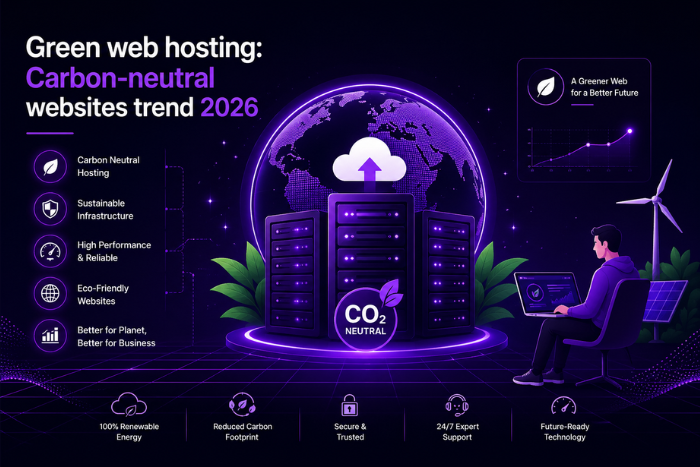
Green Web Hosting: Carbon-Neutral Websites Trend 2026
Green Web Hosting: Carbon-Neutral Websites Trend 2026 Green web hosting: Carbon-neutral websites trend 2026 for sustainable performance, lower emissions, SEO, and eco-friendly growth. Introduction As sustainability becomes a core business priority, companies are increasingly rethinking their digital infrastructure to reduce environmental impact while maintaining performance and scalability. Understanding Green web hosting: Carbon-neutral websites trend 2026 is essential for organizations seeking environmentally responsible web solutions without sacrificing speed, security, or SEO performance. Traditional web hosting relies heavily on energy-intensive data centers, contributing significantly to global carbon emissions. In contrast, green web hosting leverages renewable energy, carbon offset programs, energy-efficient infrastructure, and sustainable data center practices to create lower-emission digital ecosystems. In 2026, carbon-neutral websites are becoming more than an environmental initiative—they are also a strategic business advantage. Businesses adopting sustainable hosting solutions can improve ESG performance, strengthen brand reputation, appeal to eco-conscious consumers, and align with global sustainability standards while future-proofing digital operations. Why Green Web Hosting: Carbon-Neutral Websites Trend 2026 is Important Sustainable hosting is becoming critical for long-term business growth. Reduced Carbon FootprintLower environmental impact through cleaner infrastructure. ESG ComplianceSupports sustainability and corporate responsibility goals. Brand ReputationStrengthens consumer trust and ethical positioning. SEO & PerformanceModern green hosting often improves site efficiency. Cost EfficiencyEnergy-efficient technologies can lower long-term expenses. Regulatory PreparednessAlign with future environmental policies. Customer PreferenceEco-conscious audiences increasingly value sustainability. Competitive DifferentiationSustainable businesses gain stronger market positioning. Types of Solutions Businesses can adopt multiple sustainable web strategies: Renewable Energy HostingServers powered by solar, wind, or hydroelectric energy. Carbon Offset HostingNeutralizing emissions through verified offset programs. Energy-Efficient Data CentersLower power consumption through optimized infrastructure. Managed Green HostingSustainable hosting with maintenance support. Green Cloud HostingEco-friendly scalable cloud environments. WordPress Green HostingSustainable CMS hosting solutions. Enterprise Carbon-Neutral HostingLarge-scale sustainable infrastructure. Sustainable CDN SolutionsLower-emission content delivery networks. Eco-Friendly Website OptimizationReducing digital energy consumption. Get Free Quotation Now..!! Key Features of Green Web Hosting: Carbon-Neutral Websites Trend 2026 Modern sustainable hosting includes advanced capabilities: Renewable Energy InfrastructureClean energy-powered hosting environments. Carbon Offset CertificationsVerified emissions balancing. Efficient Cooling TechnologiesReduced data center energy waste. Optimized Server UtilizationLower resource consumption. Scalable Cloud PerformanceSustainable business growth. High Security StandardsEnterprise-grade digital protection. Fast Load SpeedsPerformance-focused sustainability. Reliable UptimeStable hosting infrastructure. Transparent Sustainability ReportingMeasurable environmental impact. Development Process Transitioning to carbon-neutral web infrastructure requires strategic planning: Current Infrastructure AssessmentEvaluate hosting environmental impact. Sustainability Goal DefinitionAlign with ESG and business objectives. Hosting Provider SelectionChoose verified green hosting partners. Website Migration PlanningSecurely transfer digital assets. Performance OptimizationMaintain speed and reliability. Carbon Offset ImplementationNeutralize remaining emissions. Monitoring & ReportingTrack sustainability outcomes. Continuous OptimizationImprove digital efficiency over time. Technology Stack Modern green hosting ecosystems leverage advanced technologies: Hosting Platforms: GreenGeeks, AWS Renewable Regions, Google Cloud, SiteGround Green InitiativesCMS Platforms: WordPress, Headless CMS, ShopifyCDN Solutions: Cloudflare Green CDN, FastlyPerformance Tools: Core Web Vitals, LighthouseCloud Infrastructure: Kubernetes, Docker, ServerlessEnergy Monitoring: Carbon tracking dashboardsSecurity: SSL, WAF, Zero TrustOptimization Tools: Image compression, caching, code minimization Cost Factors for Green Web Hosting: Carbon-Neutral Websites Trend 2026 Sustainable hosting investment varies by several factors: Hosting Provider PricingPremium sustainability services may vary. Website ComplexityResource requirements affect costs. Migration ExpensesTransitioning infrastructure may require investment. Carbon Offset ProgramsCertification and environmental initiatives. Performance RequirementsHigh-traffic websites may need advanced infrastructure. Security StandardsCompliance and protection costs. Scalability NeedsEnterprise expansion impacts budgets. Maintenance ServicesOngoing support and optimization. Latest Trends Sustainable web infrastructure continues advancing rapidly: Renewable-Powered Data CentersIncreasing global adoption. Net-Zero Hosting SolutionsCarbon-negative infrastructure expansion. Sustainable Cloud PlatformsMajor providers improving ESG practices. Energy-Efficient Web DesignReducing frontend digital waste. Carbon Footprint MonitoringReal-time sustainability metrics. Green SEO StrategiesPerformance and sustainability alignment. Circular IT InfrastructureHardware lifecycle sustainability. Enterprise ESG Web TransformationSustainability becoming mandatory. Why Choose Us for Green Web Hosting: Carbon-Neutral Websites Trend 2026 We help businesses build sustainable, high-performance digital infrastructures. Green Hosting Expertise Deep specialization in eco-friendly web solutions. ESG-Focused Digital Strategy Aligning websites with sustainability goals. Performance-Optimized Sustainability Fast, reliable, low-emission hosting solutions. Secure Infrastructure Enterprise-grade protection. Transparent Sustainability Planning Clear environmental impact strategies. Cost-Efficient Migration Support Smooth transitions to green hosting. Future-Ready Compliance Prepared for evolving regulations. Long-Term Innovation Support Continuous optimization for sustainable growth. We empower businesses to reduce digital carbon footprints while improving website performance, SEO, and customer trust through sustainable hosting solutions. Ready to future-proof your website with carbon-neutral hosting?Let’s build sustainable digital infrastructure that supports growth and environmental responsibility.Contact us today for expert green web hosting solutions. Get Free Quotation Now..!! Key Points : Explore green web hosting: Carbon-neutral websites trend 2026 for sustainable digital transformation. Reduce website carbon footprints through renewable energy hosting, carbon offsets, and eco-friendly infrastructure. Improve ESG compliance, brand reputation, and customer trust with sustainable hosting solutions. Maintain high website performance, security, and SEO while adopting environmentally responsible web hosting. Understand cost factors, migration strategies, and scalable green hosting options for businesses. Stay ahead of sustainability trends with carbon-neutral website strategies that support long-term growth. FAQ’s What is green web hosting? Green web hosting uses renewable energy and sustainability practices to reduce website carbon emissions. What does carbon-neutral hosting mean? It means hosting providers offset or eliminate carbon emissions from operations. Does green hosting affect website speed? Modern green hosting often matches or exceeds traditional hosting performance. Is green hosting more expensive? Costs vary, but long-term efficiency can offset expenses. Why is green hosting important for businesses? It improves sustainability, ESG performance, and brand trust. Does green hosting help SEO? Indirectly, through improved performance and brand positioning. Get Free Quotation Now..!!

PHP 8.4 vs Node.js for Web Apps: Speed Comparison 2026
PHP 8.4 vs Node.js for Web Apps: Speed Comparison 2026 PHP 8.4 vs Node.js for web apps: Speed comparison 2026 for performance, scalability, cost, and backend strategy. Introduction As businesses increasingly rely on high-performance web applications, selecting the right backend technology has become a crucial strategic decision. Understanding PHP 8.4 vs Node.js for web apps: Speed comparison 2026 helps organizations choose the most effective framework for scalability, speed, cost efficiency, and long-term digital success. In 2026, PHP 8.4 continues evolving with stronger execution performance, JIT improvements, asynchronous capabilities, and modern frameworks like Laravel. Meanwhile, Node.js remains a dominant force for real-time applications, microservices, APIs, and event-driven systems due to its non-blocking architecture and JavaScript ecosystem. The right choice depends on business goals—whether building enterprise applications, SaaS platforms, eCommerce websites, APIs, or high-concurrency systems. Evaluating speed, throughput, development costs, security, maintainability, and deployment flexibility is essential for maximizing ROI and future-proofing web infrastructure. Why PHP 8.4 vs Node.js for Web Apps: Speed Comparison 2026 is Important Backend architecture directly impacts business performance. Application SpeedFaster systems improve UX and SEO. ScalabilitySupports growing traffic demands. Operational EfficiencyOptimized stacks reduce resource costs. Development SpeedFramework productivity affects timelines. SecurityStrong backend systems reduce vulnerabilities. Maintenance CostsLong-term sustainability matters. Real-Time CapabilityCritical for modern digital products. Business ROITechnology choices impact profitability. Types of Solutions Different backend technologies serve different business models: PHP for Business WebsitesCorporate websites, CMS, and eCommerce. Node.js for Real-Time ApplicationsChat, streaming, live tracking. PHP for Enterprise PlatformsWorkflow systems and portals. Node.js for APIs & MicroservicesEvent-driven architectures. Hybrid ArchitecturesCombining PHP core systems with Node.js services. SaaS PlatformsFramework selection based on scalability. Marketplace PlatformsPerformance and transactional needs. Custom Web ApplicationsTailored backend solutions. Get Free Quotation Now..!! Key Features of PHP 8.4 vs Node.js for Web Apps: Speed Comparison 2026 Each technology offers distinct strengths: PHP 8.4 JIT EnhancementsImproved execution efficiency. Laravel EcosystemRapid enterprise development. Node.js Non-Blocking I/OHigh concurrency support. JavaScript Full-Stack PotentialUnified frontend/backend development. Microservices ReadinessStrong Node.js advantage. Database FlexibilityBroad ecosystem support. Security FrameworksMature solutions across both platforms. Cloud Deployment CompatibilityModern infrastructure support. Community EcosystemExtensive tooling and packages. Development Process Choosing the right backend requires strategic analysis: Business Requirement AssessmentDefine traffic, features, and scalability goals. Performance BenchmarkingCompare speed and throughput. Architecture PlanningMonolith, microservices, or hybrid. Framework SelectionLaravel, Symfony, NestJS, Express, etc. Development ImplementationBuild secure and scalable systems. Security TestingOWASP and compliance validation. Performance OptimizationCaching, scaling, and infrastructure tuning. Deployment & Continuous MonitoringLong-term optimization. Technology Stack Modern backend systems leverage advanced technologies: PHP Stack: PHP 8.4, Laravel, Symfony, MySQL, RedisNode.js Stack: Node.js, NestJS, Express, MongoDB, PostgreSQLFrontend: React, Next.js, Vue.jsHosting: AWS, DigitalOcean, Vercel, AzureDevOps: Docker, Kubernetes, CI/CDSecurity: OAuth, JWT, WAF, SSLMonitoring: Datadog, New Relic, SentryCaching: Redis, Memcached Cost Factors Investment depends on multiple business variables: Developer AvailabilityTalent pool costs vary. Framework ComplexityProject structure impacts budgets. Infrastructure CostsResource efficiency matters. Maintenance RequirementsOngoing support costs. Scaling DemandsGrowth increases complexity. Security ComplianceRegulatory standards add expenses. Integration ScopeAPIs and third-party systems. Migration CostsSwitching technologies can be expensive. Latest Trends Backend ecosystems continue evolving: Modern PHP Async GrowthEnhanced performance capabilities. Node.js Enterprise ExpansionBroader adoption for APIs and SaaS. Hybrid Architecture PopularityCombining strengths of both stacks. Serverless DeploymentsFaster infrastructure scaling. AI IntegrationSmarter backend workflows. Microservices AdoptionFlexible architecture models. Zero Trust SecurityBackend security modernization. Performance-Driven DevelopmentCore Web Vitals influencing backend choices. Why Choose Us for PHP 8.4 vs Node.js for Web Apps: Speed Comparison 2026 We help businesses choose and implement backend technologies that maximize speed, scalability, and ROI. Backend Strategy Expertise Deep specialization across PHP and Node.js ecosystems. Performance Optimization Building faster, more efficient applications. Scalable Architecture Design Future-ready backend systems. Security-First Development Compliance-driven infrastructure. Transparent Cost Planning Budget-focused development strategies. Enterprise-Grade Solutions Robust systems for growing businesses. Hybrid Technology Consulting Combining strengths for optimal outcomes. Continuous Support Long-term digital growth partnerships. We empower businesses to build powerful, secure, and scalable web applications with the right backend technology strategy. Ready to choose the ideal backend for your business in 2026?Let’s build high-performance web applications optimized for speed, scalability, and profitability.Contact us today for expert backend consultation and development. Get Free Quotation Now..!! Key Points : Compare PHP 8.4 vs Node.js for web apps: Speed comparison 2026 for performance, scalability, and business ROI. Evaluate backend speed, throughput, and real-world efficiency for enterprise websites, SaaS, APIs, and real-time applications. Understand when PHP 8.4 excels for business systems, eCommerce, and enterprise platforms. Discover why Node.js remains strong for APIs, microservices, and high-concurrency applications. Analyze development costs, maintenance, hosting, and long-term scalability factors. Leverage modern frameworks like Laravel, Symfony, NestJS, and Express for optimized web development. FAQ’s Is PHP 8.4 faster than older PHP versions? Yes, PHP 8.4 introduces major performance improvements. Is Node.js better for real-time applications? Yes, Node.js excels in event-driven, high-concurrency environments. Which backend is better for eCommerce? PHP (Laravel, Magento, WooCommerce) often remains strong for traditional commerce. Which stack scales better? Node.js often scales more efficiently for high-concurrency apps, but architecture matters most. Can businesses combine PHP and Node.js? Yes, hybrid architectures are increasingly common. Which backend is more cost-effective? PHP often offers lower development costs for standard business systems. Get Free Quotation Now..!!

Progressive Web Apps PWA Market Share Growth 2026
Progressive Web Apps PWA Market Share Growth 2026 Progressive Web Apps PWA market share growth 2026 through mobile UX, cost savings, SEO, scalability, and business innovation. Introduction The digital landscape is rapidly evolving, and businesses are increasingly prioritizing faster, more engaging, and cost-effective web experiences. Understanding Progressive Web Apps PWA market share growth 2026 is essential for organizations aiming to stay competitive in mobile-first, performance-driven markets. Progressive Web Apps (PWAs) combine the best capabilities of websites and native mobile applications, offering improved speed, offline functionality, push notifications, enhanced SEO, and lower development costs. As smartphone adoption, mobile commerce, and user expectations continue rising, PWAs are becoming a strategic technology choice across industries such as eCommerce, healthcare, finance, travel, education, and enterprise services. By 2026, PWA adoption is expected to accelerate significantly due to advancements in AI integration, better browser support, improved user retention, and scalable digital transformation strategies. Businesses leveraging PWAs can improve customer engagement, boost conversion rates, and reduce infrastructure expenses while future-proofing their digital ecosystems. Why Progressive Web Apps PWA Market Share Growth 2026 is Important PWAs are reshaping how businesses deliver mobile and web experiences. Mobile-First User ExperienceFaster, app-like performance improves customer satisfaction. Lower Development CostsSingle-platform solutions reduce expenses. SEO AdvantagesSearch engines index PWAs effectively. Improved Conversion RatesFaster loading speeds drive sales. Offline AccessibilityEnhanced usability without constant connectivity. Scalable InfrastructureSupports business growth efficiently. Cross-Platform CompatibilityWorks seamlessly across devices. Future-Proof Digital StrategyAligns with modern web trends. Types of Solutions Businesses can deploy PWAs across diverse use cases: eCommerce PWAsHigh-conversion online shopping experiences. Enterprise PWAsInternal business systems and portals. Healthcare PWAsPatient engagement and telemedicine platforms. Educational PWAsLearning management systems. Travel & Hospitality PWAsBooking and customer engagement. Financial Services PWAsBanking and fintech platforms. Content Publishing PWAsMedia and information portals. On-Demand Service PWAsLogistics and delivery ecosystems. SaaS PlatformsBusiness software accessibility. Get Free Quotation Now..!! Key Features of Progressive Web Apps PWA Market Share Growth 2026 Modern PWAs offer advanced digital capabilities: Offline FunctionalityAccess without internet connectivity. Push NotificationsStrong customer retention tools. Fast Loading SpeedsImproved Core Web Vitals. Responsive DesignSeamless device adaptability. Secure HTTPS InfrastructureStrong data protection. App-Like UXNative-style interactions. Search Engine VisibilitySEO-friendly architecture. Reduced Storage RequirementsLightweight performance. Easy UpdatesNo app store dependency. Development Process Building successful PWAs requires strategic execution: Business Requirement AnalysisDefine user goals and operational needs. UX/UI PlanningDesign app-like customer journeys. Technical Architecture DesignPlan offline, scalability, and performance layers. Frontend DevelopmentBuild responsive interfaces. Backend IntegrationConnect APIs and databases. SEO & Performance OptimizationMaximize discoverability. Testing & Quality AssuranceValidate across devices. Deployment & Continuous UpdatesLaunch scalable solutions. Technology Stack Leading PWA development relies on modern technologies: Frontend: React, Next.js, Angular, Vue.jsPWA Tools: Service Workers, Workbox, Web App ManifestBackend: Node.js, Laravel, Python, FirebaseHosting: AWS, Google Cloud, Vercel, NetlifyDatabase: MongoDB, PostgreSQL, SupabaseAnalytics: GA4, Firebase AnalyticsPerformance Tools: Lighthouse, Core Web VitalsSecurity: HTTPS, SSL, OAuth Cost Factors for Progressive Web Apps PWA Market Share Growth 2026 Several variables influence PWA investment: Project ComplexityBasic vs enterprise functionality. Custom FeaturesPush, offline, AI, integrations. Technology StackFramework and backend choices. Design RequirementsUI/UX sophistication. Maintenance CostsContinuous updates and security. Scalability NeedsInfrastructure expansion. Third-Party IntegrationsPayment, CRM, APIs. Developer ExpertiseSpecialized development teams. Latest Trends PWA innovation continues accelerating: AI-Powered PersonalizationSmarter customer experiences. Voice Search IntegrationConversational interactions. Headless Commerce PWAsFlexible eCommerce ecosystems. Super App DevelopmentMulti-functional digital platforms. 5G Performance OptimizationFaster global experiences. Enhanced Security StandardsStronger compliance. Composable ArchitecturesModular digital systems. Cross-Platform ExpansionBroader enterprise adoption. Why Choose Us for Progressive Web Apps PWA Market Share Growth 2026 We help businesses leverage PWAs for growth, scalability, and competitive advantage. Advanced PWA Expertise Deep specialization in modern web app technologies. Performance-First Development Optimized for speed, SEO, and conversions. Cost-Efficient Digital Transformation Maximizing ROI with scalable solutions. Enterprise-Ready Security Robust infrastructure protection. Cross-Industry Experience Serving eCommerce, SaaS, enterprise, and healthcare. Transparent Development Strategy Clear roadmaps and measurable results. Ongoing Support & Optimization Continuous innovation partnerships. Business-Centric Solutions Technology aligned with growth goals. We empower businesses to build future-ready web applications that drive engagement, reduce costs, and maximize long-term digital success. Ready to capitalize on PWA growth in 2026?Let’s build scalable, high-performance web apps that transform your digital business.Contact us today for expert Progressive Web App development solutions. Get Free Quotation Now..!! Key Points : Understand Progressive Web Apps PWA market share growth 2026 and why businesses are rapidly adopting PWAs. Leverage PWA benefits like faster performance, offline functionality, push notifications, and SEO advantages. Reduce mobile app development costs with scalable cross-platform Progressive Web App solutions. Improve user engagement, retention, and conversions through app-like web experiences. Explore PWA adoption across eCommerce, healthcare, finance, SaaS, and enterprise sectors. Utilize modern technologies like React, Next.js, service workers, and headless architectures for future-ready PWAs. FAQ’s What is a Progressive Web App (PWA)? A PWA is a web application that offers app-like functionality with browser accessibility. Why are PWAs growing in 2026? Due to cost efficiency, mobile optimization, SEO benefits, and enhanced UX. Do PWAs improve SEO? Yes, they are indexable and often improve technical SEO. Which industries benefit most from PWAs? eCommerce, healthcare, education, finance, and SaaS sectors. How much does PWA development cost? Costs vary based on complexity and business requirements. What is the future of PWAs? PWAs are expected to continue expanding as a major digital transformation solution. Get Free Quotation Now..!!

