




Discover the features of a good car rental website including booking systems, fleet listings, payments, and real-time availability.
Features of a Good Car Rental Website
The transportation and mobility industry has rapidly moved toward digital platforms, making car rental websites essential for modern vehicle rental businesses. Today’s customers expect to browse available vehicles, compare prices, and book rentals online quickly and securely. A well-designed website allows car rental companies to manage their fleet, handle reservations efficiently, and deliver a seamless experience to customers.
Understanding the features of a good car rental website is crucial for building a platform that attracts customers and simplifies vehicle booking processes. Modern car rental websites go beyond simple vehicle listings—they include advanced booking systems, real-time vehicle availability, secure payment gateways, and automated fleet management tools.
A high-performing car rental website also integrates features such as location-based search, customer reviews, dynamic pricing, and analytics dashboards. These tools help businesses improve operational efficiency while enhancing the user experience.
Whether you operate a local car hire company, an airport rental service, or a large vehicle leasing platform, implementing the right features ensures your website remains competitive and scalable. This guide explores the essential components every successful car rental website should include.
Why Features of a Good Car Rental Website Are Important
A car rental website must provide a fast and convenient booking experience for customers. Without the right features, users may struggle to find available vehicles or complete reservations easily.
Implementing the features of a good car rental website offers several advantages:
Simplified vehicle booking processes for customers
Better fleet management through automated scheduling and availability tracking
Improved customer experience with real-time updates and online payments
Higher booking conversions through user-friendly interfaces
Stronger online presence through SEO-optimized vehicle listings
A well-structured car rental platform allows customers to browse vehicles, check availability, compare rental options, and complete bookings within minutes.
For rental companies, these platforms reduce manual operations, streamline fleet management, and improve overall efficiency.
Types of Car Rental Website Solutions
Car rental platforms can serve different transportation businesses depending on their services and target customers.
Common types include:
Local Car Rental Websites
Platforms designed for local vehicle rental companies offering short-term rentals.Airport Car Rental Platforms
Websites specializing in airport pick-up and drop-off services.Luxury Car Rental Websites
Platforms offering high-end vehicles for premium customers and special occasions.Long-Term Car Leasing Platforms
Websites focused on monthly or yearly vehicle leasing options.Peer-to-Peer Car Rental Platforms
Marketplaces where car owners can rent their vehicles to others.Corporate Fleet Rental Platforms
Platforms designed for businesses that require fleet rental services.Travel and Tourism Car Rental Platforms
Websites integrated with travel booking systems to offer rental vehicles for tourists.
Each platform requires customized features to manage bookings, fleet inventory, and customer communication.
Key Features of a Good Car Rental Website
A successful car rental website must provide features that simplify vehicle booking and fleet management.
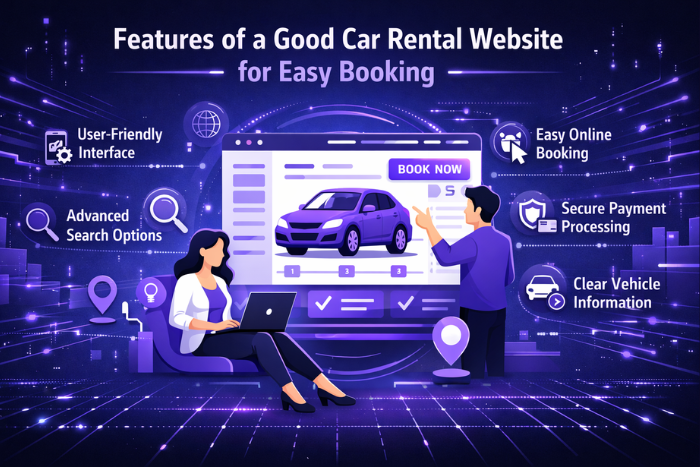
Important features of a good car rental website include:
Vehicle Inventory and Listings
The platform should display available vehicles with images, specifications, and pricing.Online Booking System
Customers must be able to select rental dates, choose vehicles, and confirm reservations online.Real-Time Vehicle Availability
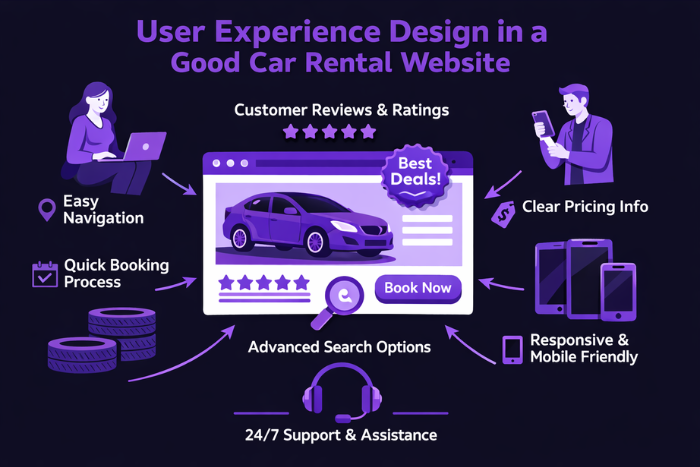
The system should update availability instantly to avoid double bookings.Advanced Search and Filters
Users should be able to search vehicles by category, price, fuel type, seating capacity, and location.Secure Online Payment Gateway
Integration with payment systems ensures safe transactions.Customer Reviews and Ratings
User feedback builds trust and helps new customers choose rental services.User Registration and Profiles
Customers can create accounts to manage bookings and rental history.Fleet Management Dashboard
Admin tools help rental companies track vehicle availability, maintenance schedules, and reservations.Location-Based Booking
Integration with maps allows customers to select pickup and drop-off locations.Automated Booking Notifications
Email or SMS alerts confirm reservations and provide reminders.Dynamic Pricing Management
Rental rates can automatically adjust based on demand and seasonality.SEO-Optimized Vehicle Pages
Individual vehicle pages help attract organic search traffic.
These features ensure both customers and administrators can manage rentals efficiently.
Development Process
Developing a reliable car rental website requires a structured development process.
Requirement Analysis and Market Research
Understanding the rental business model, fleet size, and customer requirements.Information Architecture Planning
Designing vehicle categories, booking workflows, and navigation structures.UI/UX Design
Creating intuitive layouts for browsing vehicles and completing bookings.Backend Development
Building booking systems, payment integrations, and fleet management modules.Feature Integration
Implementing search filters, notifications, maps, and customer dashboards.Testing and Quality Assurance
Conducting performance tests, security checks, and usability testing.Deployment and Maintenance
Launching the platform with scalable infrastructure and ongoing updates.
This process ensures the platform remains secure, efficient, and user-friendly.
Technology Stack
Modern car rental websites use reliable technologies to manage bookings and fleet operations.
Front-End: React.js, Vue.js, Angular, Next.js
Back-End: Node.js, Laravel, Django, Ruby on Rails
Databases: PostgreSQL, MongoDB, MySQL, Redis
Maps & Location Services: Google Maps API, Mapbox
Cloud Services: AWS, Google Cloud, Microsoft Azure
DevOps: Docker, Kubernetes, CI/CD pipelines
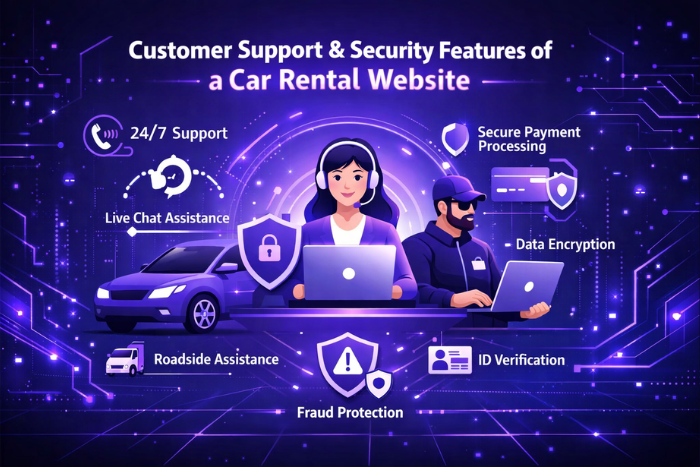
Security: OAuth authentication, SSL encryption, role-based access control (RBAC)
These technologies ensure high performance and scalability.

Cost Factors
The cost of building a car rental website depends on several factors.
Key considerations include:
Complexity of booking and reservation systems
Fleet management and scheduling features
Payment gateway integrations
Location-based services and map integrations
Custom UI/UX design
Customer dashboards and profile systems
Hosting infrastructure and cloud services
Maintenance and feature updates
A basic car rental platform may require moderate investment, while enterprise-level rental management systems may require larger development budgets.
Flexible development models allow businesses to scale their platforms over time.
Latest Trends in Car Rental Website Development
The vehicle rental industry continues evolving with new digital innovations.
Key trends include:
AI-powered pricing and demand forecasting
Mobile-first rental platforms
Contactless vehicle rentals and digital keys
Telematics integration for fleet tracking
Automated identity verification systems
Subscription-based car rental models
Smart fleet analytics dashboards
Voice-enabled vehicle booking systems
These technologies help rental companies improve efficiency and customer satisfaction.
Why Choose Us to Build Your Car Rental Website?
Building a successful car rental platform requires technical expertise and deep understanding of the mobility industry.
Our team specializes in developing scalable and feature-rich vehicle rental websites tailored to your business model.
Here’s why clients choose us:
User-Centered Website Design – Simple booking processes that improve customer experience.
Scalable Fleet Management Systems – Platforms capable of handling large vehicle inventories.
Advanced Booking and Reservation Tools – Streamlined rental workflows and automated scheduling.
Secure Payment Integrations – Safe online transactions for customers.
SEO-Optimized Vehicle Listings – Increasing search engine visibility.
Mobile-Responsive Development – Seamless experiences across devices.
Custom Rental Features – Tailored solutions for car hire companies.
Long-Term Support and Optimization – Continuous updates and performance monitoring.
We help car rental businesses create powerful online platforms that increase bookings and improve operational efficiency.
Ready to build a high-performing car rental website?
Let’s create a scalable vehicle rental platform tailored to your business.
Contact us today for a free consultation and customized quote.
Key Points :
- A good car rental website should include an online booking system that allows customers to reserve vehicles quickly and easily.
- Real-time vehicle availability helps users see which cars are available for selected dates and locations.
- Detailed vehicle listings with images and specifications help customers compare cars before booking.
- Advanced search and filtering options allow users to find vehicles based on price, type, seating capacity, or fuel type.
- Secure online payment gateway integration ensures safe and convenient booking transactions.
- Customer reviews and ratings build trust and help new users choose reliable car rental services.
FAQ's
Important features include vehicle listings, online booking systems, payment gateways, search filters, and fleet management tools.
Users browse available vehicles, select rental dates, choose pickup locations, and complete bookings through the platform.
Technologies such as React, Node.js, Laravel, PostgreSQL, and cloud platforms like AWS are commonly used.
Yes. Payment gateways allow customers to complete secure online transactions.
A basic MVP may take 6–10 weeks, while advanced fleet management systems may require several months.
Yes. With scalable infrastructure and fleet management tools, platforms can manage thousands of vehicles.
Yes. Many platforms integrate telematics and GPS systems to monitor vehicle locations and fleet performance.