




Discover the important features of a property listing website including search filters, maps, listings, and lead generation tools.


Important Features of a Property Listing Website
Property listing websites have transformed the way buyers, sellers, and real estate agents interact in the digital age. Instead of relying solely on traditional property brokers or physical visits, people now search, compare, and explore real estate opportunities online. A well-designed property listing website allows users to browse properties, analyze details, connect with agents, and make informed decisions quickly.
Understanding the important features of a property listing website is essential for businesses that want to build a successful real estate platform. A powerful property website does more than display listings—it provides a seamless experience for users to search, filter, compare, and communicate about properties.
Modern property listing platforms incorporate advanced technologies such as location-based search, high-quality media galleries, virtual tours, interactive maps, and secure communication tools. These features help users visualize properties and make faster decisions while enabling real estate businesses to generate leads efficiently.
Whether you are launching a real estate marketplace, agency website, or property directory, implementing the right features ensures better user engagement, improved property visibility, and stronger business growth. This guide explains the essential features required for building a successful property listing website.
Why Important Features of a Property Listing Website Are Important
The real estate industry relies heavily on information, trust, and accessibility. A property listing website must provide accurate property details and easy navigation so users can quickly find relevant listings.
Implementing the important features of a property listing website offers several benefits:
Improved property discovery through advanced search and filtering systems
Better engagement with potential buyers and tenants
Higher lead generation for real estate agents and agencies
Enhanced property visualization through images, videos, and virtual tours
Convenient property browsing from any device
For businesses, property listing platforms provide a centralized digital hub for showcasing available properties while building credibility and brand authority.
Without proper features, users may struggle to find relevant listings or connect with property owners, leading to missed opportunities.
Types of Property Listing Website Solutions
Property listing platforms can serve different audiences and real estate markets depending on their business model.
Common types include:
Real Estate Marketplace Websites
Platforms where buyers, sellers, and agents interact to buy, sell, or rent properties.Agency Property Listing Websites
Websites designed for real estate agencies to showcase their available properties.Rental Property Platforms
Platforms dedicated to listing apartments, houses, and commercial rental spaces.Commercial Property Listing Websites
Websites focusing on office spaces, retail properties, and business real estate.Property Aggregator Websites
Platforms that collect property listings from multiple agents or sources.Luxury Real Estate Platforms
High-end property listing platforms targeting premium buyers and investors.Local Property Marketplace Websites
Platforms focusing on properties available in specific regions or cities.
Each solution requires specific features that help users browse, compare, and evaluate properties easily.
Key Features of a Property Listing Website
A high-performing property listing website must include essential features that simplify browsing and communication.
Important features of a property listing website include:
User Registration and Profiles
Buyers, sellers, and agents should be able to create profiles and manage listings.Advanced Property Search and Filters
Users can search properties based on price, location, property type, and amenities.Detailed Property Listings
Listings should include high-resolution images, descriptions, and property specifications.Interactive Maps and Location View
Map integration allows users to explore properties within specific neighborhoods.Virtual Tours and Multimedia Content
Video tours and 3D property walkthroughs enhance user engagement.Lead Capture and Inquiry Forms
Contact forms help convert website visitors into potential buyers.Appointment Booking System
Users can schedule property visits directly through the platform.Mortgage Calculator
Financial tools help buyers estimate loan payments and affordability.Favorites and Saved Listings
Users can bookmark properties for future reference.SEO-Optimized Property Pages
Structured listing pages help property websites rank higher in search results.Secure Document Sharing
Buyers and agents can exchange contracts and documents securely.
These features ensure the property platform remains functional, engaging, and trustworthy.
Development Process
Building a property listing website requires a systematic development strategy.
Requirement Analysis and Market Research
Understanding the real estate market, user needs, and platform goals.Information Architecture Design
Structuring categories, listings, search filters, and navigation.UI/UX Design
Designing visually appealing interfaces for browsing properties.Backend Development
Building listing databases, search engines, and user authentication systems.Feature Integration
Implementing maps, virtual tours, messaging tools, and financial calculators.Testing and Quality Assurance
Performing usability testing, performance checks, and security testing.Deployment and Maintenance
Launching the website with scalable infrastructure and ongoing updates.
This development process ensures reliability, security, and scalability.
Technology Stack
Property listing websites require modern technologies to manage large datasets and user interactions.
Front-End: React.js, Vue.js, Angular, Next.js
Back-End: Node.js, Laravel, Django, Ruby on Rails
Databases: PostgreSQL, MongoDB, MySQL, Redis
Maps & Location Services: Google Maps API, Mapbox
Cloud Services: AWS, Google Cloud, Microsoft Azure
DevOps: Docker, Kubernetes, CI/CD pipelines
Security: OAuth authentication, SSL encryption, role-based access control (RBAC)
These technologies ensure high performance and scalability.

Cost Factors
The cost of developing a property listing website varies depending on multiple factors.
Key cost considerations include:
Complexity of property search and filtering systems
Integration with maps and geolocation services
Multimedia features such as videos and virtual tours
User authentication and profile management
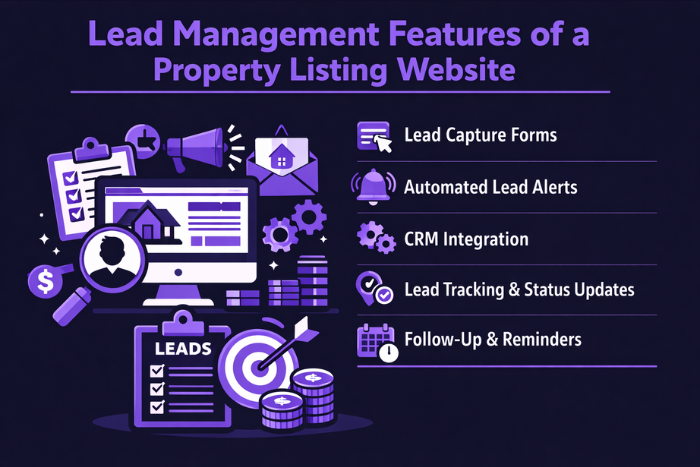
Messaging and lead capture systems
Custom UI/UX design
Hosting and cloud infrastructure
Ongoing maintenance and feature updates
A basic MVP property listing platform may require a moderate investment, while enterprise-level real estate marketplaces require more advanced development.
Flexible development models allow businesses to scale their platforms over time.
Latest Trends in Property Listing Website Development
Real estate technology continues evolving with innovative digital solutions.
Key trends include:
AI-powered property recommendations
Virtual and augmented reality property tours
Blockchain-based property transactions
Smart property search using voice commands
Automated lead management systems
Chatbots for real estate inquiries
Personalized property suggestions
Data-driven real estate market analytics
These technologies enhance the property discovery experience while improving business efficiency.
Why Choose Us to Build Your Property Listing Website?
Building a successful property listing platform requires both technical expertise and industry knowledge.
Our team specializes in developing scalable and feature-rich real estate platforms designed to generate leads and improve user engagement.
Here’s why clients choose us:
User-Centric Website Design – Simple navigation and intuitive property browsing experiences.
Scalable Architecture – Platforms capable of handling thousands of property listings.
Advanced Search and Mapping Tools – Helping users find properties quickly.
Secure Data Management – Protecting user information and property data.
SEO-Optimized Property Pages – Increasing search engine visibility.
Mobile-Responsive Development – Smooth browsing experiences across devices.
Custom Real Estate Features – Tailored solutions for agencies and property marketplaces.
Long-Term Support and Optimization – Continuous updates and performance improvements.
We help real estate businesses build powerful property listing websites that attract buyers and generate leads.
Ready to build a powerful property listing website?
Let’s create a scalable real estate platform tailored to your business goals.
Contact us today for a free consultation and customized quote.
Key Points :
- A property listing website should include advanced property search and filters so users can find properties by location, price, type, and amenities.
- Detailed property listings with high-quality images and descriptions help buyers understand property features before visiting.
- Interactive maps and location-based search allow users to explore properties in specific neighborhoods easily.
- Lead capture forms and contact options help potential buyers quickly connect with real estate agents or property owners.
- Virtual tours and multimedia content provide an immersive way for users to view properties online.
- Saved listings and property alerts help users track favorite properties and receive updates on new listings.
FAQ's
Important features include property listings, advanced search filters, maps, multimedia content, and contact forms.
They allow buyers to browse available properties, compare listings, and contact agents easily.
Technologies such as React, Node.js, Laravel, PostgreSQL, and cloud platforms like AWS are commonly used.
Yes. Many modern property websites offer video tours and 3D walkthroughs to enhance user experience.
A basic platform may take 6–10 weeks, while advanced marketplaces may take several months.
Yes. Most property listing platforms support both rental and property sale listings.
Yes. Features such as inquiry forms and contact tools help convert visitors into potential buyers.