

Discover the essential features of a successful real estate app including property search, virtual tours, maps, and secure communication tools.
Features of a Successful Real Estate App
The real estate industry has rapidly adopted digital technologies to improve property discovery, streamline transactions, and enhance customer engagement. Today, mobile applications play a critical role in helping buyers, sellers, and real estate agents connect efficiently. A well-designed mobile platform allows users to explore property listings, schedule visits, communicate with agents, and make informed decisions from anywhere.
Understanding the features of a successful real estate app is essential when building a digital property marketplace. Modern real estate applications must provide seamless property search, accurate location mapping, high-quality listings, and secure communication tools to meet the expectations of today’s tech-savvy users.
Successful real estate apps also integrate advanced functionalities such as virtual property tours, mortgage calculators, AI-powered recommendations, and real-time notifications. These features improve the user experience while helping real estate businesses generate leads and close deals faster.
Whether you are developing a property listing app, a real estate marketplace, or a brokerage management platform, implementing the right features ensures your app remains competitive and scalable. This guide explores the essential elements that define a high-performing real estate application.
Why Features of a Successful Real Estate App Are Important
Real estate decisions involve significant financial investments, which means users expect reliable information and seamless digital experiences. The right features can transform a simple property listing app into a powerful property discovery and transaction platform.
Key benefits of implementing the features of a successful real estate app include:
Improved property discovery through advanced search and filtering tools
Better engagement with buyers and sellers through messaging and notifications
Enhanced property visualization using images, videos, and virtual tours
Efficient lead management for agents and agencies
Greater convenience for users searching for properties anytime, anywhere
For real estate businesses, mobile apps help generate qualified leads, strengthen brand presence, and improve customer relationships.
By providing a seamless and feature-rich user experience, real estate apps can significantly improve the buying, selling, and renting process.
Types of Successful Real Estate App Solutions
Real estate apps can serve different purposes depending on the target audience and business model.
Common types include:
Property Listing Apps
Platforms where users browse properties available for sale or rent.Real Estate Marketplace Apps
Applications that connect buyers, sellers, and agents on a single platform.Property Management Apps
Tools used by landlords and property managers to manage tenants and rental properties.Real Estate Agent Apps
Platforms designed for agents to manage listings, leads, and client communications.Investment and Property Analytics Apps
Apps that help investors analyze real estate markets and investment opportunities.Rental Property Apps
Platforms focused on rental listings, tenant screening, and lease management.Commercial Real Estate Apps
Apps dedicated to office spaces, retail properties, and commercial investments.
Each solution requires specific features tailored to the needs of property buyers, sellers, and professionals.
Key Features of a Successful Real Estate App
To succeed in a competitive property market, a real estate application must offer a wide range of user-friendly and advanced features.
Important features of a successful real estate app include:
User Registration and Profiles
Buyers, sellers, and agents should be able to create profiles and manage their activity.Advanced Property Search and Filters
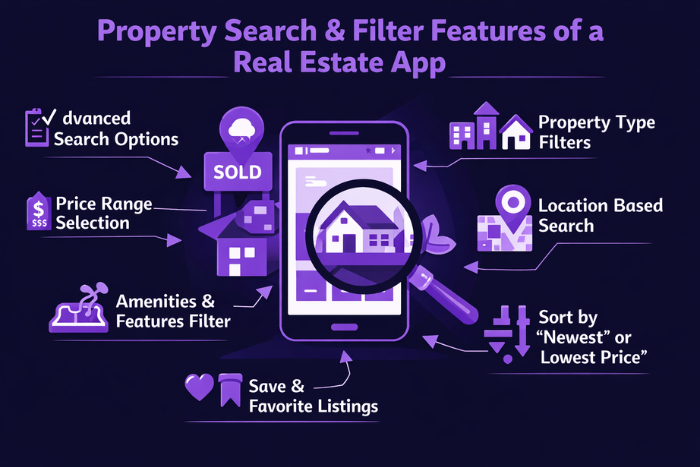
Users should be able to search by location, price range, property type, and amenities.Interactive Maps and Location-Based Search
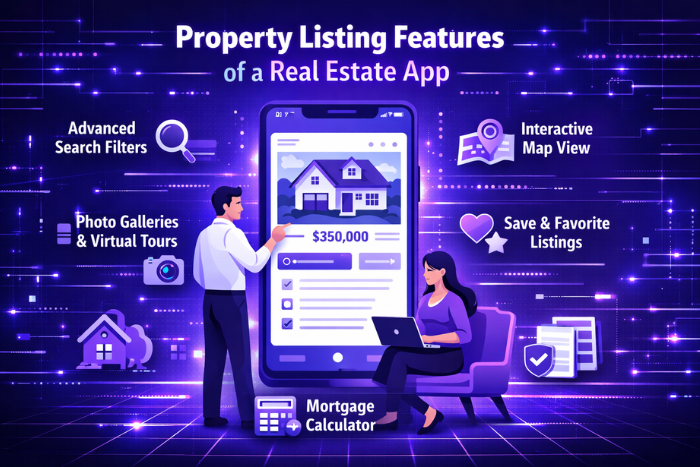
Map integration allows users to explore properties in specific neighborhoods.Detailed Property Listings
Listings should include images, videos, property descriptions, and amenities.Virtual Property Tours (AR/VR)
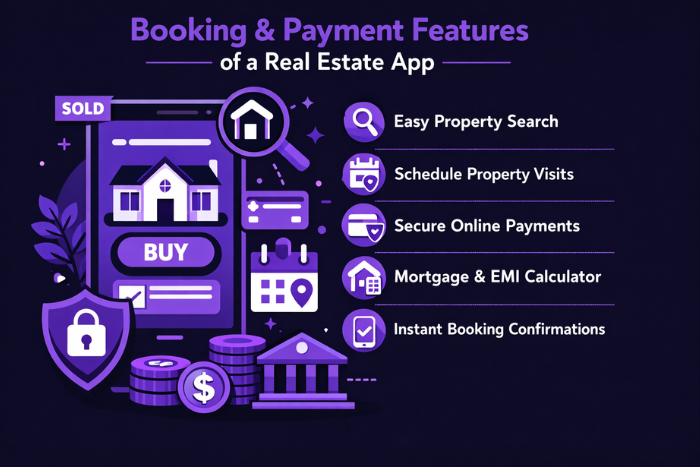
Virtual tours allow users to explore properties remotely before scheduling visits.Mortgage Calculator and Financial Tools
Built-in calculators help users estimate loan payments and affordability.In-App Messaging and Communication
Buyers and agents can communicate directly within the app.Property Alerts and Notifications
Users receive notifications when new properties match their preferences.Saved Properties and Favorites
Users can bookmark properties for later comparison.Appointment Scheduling
Buyers can schedule property visits directly through the app.Secure Document Sharing
Contracts and documents can be safely exchanged within the platform.SEO-Optimized Property Listings
Property pages should be optimized to attract organic search traffic.
These features ensure a seamless and engaging user experience for property seekers.
Development Process
Developing a high-performing real estate application requires a structured and strategic approach.
Market Research and Requirement Analysis
Identifying the target audience, property categories, and required features.Platform Architecture and Planning
Designing the app’s structure, listing system, and navigation.UI/UX Design
Creating intuitive interfaces that make property browsing simple and engaging.Backend Development
Building databases, listing management systems, and authentication features.Feature Integration
Adding search filters, maps, messaging tools, and virtual tour capabilities.Testing and Quality Assurance
Conducting performance testing, security checks, and usability testing.Deployment and Maintenance
Launching the app and providing ongoing updates and improvements.
This process ensures the application is stable, secure, and scalable.
Technology Stack
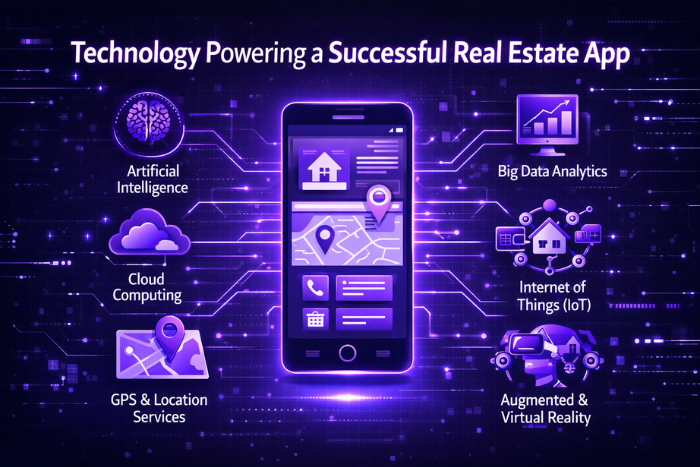
Real estate applications require robust technologies to support large property databases and real-time interactions.
Front-End: React Native, Flutter, Swift, Kotlin
Back-End: Node.js, Django, Laravel, Ruby on Rails
Databases: PostgreSQL, MongoDB, MySQL, Redis
Maps & Location Services: Google Maps API, Mapbox
Cloud Services: AWS, Google Cloud, Microsoft Azure
DevOps: Docker, Kubernetes, CI/CD pipelines
Security: OAuth authentication, SSL encryption, role-based access control (RBAC)
This technology stack ensures fast performance, reliable data handling, and strong security.
Cost Factors
The cost of developing a real estate app depends on several variables.
Important cost factors include:
Complexity of property listing and search features
Map and geolocation integrations
Virtual tour and multimedia features
Messaging and notification systems
UI/UX design complexity
Integration with CRM and property databases
Cloud infrastructure and hosting
Ongoing maintenance and updates
A basic MVP real estate app may require moderate investment, while enterprise-level property marketplaces may require larger budgets.
Flexible pricing models allow businesses to scale their applications gradually.
Latest Trends in Real Estate App Development
The real estate industry continues evolving with new technologies that enhance property discovery and decision-making.
Key trends include:
AI-powered property recommendations
AR/VR virtual property tours
Blockchain-based property transactions
Smart property search using voice commands
Real-time market analytics and insights
Chatbot-powered customer support
Smart home integration features
Personalized property suggestions using AI
These innovations help real estate platforms provide more engaging and efficient user experiences.
Why Choose Us to Build Your Real Estate App?
Developing a successful real estate app requires deep technical expertise and a strong understanding of the property market.
Our team specializes in building scalable and feature-rich real estate applications designed to attract users and generate leads.
Here’s what makes us the right development partner:
User-Focused App Design – Intuitive interfaces that simplify property discovery.
Scalable Architecture – Platforms designed to support thousands of listings and users.
Advanced Search and Mapping Tools – Helping users find properties quickly and accurately.
Secure Data Management – Protecting sensitive property and user data.
SEO-Optimized Property Listings – Increasing visibility in search engines.
Mobile-First Development – Smooth experiences across iOS and Android devices.
Custom Real Estate Features – Tailored solutions for property marketplaces and agents.
Long-Term Support and Optimization – Continuous updates and performance monitoring.
We help real estate businesses transform their digital presence with powerful mobile applications.
Ready to launch your real estate mobile app?
Let’s build a scalable property platform tailored to your business goals.
Contact us today for a free consultation and customized quote.
Key Points :
- A successful real estate app should include advanced property search and filters to help users find properties by location, price, type, and amenities.
- Detailed property listings with images, videos, and descriptions allow users to understand property features before visiting.
- Virtual tours and 3D property views allow buyers to explore properties remotely.
- User registration and profile management enable buyers, sellers, and agents to manage listings and activities.
- In-app messaging and appointment scheduling allow buyers to communicate with agents and book property visits easily.
- Real-time notifications and saved property options help users track new listings and keep their favorite properties for later comparison.
FAQ's
Key features include property listings, advanced search filters, map integration, messaging systems, and virtual property tours.
They simplify property discovery, allow direct communication with agents, and provide detailed property information.
Technologies such as React Native, Flutter, Node.js, PostgreSQL, and cloud platforms like AWS are commonly used.
Yes. Many modern apps integrate AR and VR technologies to provide immersive virtual property tours.
A basic MVP may take 8–12 weeks, while advanced applications may require several months.
Yes. Real estate apps can integrate with CRM tools to manage leads and customer relationships.
Yes. Secure authentication, encrypted communication, and data protection practices ensure user safety.
Yes. Most platforms support both rental listings and property sales within the same application.