
Discover the key features of a job listing website including job search, employer dashboards, resume uploads, and applicant tracking systems.
Key Features of a Job Listing Website
Job listing websites have become essential platforms for connecting employers with job seekers in today’s digital hiring landscape. Companies rely on these platforms to publish job openings, manage applications, and identify qualified candidates efficiently. At the same time, job seekers depend on job portals to discover opportunities, upload resumes, and track their application progress.
Understanding the key features of a job listing website is crucial when developing a platform that is efficient, scalable, and user-friendly. A well-designed job portal simplifies recruitment processes while improving the candidate experience. It enables employers to manage hiring workflows and allows applicants to easily find suitable jobs based on skills, location, or industry.
Modern job listing platforms include advanced functionalities such as intelligent job search filters, resume uploads, employer dashboards, automated job alerts, and applicant tracking systems. These features streamline recruitment processes while enhancing user engagement.
Whether you are building a niche job board, corporate recruitment portal, or large-scale job marketplace, implementing the right features ensures that your platform attracts both employers and job seekers. This article explores the most important elements every successful job listing website should include.
Why Key Features of a Job Listing Website Are Important
A job listing website must provide a seamless experience for both employers and job seekers. Without the right features, recruitment platforms can become inefficient and difficult to use.
Implementing the key features of a job listing website provides several benefits:
Faster hiring processes through automated job posting and application management
Better job discovery with advanced search and filtering tools
Improved candidate experience with simple application workflows
Efficient employer management through dashboards and applicant tracking systems
Higher engagement and retention through personalized job alerts and notifications
Businesses benefit by reaching a larger pool of qualified candidates, while job seekers gain access to a centralized platform for exploring opportunities.
A well-structured job listing website also improves visibility in search engines, allowing job postings to attract organic traffic.
Types of Job Listing Website Solutions
Job listing platforms can be designed for different industries and recruitment needs.
Some common types include:
General Job Portals
Platforms that publish job listings across multiple industries and professions.Niche Job Boards
Industry-specific job platforms focused on sectors like technology, healthcare, or education.Company Career Portals
Dedicated recruitment platforms where companies list internal job openings.Freelance Job Marketplaces
Platforms connecting businesses with freelancers for project-based work.Remote Job Platforms
Websites that specialize in remote and work-from-home opportunities.Local Job Listing Platforms
Job boards targeting employment opportunities in specific geographic regions.Recruitment Agency Platforms
Job listing systems used by recruitment agencies to manage multiple employer listings.
Each platform requires specific features to manage job listings, applications, and candidate communication.
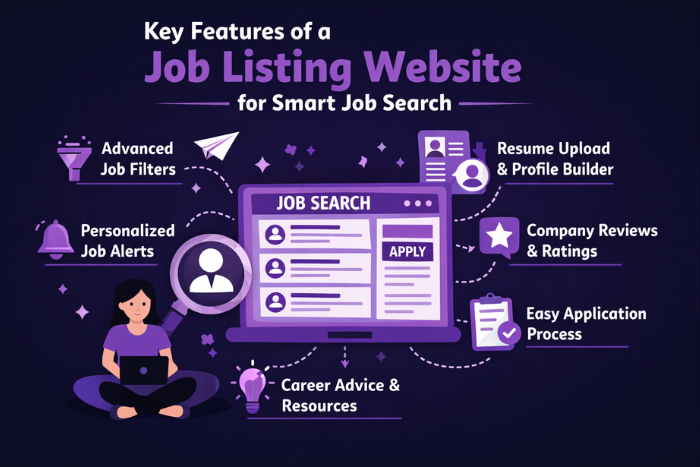
Key Features of a Job Listing Website
A successful job portal requires features that make job discovery simple and recruitment efficient.
Important key features of a job listing website include:
User Registration and Profiles
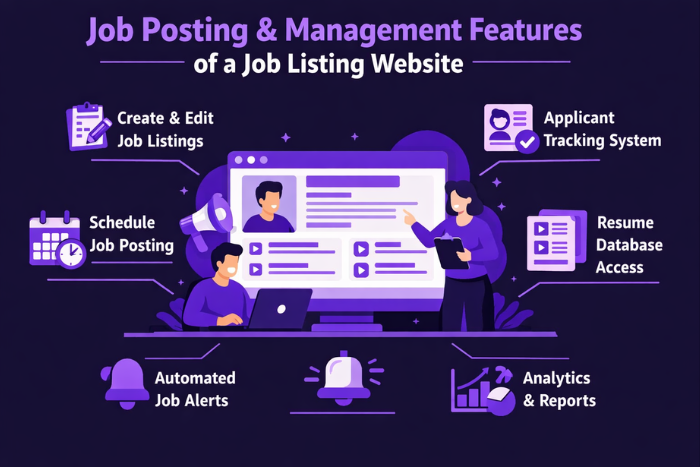
Job seekers and employers should be able to create accounts and manage their profiles.Job Posting and Management
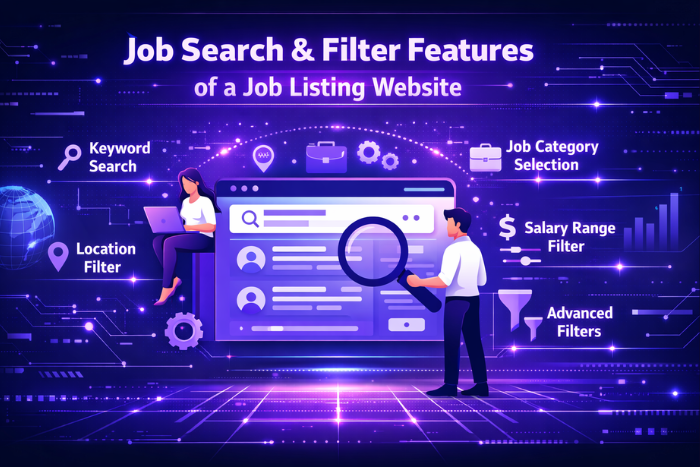
Employers can publish job listings, edit postings, and manage recruitment campaigns.Advanced Job Search and Filters
Users should be able to search jobs by location, industry, salary range, experience level, and keywords.Resume Upload and Profile Creation
Job seekers can upload resumes or build profiles showcasing their skills and experience.Applicant Tracking System (ATS)
Employers can review applications, shortlist candidates, and manage hiring workflows.Employer and Candidate Dashboards
Dashboards allow both parties to track applications, job postings, and activity.Job Alerts and Notifications
Automated notifications inform users about new opportunities matching their preferences.Saved Jobs and Application Tracking
Job seekers can bookmark jobs and track the status of their applications.Messaging and Communication Tools
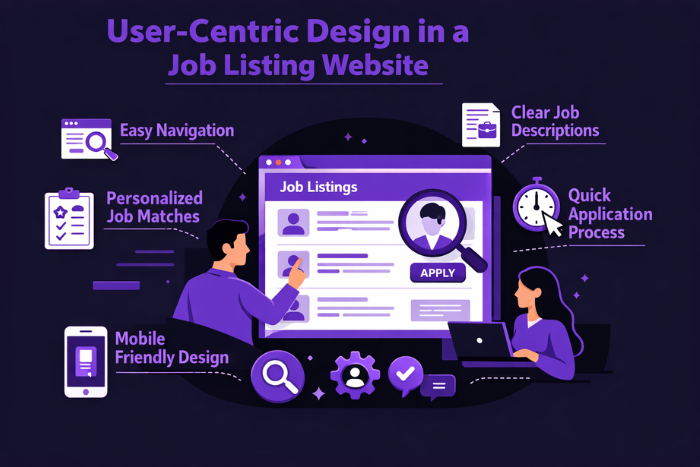
Employers and candidates can communicate directly through the platform.Mobile-Friendly Design
Responsive interfaces ensure users can browse and apply for jobs from mobile devices.SEO-Optimized Job Listings
Structured job data improves search engine visibility and helps attract candidates.
These features ensure the platform delivers a seamless experience for employers and job seekers.
Development Process
Developing a job listing website requires careful planning and structured implementation.
Requirement Analysis and Platform Strategy
Identifying target users, industries, and recruitment workflows.Information Architecture Planning
Designing categories, job listings structure, and navigation systems.UI/UX Design
Creating intuitive interfaces for job search, posting, and applications.Backend Development
Implementing databases, applicant tracking systems, and user authentication.Feature Integration
Adding job alerts, messaging tools, resume uploads, and search filters.Testing and Quality Assurance
Performing usability testing, performance testing, and security checks.Deployment and Optimization
Launching the platform with scalable hosting infrastructure and monitoring tools.
A structured development process ensures reliability, scalability, and security.
Technology Stack
Modern job listing platforms rely on advanced technologies to handle large volumes of users and job postings.
Front-End: React.js, Vue.js, Angular, Next.js
Back-End: Node.js, Laravel, Django, Ruby on Rails
Databases: PostgreSQL, MongoDB, MySQL, Redis
Search Engines: Elasticsearch, Algolia
Cloud Services: AWS, Google Cloud, Microsoft Azure
DevOps: Docker, Kubernetes, CI/CD pipelines
Security: OAuth authentication, SSL encryption, role-based access control (RBAC)
This technology stack ensures fast search performance and secure data handling.
Cost Factors
The cost of building a job listing website varies depending on several factors.
Key cost considerations include:
Complexity of job search and filtering features
Resume parsing and applicant tracking systems
Employer and candidate dashboards
Messaging and notification systems
Custom UI/UX design
Integration with HR software and third-party tools
Hosting and infrastructure setup
Maintenance and platform updates
A basic job portal MVP may require a moderate investment, while enterprise-level recruitment platforms require advanced infrastructure and development resources.
Flexible pricing models such as fixed-price development or dedicated teams allow businesses to scale gradually.
Latest Trends in Job Listing Website Development
Recruitment platforms continue evolving with new technologies and hiring trends.
Some emerging trends include:
AI-powered candidate matching
Automated resume screening
Video interview integrations
Skill-based job recommendations
Remote job filtering
Chatbot-based candidate assistance
Data-driven recruitment analytics
Mobile-first job application experiences
These innovations help recruiters hire faster and improve the job search experience for candidates.
Why Choose Us to Build Your Job Listing Website?
Building a high-performance job portal requires expertise in recruitment workflows, user experience design, and scalable development.
Our team specializes in building powerful recruitment platforms tailored to your business needs.
Here’s why businesses choose us:
User-Centered Platform Design – Simple interfaces for job posting and job searching.
Scalable Job Portal Architecture – Platforms capable of handling thousands of listings and users.
Advanced Search and Matching Systems – Helping candidates find relevant opportunities quickly.
Secure Data Management – Protecting candidate and employer information with robust security practices.
SEO-Optimized Job Listings – Improving visibility in search engines to attract more applicants.
Mobile-First Development – Seamless experience across smartphones, tablets, and desktops.
Custom Recruitment Features – Tailored dashboards, applicant tracking systems, and automation tools.
Long-Term Support and Optimization – Continuous updates, performance monitoring, and security improvements.
We help you build a scalable recruitment platform that connects employers with the right talent.
Ready to build a powerful job listing platform?
Let’s create a scalable recruitment website tailored to your hiring needs.
Contact us today for a free consultation and customized quote.
Key Points :
- A job listing website should include an easy job posting system so employers can quickly publish and manage job openings.
- Advanced job search and filtering options help candidates find jobs based on location, salary, experience, and industry.
- User registration and profile creation allow job seekers to upload resumes and showcase their skills.
- Employer and candidate dashboards help users track job postings, applications, and hiring progress.
- Applicant Tracking System (ATS) helps employers review applications, shortlist candidates, and manage recruitment workflows.
- Secure messaging or communication tools allow employers and candidates to connect directly.
FAQ's
Important features include job posting systems, advanced search filters, resume uploads, employer dashboards, and applicant tracking systems.
They streamline hiring processes by allowing recruiters to publish job postings, manage applications, and communicate with candidates efficiently.
Technologies such as React, Node.js, Laravel, PostgreSQL, Elasticsearch, and cloud platforms like AWS are commonly used.
By offering easy job search tools, job alerts, and mobile-friendly applications that simplify the application process.
Yes. With scalable infrastructure and optimized databases, job portals can support thousands or millions of users.
A basic job portal MVP may take 6–10 weeks, while advanced recruitment platforms may take several months.
Yes. Optimized job pages with structured data and keyword-rich listings can rank well in search engines.
Yes. Many job portals integrate with HR tools, CRM systems, and applicant tracking systems to streamline recruitment workflows.